THE ADVENTURE COLLECTIVE® · Independent discovery and booking for outdoor travel

Float over Pamukkale’s white travertines at sunrise, then spend hours wandering Hierapolis and the thermal pools. This full‑day trip from Izmir pairs a sunrise hot‑air balloon flight with independent time on one of Turkey’s most striking UNESCO sites.
Float over Pamukkale’s white travertines at sunrise, then spend hours wandering Hierapolis and the thermal pools. This full‑day trip from Izmir pairs a sunrise hot‑air balloon flight with independent time on one of Turkey’s most striking UNESCO sites.
You lift from the valley in the hush before dawn, the balloon hiss of burners punctuating a sky that is still cool and blue. Below, Pamukkale’s white travertine terraces catch the first light like stretched porcelain, and the ancient ruins of Hierapolis sit mute and patient on the plateau as the sun colors limestone pools gold.
Verified experiences and guided adventures in the surrounding area.
Operated by Payless · Pamukkale, Denizli Province
You lift from the valley in the hush before dawn, the balloon hiss of burners punctuating a sky that is still cool and blue. Below, Pamukkale’s white travertine terraces catch the first light like stretched porcelain, and the ancient ruins of Hierapolis sit mute and patient on the plateau as the sun colors limestone pools gold.
The white cliffs of Pamukkale are travertine terraces formed by calcium‑rich thermal springs; Romans built the spa city of Hierapolis atop them and used the waters for healing. The landscape is geological theatre—mineral deposits flowing and setting into cascading pools—while the ruins tell stories of baths, colonnades and a necropolis that once served a thriving provincial capital.
Culturally, Pamukkale blends rural Turkish life with steady tourism; local restaurants serve hearty mezzes and lamb stews after the morning flights. Pilots adjust takeoff to wind and weather, so each flight is routed for the best light and views—expect a slow, smooth ascent that places the valley at eye level.
Practical guidance: pickups leave Izmir very early (this is a full‑day tour, ~12–13 hours total). Wear layers for pre‑sun chill, pack sun protection and a small daypack for three hours of independent exploring after the flight. Note you must remove shoes to walk on many travertine terraces and entrance fees to UNESCO areas may be separate. Flights can be cancelled for wind or fog; bookings usually allow 24‑hour free cancellation. Hydrate, keep your passport handy for pickup details, and allow time to savor both the airborne view and the thermal pools on the ground.
moderate.
12–13 hours (full‑day from Izmir).
Moderate fitness for short climbs, uneven travertine walking and a day of sightseeing; able to stand through the balloon boarding and landing.
Expect a full day—roughly 12 to 13 hours door‑to‑door including transfers, flight, free time in Pamukkale and lunch.
This tour provides free time to visit the sites, but standard site entrance fees are typically not included—check your booking details before travel.
Children under 5 and pregnant travelers are not permitted; anyone with serious cardiovascular or spinal issues should avoid flights and consult a doctor.
Flights are cancelled for unsafe weather; the operator usually offers a full refund or rescheduling depending on availability and the stated cancellation policy.
Romans established Hierapolis in the 2nd century BCE as a thermal spa; the city and its baths flourished under Roman and Byzantine rule and were later rediscovered in modern times.
Visitor limits and rules (like going barefoot on travertines) help protect fragile mineral formations; stick to marked paths and avoid using soaps or lotions in thermal waters.
Payless operates guided outdoor trips and adventures with an emphasis on safety, stewardship, and memorable experiences.
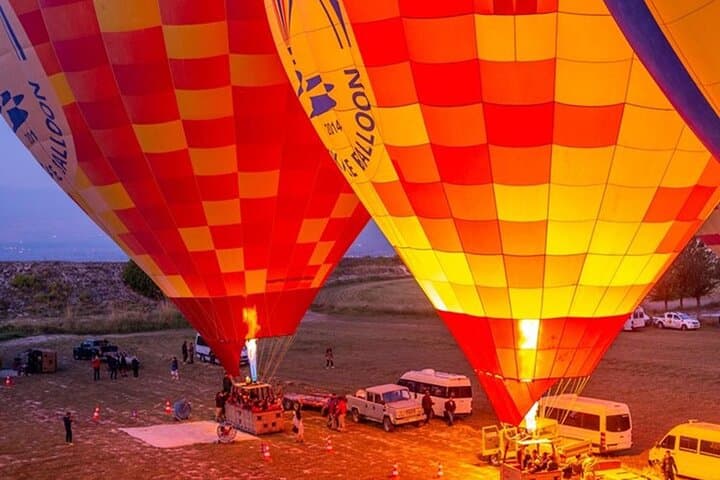

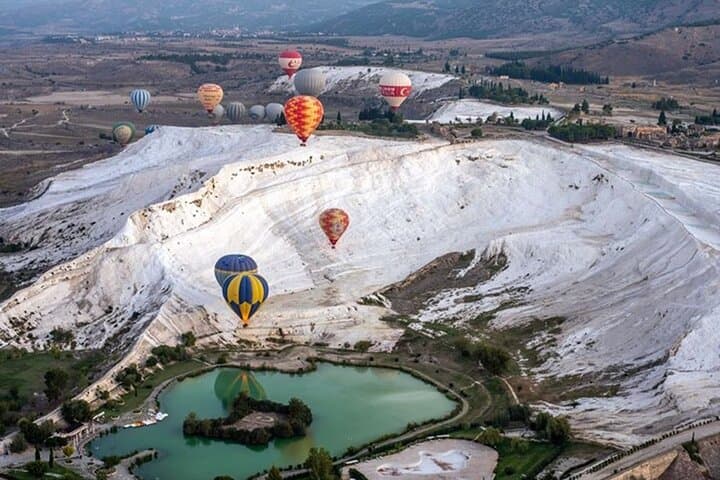

You lift from the valley in the hush before dawn, the balloon hiss of burners punctuating a sky that is still cool and blue. Below, Pamukkale’s white travertine terraces catch the first light like stretched porcelain, and the ancient ruins of Hierapolis sit mute and patient on the plateau as the sun colors limestone pools gold.
You lift from the valley in the hush before dawn, the balloon hiss of burners punctuating a sky that is still cool and blue. Below, Pamukkale’s white travertine terraces catch the first light like stretched porcelain, and the ancient ruins of Hierapolis sit mute and patient on the plateau as the sun colors limestone pools gold.
The white cliffs of Pamukkale are travertine terraces formed by calcium‑rich thermal springs; Romans built the spa city of Hierapolis atop them and used the waters for healing. The landscape is geological theatre—mineral deposits flowing and setting into cascading pools—while the ruins tell stories of baths, colonnades and a necropolis that once served a thriving provincial capital.
Culturally, Pamukkale blends rural Turkish life with steady tourism; local restaurants serve hearty mezzes and lamb stews after the morning flights. Pilots adjust takeoff to wind and weather, so each flight is routed for the best light and views—expect a slow, smooth ascent that places the valley at eye level.
Practical guidance: pickups leave Izmir very early (this is a full‑day tour, ~12–13 hours total). Wear layers for pre‑sun chill, pack sun protection and a small daypack for three hours of independent exploring after the flight. Note you must remove shoes to walk on many travertine terraces and entrance fees to UNESCO areas may be separate. Flights can be cancelled for wind or fog; bookings usually allow 24‑hour free cancellation. Hydrate, keep your passport handy for pickup details, and allow time to savor both the airborne view and the thermal pools on the ground.