THE ADVENTURE COLLECTIVE® · Independent discovery and booking for outdoor travel

Float above the alabaster terraces of Pamukkale at sunrise, then explore the ancient spa city of Hierapolis. This long day trip from Antalya pairs a hot-air balloon flight with time on the travertines and a local lunch.
Float above the alabaster terraces of Pamukkale at sunrise, then explore the ancient spa city of Hierapolis. This long day trip from Antalya pairs a hot-air balloon flight with time on the travertines and a local lunch.
Before dawn the coach eases out of Antalya, headlights slicing the dark as the Aegean hills roll by. By the time the bus reaches Pamukkale the sky is thin and pale; the balloon crews are already inflating envelopes that will lift you above white terraces and the ruins of Hierapolis. The first light spills across the travertines and seems to set the calcium pools on fire — a slow, quiet spectacle best seen from a floating basket.
Verified experiences and guided adventures in the surrounding area.
Operated by Tour Point · Pamukkale, Denizli Province
Before dawn the coach eases out of Antalya, headlights slicing the dark as the Aegean hills roll by. By the time the bus reaches Pamukkale the sky is thin and pale; the balloon crews are already inflating envelopes that will lift you above white terraces and the ruins of Hierapolis. The first light spills across the travertines and seems to set the calcium pools on fire — a slow, quiet spectacle best seen from a floating basket.
The terraces themselves are geological workhorses: mineral-rich thermal waters deposit layers of travertine that build the stepped pools over millennia. Hierapolis, founded in Hellenistic times and expanded under Rome, grew up around those springs as a spa town—its theater and necropolis still speak to a civic life shaped by water.
Expect a practical, full-day rhythm: roughly three hours each way by bus from Antalya, a sunrise balloon flight with a safety briefing, celebratory landing toast and certificate, then time on foot to walk the terraces (boardwalks protect fragile surfaces), and a guided visit to Hierapolis and the antique thermal pool often called Cleopatra’s Pool. Lunch at a local restaurant is included.
Plan for uneven limestone, bright morning light and a long day. Wear sturdy shoes you can remove for walking on wet travertine where required, carry layers for the cool pre-dawn and warmer midday, and keep electronics safe from splash and mineral stains. Note health restrictions for the balloon: no pregnancy, young children under 5 cannot fly, and those with back or heart conditions should avoid the flight. With daylight stretched across white pools and ruins, the day is equal parts geology, history and a quiet aerial thrill.
moderate.
13–14 hours.
Moderate stamina—able to stand in the balloon basket, climb steps at Hierapolis, and walk uneven boardwalks and limestone terraces.
The bus transfer is about three hours each way depending on traffic, making this a full-day (approximately 13–14 hour) excursion.
Flights are weather-dependent; operators cancel for unsafe wind or rain and will refund or reschedule per the tour’s policy.
Some pools are closed to protect formations; designated areas and the Cleopatra’s Pool (where permitted by the operator) are popular, but follow guide instructions and local rules.
Yes—this tour includes hotel pick-up from Antalya, a guided lunch in Pamukkale, the balloon flight fee, a post-flight toast and flight certificate.
Hierapolis developed as a Greco-Roman spa town built around the thermal springs; its ruins include a large theater and an extensive necropolis.
The travertine pools are fragile; follow boardwalks and local rules, avoid soaps or lotions in pools, and minimize footprint to help preserve mineral formations.
Tour Point operates guided outdoor trips and adventures with an emphasis on safety, stewardship, and memorable experiences.
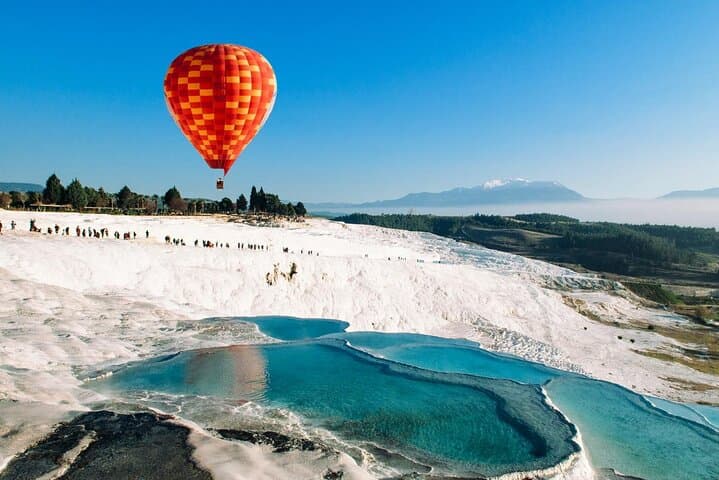
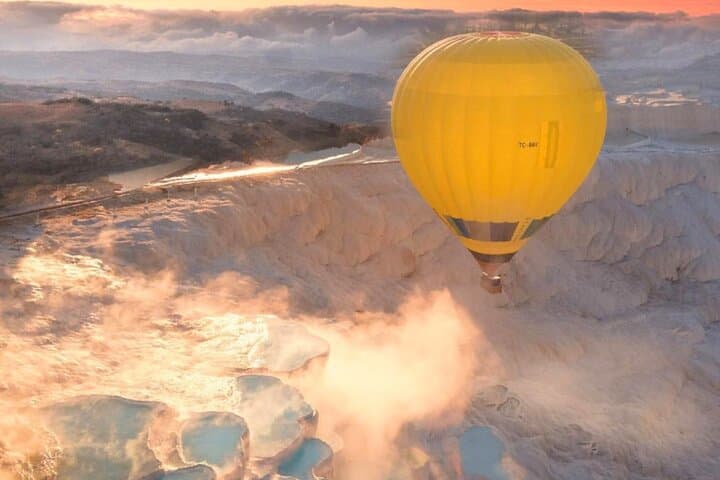
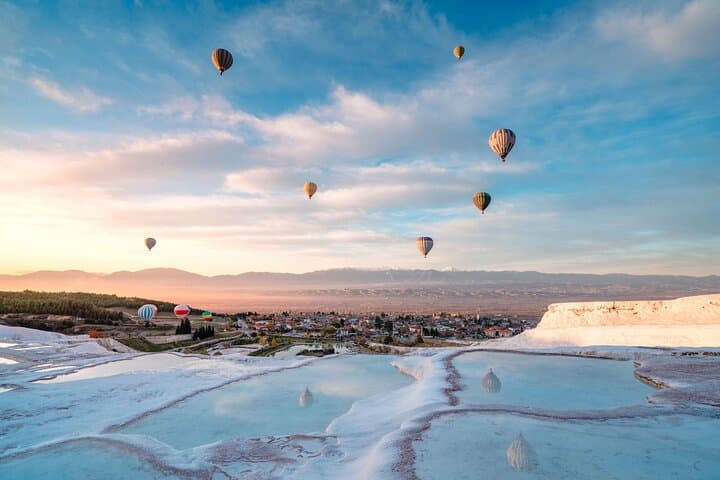
Before dawn the coach eases out of Antalya, headlights slicing the dark as the Aegean hills roll by. By the time the bus reaches Pamukkale the sky is thin and pale; the balloon crews are already inflating envelopes that will lift you above white terraces and the ruins of Hierapolis. The first light spills across the travertines and seems to set the calcium pools on fire — a slow, quiet spectacle best seen from a floating basket.
Before dawn the coach eases out of Antalya, headlights slicing the dark as the Aegean hills roll by. By the time the bus reaches Pamukkale the sky is thin and pale; the balloon crews are already inflating envelopes that will lift you above white terraces and the ruins of Hierapolis. The first light spills across the travertines and seems to set the calcium pools on fire — a slow, quiet spectacle best seen from a floating basket.
The terraces themselves are geological workhorses: mineral-rich thermal waters deposit layers of travertine that build the stepped pools over millennia. Hierapolis, founded in Hellenistic times and expanded under Rome, grew up around those springs as a spa town—its theater and necropolis still speak to a civic life shaped by water.
Expect a practical, full-day rhythm: roughly three hours each way by bus from Antalya, a sunrise balloon flight with a safety briefing, celebratory landing toast and certificate, then time on foot to walk the terraces (boardwalks protect fragile surfaces), and a guided visit to Hierapolis and the antique thermal pool often called Cleopatra’s Pool. Lunch at a local restaurant is included.
Plan for uneven limestone, bright morning light and a long day. Wear sturdy shoes you can remove for walking on wet travertine where required, carry layers for the cool pre-dawn and warmer midday, and keep electronics safe from splash and mineral stains. Note health restrictions for the balloon: no pregnancy, young children under 5 cannot fly, and those with back or heart conditions should avoid the flight. With daylight stretched across white pools and ruins, the day is equal parts geology, history and a quiet aerial thrill.