THE ADVENTURE COLLECTIVE® · Independent discovery and booking for outdoor travel

Glide at sunrise above Luxor’s temples and burial grounds on a calm hot-air balloon flight. This early-morning excursion pairs quiet aerial perspective with practical logistics — ideal for first-time flyers and history-minded travelers.
Glide at sunrise above Luxor’s temples and burial grounds on a calm hot-air balloon flight. This early-morning excursion pairs quiet aerial perspective with practical logistics — ideal for first-time flyers and history-minded travelers.
Before first light you stand at the edge of the Nile floodplain while crews inflate a giant envelope that will lift you above the scarred, sun-warmed landscape. The balloon rises slow and steady; below, straight-lined irrigation, the dark ribbon of the river, and the irregular silhouettes of temples and burial ridges fold into a new map of antiquity.
Verified experiences and guided adventures in the surrounding area.
Operated by Gate 2 Egypt Tours · Luxor, Luxor Governorate
Before first light you stand at the edge of the Nile floodplain while crews inflate a giant envelope that will lift you above the scarred, sun-warmed landscape. The balloon rises slow and steady; below, straight-lined irrigation, the dark ribbon of the river, and the irregular silhouettes of temples and burial ridges fold into a new map of antiquity.
From the air the city of Luxor reads like a chapter of ancient Egypt: Karnak’s pylons, Luxor Temple’s axis, and the clustered tombs of the West Bank. Geology is plain here — a narrow fertile ribbon etched between sandstone escarpments and desert plateaus — which is why pharaohs chose this stretch for their temples and necropolises. Local crews and pilots are part of that cultural landscape; many families have worked balloon season after season, linking tourism, archaeology, and community income.
Practical guidance: flights are early-morning to catch calm thermals and the best light; expect a total excursion of roughly 2–3 hours including pickup and return. Dress in layers: pre-dawn temperatures are cool, and heat builds quickly after sunrise. Mobility requirements are minimal — passengers step into a low basket — and operators typically offer hotel pickup, refreshments, and an English-speaking guide.
Photo and safety tips: bring a fast lens and a strap, keep phones secure against the breeze, and follow crew instructions at landing (landings can be bumpy). Be prepared for weather cancellations — safety depends on wind and visibility. A sunrise balloon over Luxor is as much about seeing ancient lines of stone as it is about feeling the slow, patient lift that reorders history beneath you.
easy.
2–3 hours.
Suitable for most fitness levels; you must be able to step into and stand in a basket for 30–60 minutes.
The total excursion is about 2–3 hours; actual time aloft is typically 40–60 minutes within that window.
Most operators permit children and seniors; infants usually ride on laps and accessibility details should be confirmed at booking.
Operators usually offer a full refund or reschedule when winds or visibility make flying unsafe — check the 24-hour cancellation terms.
Yes, many flights pass over or near the West Bank area giving aerial views of tomb complexes and desert ridges, though exact flight paths vary by wind.
Luxor sits on the site of ancient Thebes, the ceremonial center for pharaonic Egypt; temples and necropolises here span New Kingdom dynasties and the age of Ramses II.
Archaeological sites are sensitive; reputable operators coordinate with local authorities to avoid overflight of fragile conservation areas and support low-impact tourism.
Gate 2 Egypt Tours operates guided outdoor trips and adventures with an emphasis on safety, stewardship, and memorable experiences.
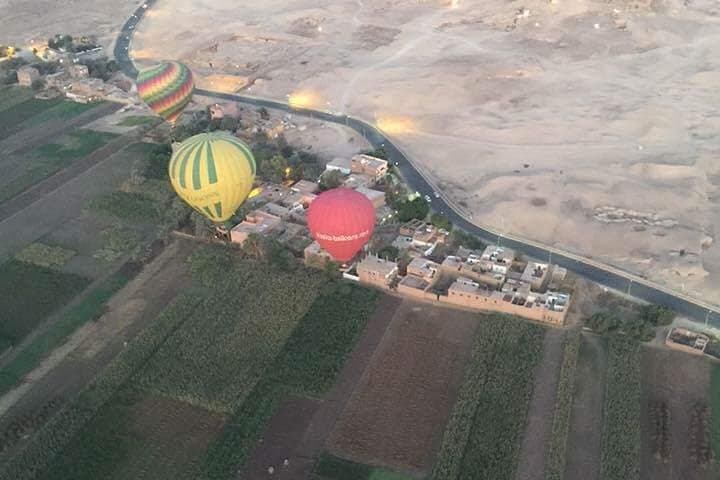
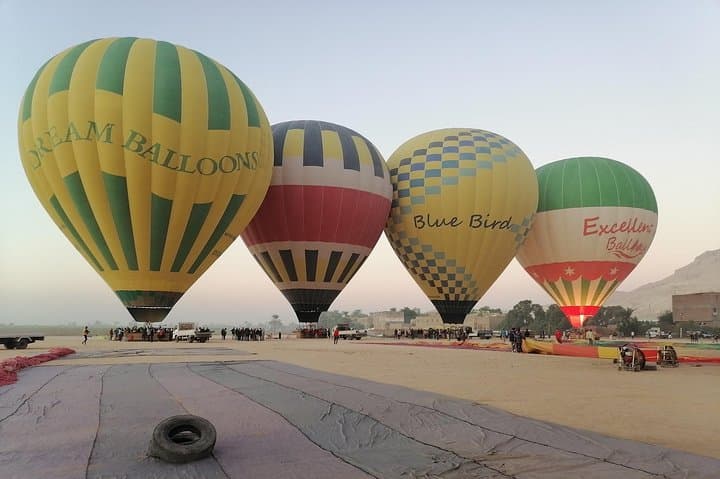
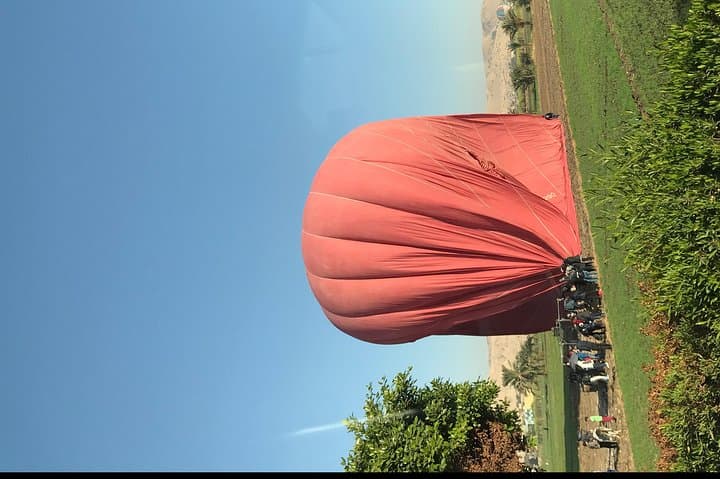
Before first light you stand at the edge of the Nile floodplain while crews inflate a giant envelope that will lift you above the scarred, sun-warmed landscape. The balloon rises slow and steady; below, straight-lined irrigation, the dark ribbon of the river, and the irregular silhouettes of temples and burial ridges fold into a new map of antiquity.
Before first light you stand at the edge of the Nile floodplain while crews inflate a giant envelope that will lift you above the scarred, sun-warmed landscape. The balloon rises slow and steady; below, straight-lined irrigation, the dark ribbon of the river, and the irregular silhouettes of temples and burial ridges fold into a new map of antiquity.
From the air the city of Luxor reads like a chapter of ancient Egypt: Karnak’s pylons, Luxor Temple’s axis, and the clustered tombs of the West Bank. Geology is plain here — a narrow fertile ribbon etched between sandstone escarpments and desert plateaus — which is why pharaohs chose this stretch for their temples and necropolises. Local crews and pilots are part of that cultural landscape; many families have worked balloon season after season, linking tourism, archaeology, and community income.
Practical guidance: flights are early-morning to catch calm thermals and the best light; expect a total excursion of roughly 2–3 hours including pickup and return. Dress in layers: pre-dawn temperatures are cool, and heat builds quickly after sunrise. Mobility requirements are minimal — passengers step into a low basket — and operators typically offer hotel pickup, refreshments, and an English-speaking guide.
Photo and safety tips: bring a fast lens and a strap, keep phones secure against the breeze, and follow crew instructions at landing (landings can be bumpy). Be prepared for weather cancellations — safety depends on wind and visibility. A sunrise balloon over Luxor is as much about seeing ancient lines of stone as it is about feeling the slow, patient lift that reorders history beneath you.