THE ADVENTURE COLLECTIVE® · Independent discovery and booking for outdoor travel

Catch the Taj at sunrise with skip-the-line access and a private guide, then explore Agra Fort’s royal chambers. This concise private tour saves time and pairs essential history with practical tips for photography and comfort.
Catch the Taj at sunrise with skip-the-line access and a private guide, then explore Agra Fort’s royal chambers. This concise private tour saves time and pairs essential history with practical tips for photography and comfort.
You step from a private tuk-tuk into a pale, cool morning where the Yamuna dares you to look away; the Taj Mahal lifts from the mist like a carved promise. A local guide times your approach so you enter with the crowd still thin and light catching the white marble domes.
Verified experiences and guided adventures in the surrounding area.
Operated by Akbran Tours · Agra, Uttar Pradesh
You step from a private tuk-tuk into a pale, cool morning where the Yamuna dares you to look away; the Taj Mahal lifts from the mist like a carved promise. A local guide times your approach so you enter with the crowd still thin and light catching the white marble domes.
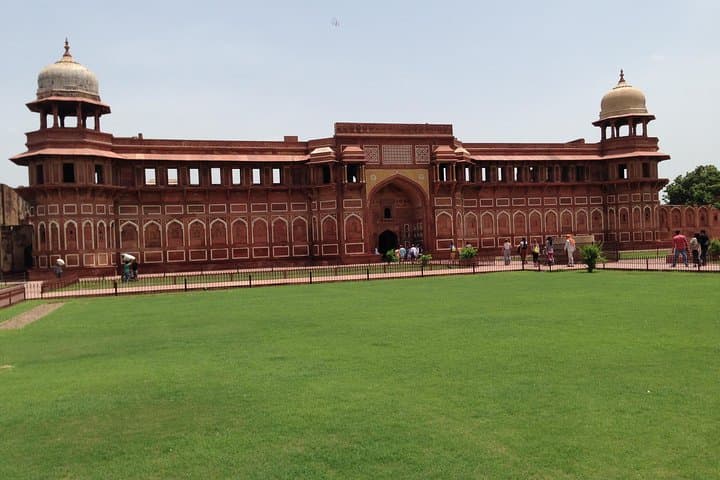
The Taj was begun in 1632 by Shah Jahan as a mausoleum for Mumtaz Mahal; its inlaid pietra dura and precise symmetry reflect Mughal architectural ambition and decades of skilled labor. Across the river, Agra Fort—started under Akbar in the mid-16th century—reads like a fortified court, its red sandstone walls framing chambers, audience halls and a vantage that frames the Taj from a different era.
Geology here is simple: alluvial plains of the Yamuna, soft soils under historic foundations that require constant conservation. Culturally, Agra is an imperial city with marble workshops, bazaars selling petha sweets, and a rhythm of calls to prayer and market shouts.
Practical guidance: plan for a 5–6 hour private tour that includes hotel pickup, skip-the-line tickets and a guide. Arrive early for sunrise light, bring sun protection and water, and wear comfortable shoes for walking across marble and uneven fort courtyards. Respect restricted areas and photography rules inside mausoleums. If you want specific photo angles, ask your guide—their timed access and local knowledge make the difference between a snapshot and a memorable image.
easy.
5–6 hours.
Suitable for most fitness levels; involves walking on flat marble surfaces and uneven fort steps for up to a few hours.
Yes—this private tour includes skip-the-line entrance tickets for the Taj Mahal and Agra Fort as stated in the itinerary.
Pickup is typically scheduled around 06:00 for sunrise visits but can be customized—confirm your exact time with the operator beforehand.
The operator notes wheelchair and stroller accessibility for many areas, but some marble ramps and fort sections have steps—notify the operator of special needs when booking.
Photography is allowed in most exterior and some interior areas, but tripods and commercial equipment may be restricted; follow the guide’s instructions.
The Taj Mahal was commissioned by Shah Jahan in 1632 as a mausoleum for Mumtaz Mahal; Agra Fort dates to Akbar’s reign in the 16th century and later served Mughal rulers as a royal residence.
Both sites are managed by the Archaeological Survey of India; visitors are asked to follow pathways, avoid touching delicate inlay, and limit pollution by minimizing plastic and emissions.
Akbran Tours operates guided outdoor trips and adventures with an emphasis on safety, stewardship, and memorable experiences.



You step from a private tuk-tuk into a pale, cool morning where the Yamuna dares you to look away; the Taj Mahal lifts from the mist like a carved promise. A local guide times your approach so you enter with the crowd still thin and light catching the white marble domes.
You step from a private tuk-tuk into a pale, cool morning where the Yamuna dares you to look away; the Taj Mahal lifts from the mist like a carved promise. A local guide times your approach so you enter with the crowd still thin and light catching the white marble domes.
The Taj was begun in 1632 by Shah Jahan as a mausoleum for Mumtaz Mahal; its inlaid pietra dura and precise symmetry reflect Mughal architectural ambition and decades of skilled labor. Across the river, Agra Fort—started under Akbar in the mid-16th century—reads like a fortified court, its red sandstone walls framing chambers, audience halls and a vantage that frames the Taj from a different era.
Geology here is simple: alluvial plains of the Yamuna, soft soils under historic foundations that require constant conservation. Culturally, Agra is an imperial city with marble workshops, bazaars selling petha sweets, and a rhythm of calls to prayer and market shouts.
Practical guidance: plan for a 5–6 hour private tour that includes hotel pickup, skip-the-line tickets and a guide. Arrive early for sunrise light, bring sun protection and water, and wear comfortable shoes for walking across marble and uneven fort courtyards. Respect restricted areas and photography rules inside mausoleums. If you want specific photo angles, ask your guide—their timed access and local knowledge make the difference between a snapshot and a memorable image.