THE ADVENTURE COLLECTIVE® · Independent discovery and booking for outdoor travel

Wake before dawn and ride to Nagarkot’s ridge for a front-row sunrise over the Himalayan skyline, including Mount Everest on clear days. This brief, private tour from Kathmandu pairs rural village scenery with effortless access to panoramic viewpoints.
Wake before dawn and ride to Nagarkot’s ridge for a front-row sunrise over the Himalayan skyline, including Mount Everest on clear days. This brief, private tour from Kathmandu pairs rural village scenery with effortless access to panoramic viewpoints.
You step from the minivan into a bracing Himalayan dawn: the valley below is dark, a scatter of lights, while a cold wind pushes across the ridge and teases the breath from your lungs.
Verified experiences and guided adventures in the surrounding area.
Operated by Swami Narayan Travels Pvt Ltd · Nagarkot, Bagmati Province
You step from the minivan into a bracing Himalayan dawn: the valley below is dark, a scatter of lights, while a cold wind pushes across the ridge and teases the breath from your lungs.
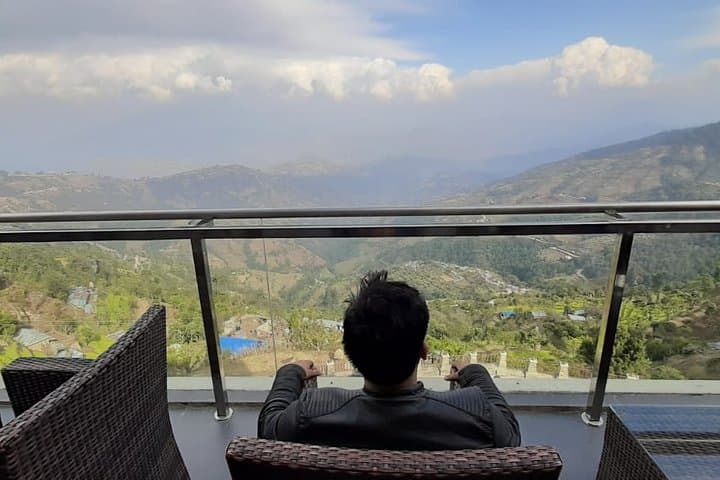
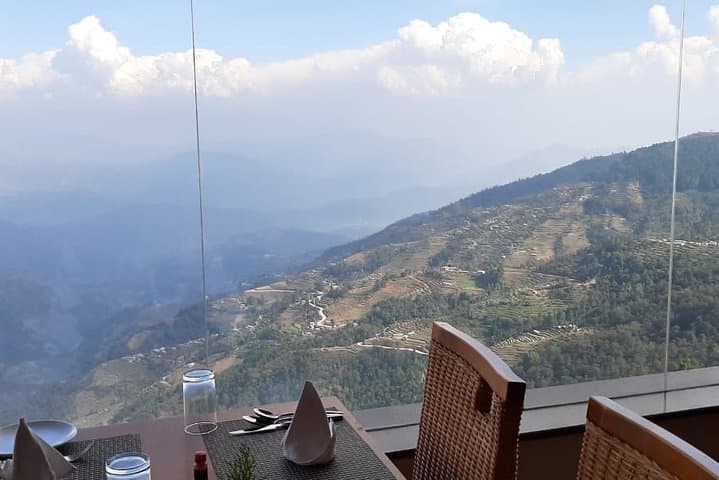
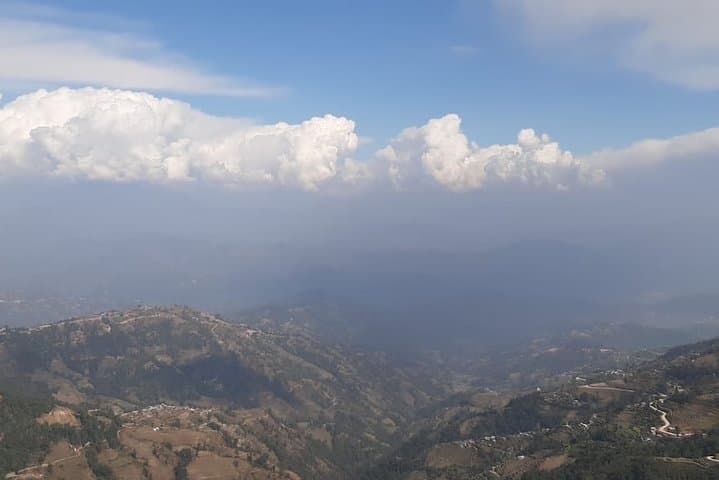
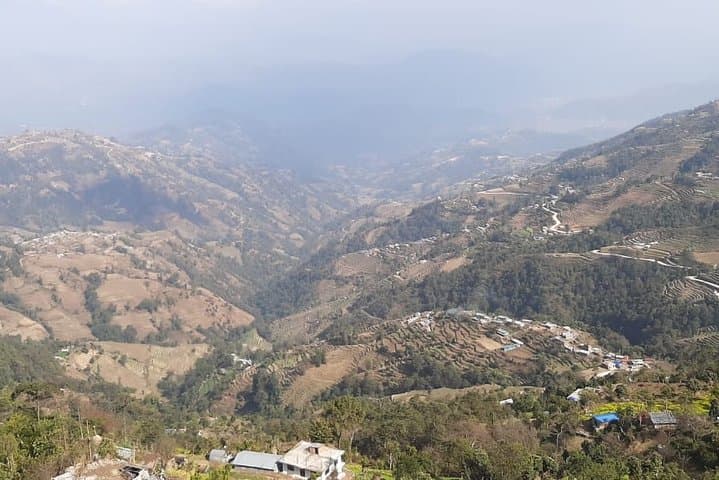
Nagarkot’s spine is a simple stage for the world’s highest peaks—on clear mornings the sun pins a thin gold edge along the Himalaya and Mount Everest appears as a distant, glinting crown. The hill’s forested slopes—oaks, pines and scattered rhododendron—guard small brick villages and terraced fields that still tilt toward subsistence farming.
Historically Nagarkot served as a watch post (kot) for regional polities, later evolving into a lookout favored by travelers. Geologically you’re perched on the foreland of the young Himalayan range, where the Indian plate thrusts northward and creates sudden, dramatic relief visible in the jagged skyline.
Culturally, mornings here are quiet—local Tamang and Newar communities move through their day while tea-house owners stoke fires for early visitors. Expect simple hospitality rather than luxury: a hot cup, local breakfast, and panoramic benches facing east.
Practical guidance: the standard excursion is a private, 2–3 hour tour with pre-dawn pickup from Kathmandu; road approach rises to about 2,170 m (7,120 ft). Dress in warm layers, bring a headlamp and a tripod for stable photography, and plan for limited services before sunrise. Visibility is seasonal—autumn and spring offer the clearest views—so allow an extra morning in your itinerary for ideal conditions. Stick to marked paths, respect local homes, and carry out any trash—Nagarkot’s views owe as much to care as to altitude.
easy.
2–3 hours.
Suitable for all fitness levels; involves short, gentle walks to viewpoints and minimal elevation gain once at Nagarkot.
Yes—on very clear mornings Everest is visible to the northeast as part of the Himalayan skyline, though haze or clouds often obscure distant peaks.
Typical duration is 2–3 hours; pickup is scheduled before dawn so you arrive at the viewpoint in time for sunrise.
Yes—the tour involves minimal walking and is suitable for most ages, though the early start and cold temperatures should be considered.
Sunrise visibility is weather-dependent; operators usually follow the cancellation policy—consider booking an extra morning to increase your chances of clear views.
Nagarkot began as a strategic hilltop watch post (kot) for nearby kingdoms and later developed into a viewpoint destination during the British and Rana periods.
Tourism is concentrated at a few viewpoints; help protect the ridge by staying on trails, using local services, and packing out litter to reduce pressure on fragile slopes.
Swami Narayan Travels Pvt Ltd operates guided outdoor trips and adventures with an emphasis on safety, stewardship, and memorable experiences.
You step from the minivan into a bracing Himalayan dawn: the valley below is dark, a scatter of lights, while a cold wind pushes across the ridge and teases the breath from your lungs.
You step from the minivan into a bracing Himalayan dawn: the valley below is dark, a scatter of lights, while a cold wind pushes across the ridge and teases the breath from your lungs.
Nagarkot’s spine is a simple stage for the world’s highest peaks—on clear mornings the sun pins a thin gold edge along the Himalaya and Mount Everest appears as a distant, glinting crown. The hill’s forested slopes—oaks, pines and scattered rhododendron—guard small brick villages and terraced fields that still tilt toward subsistence farming.
Historically Nagarkot served as a watch post (kot) for regional polities, later evolving into a lookout favored by travelers. Geologically you’re perched on the foreland of the young Himalayan range, where the Indian plate thrusts northward and creates sudden, dramatic relief visible in the jagged skyline.
Culturally, mornings here are quiet—local Tamang and Newar communities move through their day while tea-house owners stoke fires for early visitors. Expect simple hospitality rather than luxury: a hot cup, local breakfast, and panoramic benches facing east.
Practical guidance: the standard excursion is a private, 2–3 hour tour with pre-dawn pickup from Kathmandu; road approach rises to about 2,170 m (7,120 ft). Dress in warm layers, bring a headlamp and a tripod for stable photography, and plan for limited services before sunrise. Visibility is seasonal—autumn and spring offer the clearest views—so allow an extra morning in your itinerary for ideal conditions. Stick to marked paths, respect local homes, and carry out any trash—Nagarkot’s views owe as much to care as to altitude.