THE ADVENTURE COLLECTIVE® · Independent discovery and booking for outdoor travel

Experience dawn among the steaming fumaroles of El Tatio, the southern hemisphere’s largest geothermal field. This half-day tour from San Pedro de Atacama combines dramatic sunrise geysers, a local breakfast, and stops for flamingos and traditional mountain hamlets.
Experience dawn among the steaming fumaroles of El Tatio, the southern hemisphere’s largest geothermal field. This half-day tour from San Pedro de Atacama combines dramatic sunrise geysers, a local breakfast, and stops for flamingos and traditional mountain hamlets.
Before dawn the road out of San Pedro de Atacama narrows and the air bites. You arrive with headlights cutting through steam: columns of boiling vapor rising from white crusts, the ground hissing like a living thing as sunlight slowly pries itself over volcanic ridges.
Verified experiences and guided adventures in the surrounding area.
Operated by Puka Rumi Travel Agency · San Pedro de Atacama, Antofagasta Region
Before dawn the road out of San Pedro de Atacama narrows and the air bites. You arrive with headlights cutting through steam: columns of boiling vapor rising from white crusts, the ground hissing like a living thing as sunlight slowly pries itself over volcanic ridges.
Geologically the field sits at about 4,200 m (13,780 ft), a high-altitude playground of silica mounds and fumaroles fed by the region’s active volcanism. The site is the third largest geothermal field on Earth and the largest in the southern hemisphere, where subterranean heat forces mineral-rich water skyward.
Culturally, the morning routine mixes science and tradition. Aymara and Atacameño communities have long inhabited these high valleys; the small adobe village of Machuca nearby preserves an old church and local food traditions like roasted llama. The route winds through the Putana Valley and past high Andean lagoons that host flamingos and grazing vicuñas.
Practically: expect a 1‑hour drive from San Pedro, an early pickup (often before 4:30 a.m.), and a guided walk among roughly 80 geysers. Morning temperatures are extreme—very cold before sunrise, bright and intense once the sun is up. Operators include a hot breakfast; tours are generally suitable for most fitness levels but not recommended for pregnant guests or those with serious heart or respiratory conditions.
Take layered clothing, sunscreen, plenty of water, and a camera with a fast shutter for steam and backlight shots. Respect fenced areas around vents—ground can be unstable—and carry small local currency if you want snacks or souvenirs in Machuca.
moderate.
6–7 hours.
Light walking and standing at high altitude; good cardiovascular tolerance recommended due to elevation.
The trip takes roughly 45–60 minutes each way, depending on the pickup point and road conditions.
Physically the walk is easy, but the high altitude can affect children and older adults; consult a doctor if there are heart or respiratory concerns.
Most tours include hotel pickup, guided time at El Tatio, and a hot breakfast; check operator details for exact inclusions.
Access is controlled—follow your guide and stay on designated paths; vent areas can be unstable and are potentially dangerous.
The region has long been inhabited by Atacameño (Likan Antai) communities; thermal features have appeared in local stories and seasonal routes for centuries.
This fragile high‑altitude ecosystem is sensitive to erosion and litter—stay on trails, pack out trash, and minimize footprint near breeding lagoons.
Puka Rumi Travel Agency operates guided outdoor trips and adventures with an emphasis on safety, stewardship, and memorable experiences.
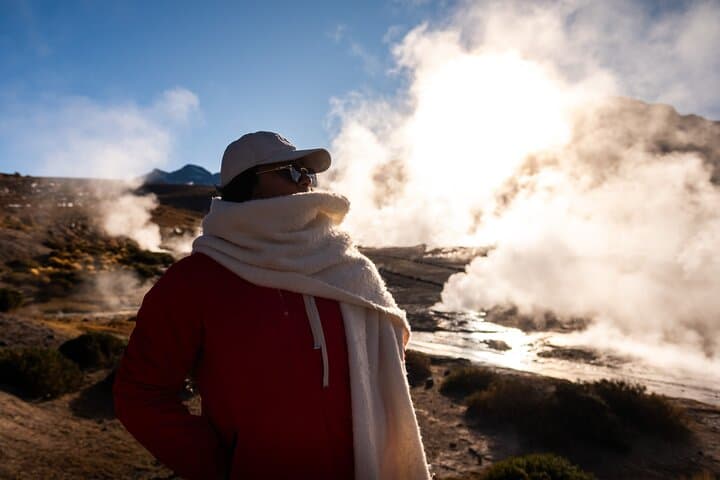
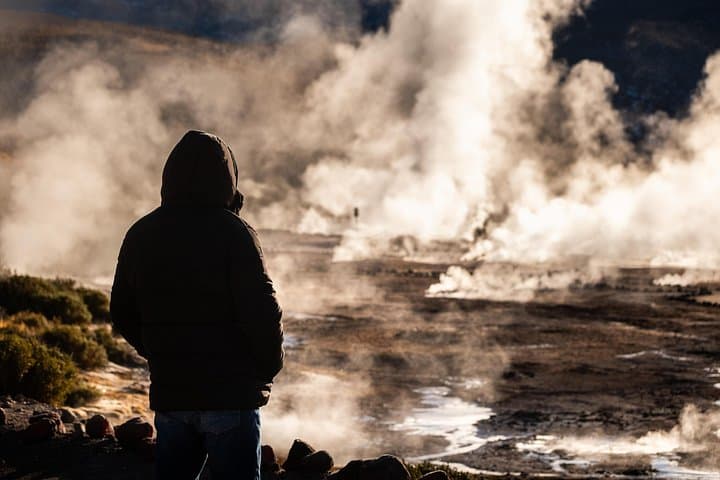
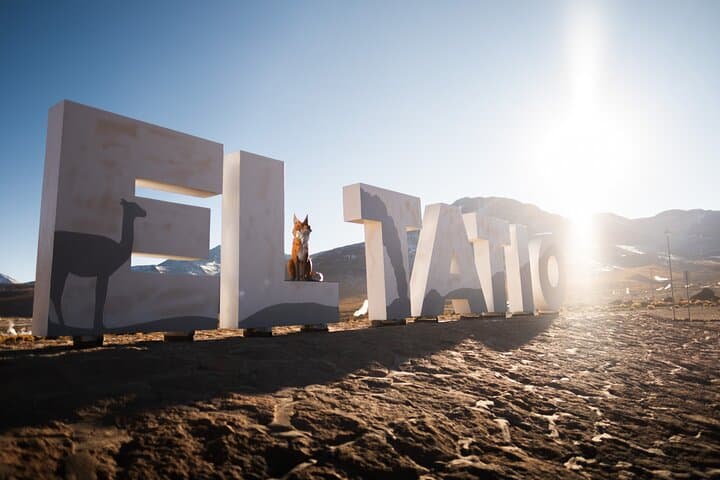
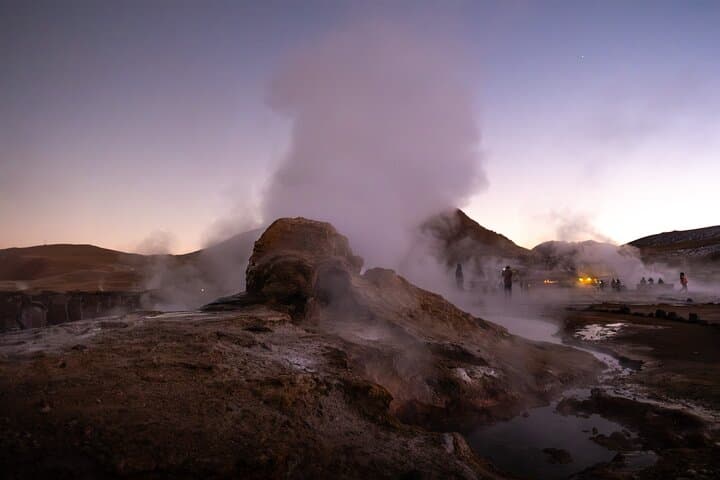
Before dawn the road out of San Pedro de Atacama narrows and the air bites. You arrive with headlights cutting through steam: columns of boiling vapor rising from white crusts, the ground hissing like a living thing as sunlight slowly pries itself over volcanic ridges.
Before dawn the road out of San Pedro de Atacama narrows and the air bites. You arrive with headlights cutting through steam: columns of boiling vapor rising from white crusts, the ground hissing like a living thing as sunlight slowly pries itself over volcanic ridges.
Geologically the field sits at about 4,200 m (13,780 ft), a high-altitude playground of silica mounds and fumaroles fed by the region’s active volcanism. The site is the third largest geothermal field on Earth and the largest in the southern hemisphere, where subterranean heat forces mineral-rich water skyward.
Culturally, the morning routine mixes science and tradition. Aymara and Atacameño communities have long inhabited these high valleys; the small adobe village of Machuca nearby preserves an old church and local food traditions like roasted llama. The route winds through the Putana Valley and past high Andean lagoons that host flamingos and grazing vicuñas.
Practically: expect a 1‑hour drive from San Pedro, an early pickup (often before 4:30 a.m.), and a guided walk among roughly 80 geysers. Morning temperatures are extreme—very cold before sunrise, bright and intense once the sun is up. Operators include a hot breakfast; tours are generally suitable for most fitness levels but not recommended for pregnant guests or those with serious heart or respiratory conditions.
Take layered clothing, sunscreen, plenty of water, and a camera with a fast shutter for steam and backlight shots. Respect fenced areas around vents—ground can be unstable—and carry small local currency if you want snacks or souvenirs in Machuca.