THE ADVENTURE COLLECTIVE® · Independent discovery and booking for outdoor travel

Watch the sun lift behind volcanic peaks as Borobudur’s terraces emerge from morning mist. This early-morning temple tour from Yogyakarta pairs cultural depth with dramatic sunrise views—best experienced with good footwear and an early start.
Watch the sun lift behind volcanic peaks as Borobudur’s terraces emerge from morning mist. This early-morning temple tour from Yogyakarta pairs cultural depth with dramatic sunrise views—best experienced with good footwear and an early start.
Dawn arrives cool and quiet across Central Java as you step onto the volcanic plaza that surrounds Borobudur. Mist creeps along the terraces, the temple's bell-shaped stupas cut into silhouette, and the sun lifts behind Merapi and Merbabu—light and shadow drawing the relief panels into sudden, crisp life.
Verified experiences and guided adventures in the surrounding area.
Operated by Menoreh Tour · Borobudur, Central Java
Dawn arrives cool and quiet across Central Java as you step onto the volcanic plaza that surrounds Borobudur. Mist creeps along the terraces, the temple's bell-shaped stupas cut into silhouette, and the sun lifts behind Merapi and Merbabu—light and shadow drawing the relief panels into sudden, crisp life.
Built in the 9th century by the Sailendra dynasty from andesite stone, Borobudur is the largest Buddhist monument in the world and a UNESCO World Heritage Site. The structure is both a geological product of Java’s volcanic past and a cultural artifact of Indonesian Buddhist practice; the monument’s concentric terraces and carved narrative panels map a devotional path from the earthly to the enlightened.
Visitors commonly pair the sunrise view with short stops at nearby Mendut and Pawon temples or a hill viewpoint such as Punthuk Setumbu. Expect long stair sections, weathered stone surfaces, and a spiritual atmosphere that rewards quiet observation and respectful behavior.
Practical guidance: plan an early pick-up from Yogyakarta (many tours leave around 04:00–06:30), bring a light layer for morning chill, and wear shoes with good grip for steep, sometimes slippery steps. Tickets for sunrise can sell out—book in advance or arrange a private transfer. Photography is exceptional at golden hour but avoid blocking pathways and keep voices low; the site functions as both a tourist destination and an active place of worship.
With straightforward logistics and unforgettable views, a Borobudur sunrise is an accessible, contemplative outdoor experience that balances cultural depth with pure visual reward.
easy.
10–12 hours.
Basic fitness for walking and climbing multiple flights of stairs; able to stand and move on uneven surfaces.
Most sunrise tours allow 1.5–3 hours on site and are part of a 10–12 hour door-to-door tour from Yogyakarta, depending on additional stops.
Yes—paths are wheelchair-accessible in main areas and the site is family-friendly, but there are many stairs to reach upper terraces so plan accordingly.
Sunrise entries are limited and popular—book ahead or secure a private tour to guarantee access.
Photography is allowed, including sunrise shots, but avoid using tripods that block walkways and be respectful during worship activities.
Constructed in the 9th century under the Sailendra dynasty, Borobudur’s layered terraces and carved reliefs reflect Mahayana Buddhist cosmology and Javanese stone craftsmanship.
Visitor management and local conservation efforts emphasize staying on designated paths, avoiding climbing on stupas, and supporting licensed guides and local vendors to reduce impact.
Menoreh Tour operates guided outdoor trips and adventures with an emphasis on safety, stewardship, and memorable experiences.
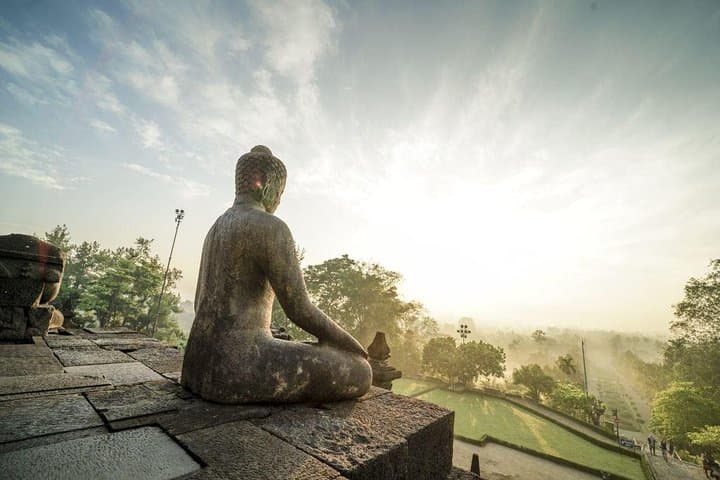
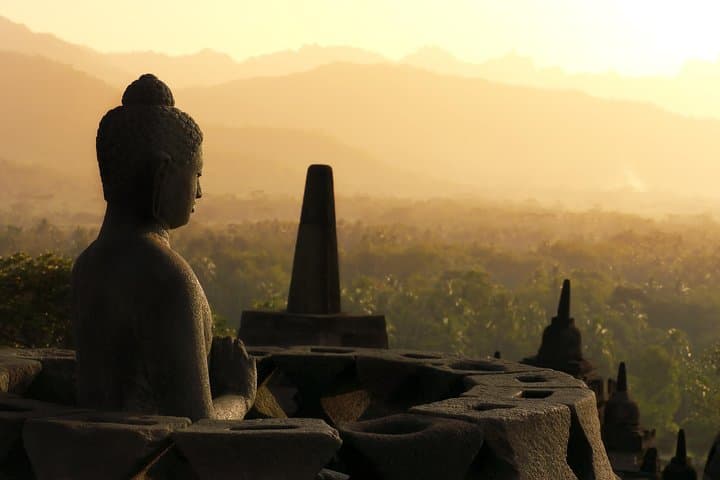
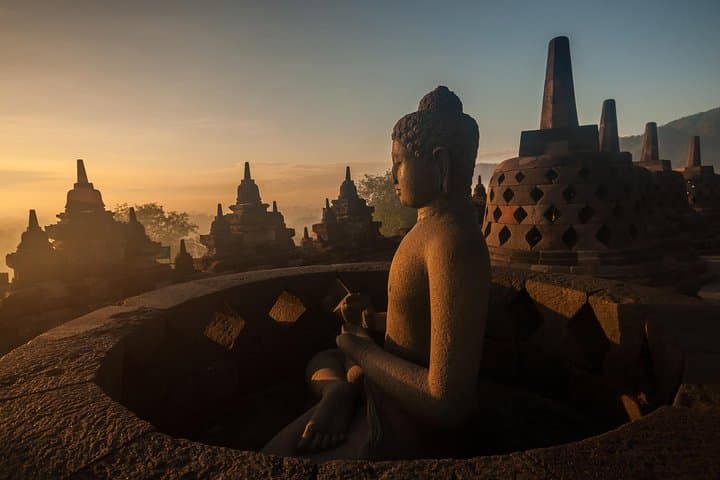
Dawn arrives cool and quiet across Central Java as you step onto the volcanic plaza that surrounds Borobudur. Mist creeps along the terraces, the temple's bell-shaped stupas cut into silhouette, and the sun lifts behind Merapi and Merbabu—light and shadow drawing the relief panels into sudden, crisp life.
Dawn arrives cool and quiet across Central Java as you step onto the volcanic plaza that surrounds Borobudur. Mist creeps along the terraces, the temple's bell-shaped stupas cut into silhouette, and the sun lifts behind Merapi and Merbabu—light and shadow drawing the relief panels into sudden, crisp life.
Built in the 9th century by the Sailendra dynasty from andesite stone, Borobudur is the largest Buddhist monument in the world and a UNESCO World Heritage Site. The structure is both a geological product of Java’s volcanic past and a cultural artifact of Indonesian Buddhist practice; the monument’s concentric terraces and carved narrative panels map a devotional path from the earthly to the enlightened.
Visitors commonly pair the sunrise view with short stops at nearby Mendut and Pawon temples or a hill viewpoint such as Punthuk Setumbu. Expect long stair sections, weathered stone surfaces, and a spiritual atmosphere that rewards quiet observation and respectful behavior.
Practical guidance: plan an early pick-up from Yogyakarta (many tours leave around 04:00–06:30), bring a light layer for morning chill, and wear shoes with good grip for steep, sometimes slippery steps. Tickets for sunrise can sell out—book in advance or arrange a private transfer. Photography is exceptional at golden hour but avoid blocking pathways and keep voices low; the site functions as both a tourist destination and an active place of worship.
With straightforward logistics and unforgettable views, a Borobudur sunrise is an accessible, contemplative outdoor experience that balances cultural depth with pure visual reward.