THE ADVENTURE COLLECTIVE® · Independent discovery and booking for outdoor travel

Watch first light spill across the towers of Angkor Wat, then explore Angkor Thom and Ta Prohm with a licensed guide. This small-group early-morning tour covers the park’s highlights while leaving practical tips for navigating crowds, tickets and temple etiquette.
Watch first light spill across the towers of Angkor Wat, then explore Angkor Thom and Ta Prohm with a licensed guide. This small-group early-morning tour covers the park’s highlights while leaving practical tips for navigating crowds, tickets and temple etiquette.
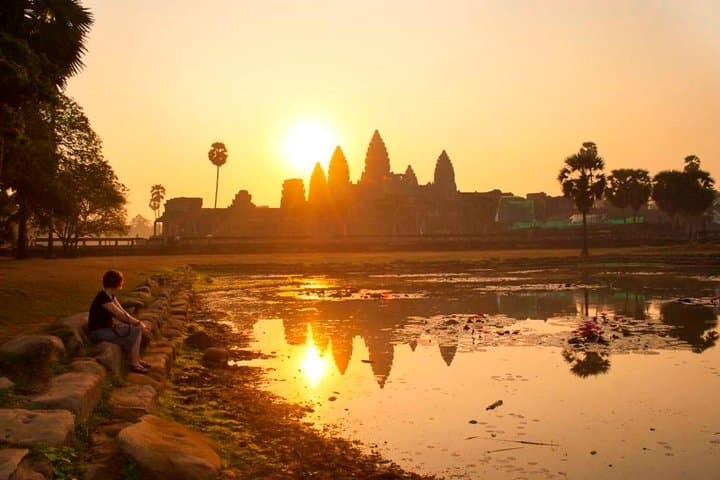
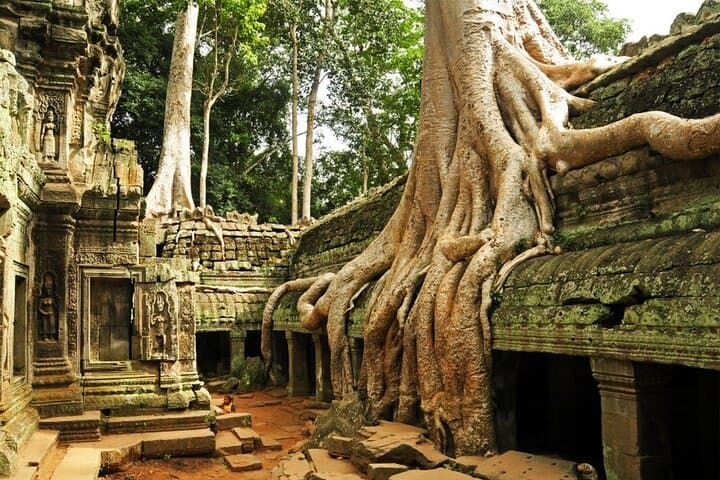
Pre-dawn in the Angkor Archaeological Park feels like stepping into a living relief: the five towers of Angkor Wat cut into a pale sky while the moat mirrors them in molten silver. You wait on damp grass as the jungle exhales steam and the silhouette of the central shrine brightens—an hour later the bas-reliefs, stone galleries and root-clenched courtyards reveal themselves in warm light.
Verified experiences and guided adventures in the surrounding area.
Operated by Bayon Tabi Tour · Siem Reap, Siem Reap Province
Pre-dawn in the Angkor Archaeological Park feels like stepping into a living relief: the five towers of Angkor Wat cut into a pale sky while the moat mirrors them in molten silver. You wait on damp grass as the jungle exhales steam and the silhouette of the central shrine brightens—an hour later the bas-reliefs, stone galleries and root-clenched courtyards reveal themselves in warm light.
The complex grew under the Khmer Empire between the 9th and 15th centuries; Angkor Wat itself dates to the 12th century under Suryavarman II and is carved from sandstone and laterite. Geology shows up in the wear—soft sandstone panels, tree-root upheaval at Ta Prohm and the compact laterite platforms at Angkor Thom’s Bayon with its carved faces. Culture is immediate: monks in saffron, devotees offering jasmine, and vendors selling sticky rice by temple steps.
On a typical small-group sunrise tour you’ll be picked up before dawn (commonly 4:30–5:30 a.m.), watch sunrise at Angkor Wat, then walk Angkor Wat, Angkor Thom and Ta Prohm, finishing with additional temple visits. Note: the Angkor Pass and any temple admissions are usually not included, and some sites have steep steps and uneven surfaces.
Practical essentials: wear modest, lightweight clothing that covers shoulders and knees; bring sun protection, refillable water and sturdy shoes with good grip; expect early wake-up, periods of standing and uneven walking. Respect local customs, stay on marked paths to protect carvings and roots, and bring cash for the ticket center and small purchases.
moderate.
8 hours.
Moderate—suitable for most walkers but requires several hours on your feet and negotiating stairs and uneven stone surfaces.
No—most operators don’t include the Angkor Pass; purchase the one-day or multi-day pass at the official ticket center in Siem Reap or confirm with your booking agent.
Pickups are typically between 4:30–5:30 a.m. to reach sunrise on time; the full tour runs roughly 7–9 hours depending on stops and pace.
Some areas have ramps and paved paths, but many temples have steep stone steps and uneven ground; accessibility is limited and assistance may be needed.
Licensed English-speaking guides usually manage the route and local insights, but guests should confirm whether the Angkor Pass is included and be ready with cash for entrance fees.
Angkor was the political and religious heart of the Khmer Empire (9th–15th centuries); Angkor Wat—built in the 12th century—was originally a Hindu temple later converted to Buddhist use.
Visitor fees fund conservation work at the site; stay on designated paths to prevent damage to roots and fragile carvings and avoid climbing on reliefs.
Bayon Tabi Tour operates guided outdoor trips and adventures with an emphasis on safety, stewardship, and memorable experiences.


Pre-dawn in the Angkor Archaeological Park feels like stepping into a living relief: the five towers of Angkor Wat cut into a pale sky while the moat mirrors them in molten silver. You wait on damp grass as the jungle exhales steam and the silhouette of the central shrine brightens—an hour later the bas-reliefs, stone galleries and root-clenched courtyards reveal themselves in warm light.
Pre-dawn in the Angkor Archaeological Park feels like stepping into a living relief: the five towers of Angkor Wat cut into a pale sky while the moat mirrors them in molten silver. You wait on damp grass as the jungle exhales steam and the silhouette of the central shrine brightens—an hour later the bas-reliefs, stone galleries and root-clenched courtyards reveal themselves in warm light.
The complex grew under the Khmer Empire between the 9th and 15th centuries; Angkor Wat itself dates to the 12th century under Suryavarman II and is carved from sandstone and laterite. Geology shows up in the wear—soft sandstone panels, tree-root upheaval at Ta Prohm and the compact laterite platforms at Angkor Thom’s Bayon with its carved faces. Culture is immediate: monks in saffron, devotees offering jasmine, and vendors selling sticky rice by temple steps.
On a typical small-group sunrise tour you’ll be picked up before dawn (commonly 4:30–5:30 a.m.), watch sunrise at Angkor Wat, then walk Angkor Wat, Angkor Thom and Ta Prohm, finishing with additional temple visits. Note: the Angkor Pass and any temple admissions are usually not included, and some sites have steep steps and uneven surfaces.
Practical essentials: wear modest, lightweight clothing that covers shoulders and knees; bring sun protection, refillable water and sturdy shoes with good grip; expect early wake-up, periods of standing and uneven walking. Respect local customs, stay on marked paths to protect carvings and roots, and bring cash for the ticket center and small purchases.