THE ADVENTURE COLLECTIVE® · Independent discovery and booking for outdoor travel

Catch dawn over Angkor Wat then sweep through Angkor Thom’s Bayon, Ta Prohm and royal terraces on a small-circuit day tour. Practical tips on timing, dress code, and what to expect at each stop help you plan a thoughtful visit.
Catch dawn over Angkor Wat then sweep through Angkor Thom’s Bayon, Ta Prohm and royal terraces on a small-circuit day tour. Practical tips on timing, dress code, and what to expect at each stop help you plan a thoughtful visit.
Before the sun clears the horizon, the moat around Angkor Wat holds the sky in a glassy hush. You arrive in predawn blue, camera warm in hand, and watch spires pierce morning light as reflections tremble on the water.
Verified experiences and guided adventures in the surrounding area.
Operated by Cambodia Golden Tours · Siem Reap, Siem Reap Province
Before the sun clears the horizon, the moat around Angkor Wat holds the sky in a glassy hush. You arrive in predawn blue, camera warm in hand, and watch spires pierce morning light as reflections tremble on the water.
This small-circuit tour threads the best of the Angkor Archaeological Park into one pragmatic day: the sunrise panorama at Angkor Wat, the processional South Gate into Angkor Thom, the face-towered Bayon, the stepped pyramid of Baphoun, the ceremonial Terraces of the Elephants and the Leper King, Ta Prohm’s tree-root ruins, and the quiet pool at Srah Srang. Angkor’s temples were carved from sandstone and laterite at the height of the Khmer Empire (9th–15th centuries); their reliefs record myth, war and court life while the barays and moats reveal sophisticated water engineering.
Expect sun, dust, uneven stone and close-up history: religious layers of Hindu origin later fused with Buddhism, and the land itself—originally seasonal forest—now frames open temple precincts.
Practical notes: departure is very early for sunrise; buy an Angkor Pass at the official ticket center before the tour (admission not included). Dress respectfully—shoulders and knees covered—and wear grippy shoes for carved steps and damp surfaces. Hydrate; bring a small towel for humidity. Guided pacing varies but allows 30–60 minutes at most major sites. If crowds pack Angkor Wat, the surrounding basins and the later stops like Banteay Kdei or Srah Srang offer quieter moments. A local guide clarifies inscriptions and points out restoration work—use one to turn stones into stories.
moderate.
8–10 hours.
Comfortable with all-day walking on uneven, often hot terrain; light to moderate stamina required.
Admission to the Angkor Archaeological Park is not included; you must purchase an Angkor Pass at the official ticket center before the tour.
Shoulders and knees must be covered for most temples; lightweight long sleeves and a sarong or travel pants work well in the heat.
Many sites have stairs, uneven stones and narrow passages; accessibility is limited—notify the operator in advance to arrange closer vehicle access where possible.
Sunrise is most iconic for reflections in the western moat; arrive early and be prepared for crowds—later morning light can highlight carvings with less congestion.
Angkor Wat was built in the early 12th century under King Suryavarman II as a state temple and later became a Buddhist pilgrimage site, reflecting centuries of religious transition.
Ongoing conservation balances tourism and preservation; visitors are asked to avoid climbing on fragile carvings and to follow paths to limit erosion.
Cambodia Golden Tours operates guided outdoor trips and adventures with an emphasis on safety, stewardship, and memorable experiences.

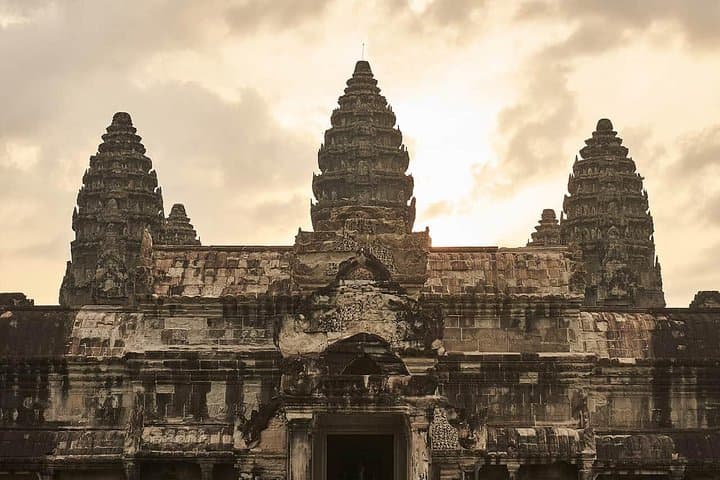
Before the sun clears the horizon, the moat around Angkor Wat holds the sky in a glassy hush. You arrive in predawn blue, camera warm in hand, and watch spires pierce morning light as reflections tremble on the water.
Before the sun clears the horizon, the moat around Angkor Wat holds the sky in a glassy hush. You arrive in predawn blue, camera warm in hand, and watch spires pierce morning light as reflections tremble on the water.
This small-circuit tour threads the best of the Angkor Archaeological Park into one pragmatic day: the sunrise panorama at Angkor Wat, the processional South Gate into Angkor Thom, the face-towered Bayon, the stepped pyramid of Baphoun, the ceremonial Terraces of the Elephants and the Leper King, Ta Prohm’s tree-root ruins, and the quiet pool at Srah Srang. Angkor’s temples were carved from sandstone and laterite at the height of the Khmer Empire (9th–15th centuries); their reliefs record myth, war and court life while the barays and moats reveal sophisticated water engineering.
Expect sun, dust, uneven stone and close-up history: religious layers of Hindu origin later fused with Buddhism, and the land itself—originally seasonal forest—now frames open temple precincts.
Practical notes: departure is very early for sunrise; buy an Angkor Pass at the official ticket center before the tour (admission not included). Dress respectfully—shoulders and knees covered—and wear grippy shoes for carved steps and damp surfaces. Hydrate; bring a small towel for humidity. Guided pacing varies but allows 30–60 minutes at most major sites. If crowds pack Angkor Wat, the surrounding basins and the later stops like Banteay Kdei or Srah Srang offer quieter moments. A local guide clarifies inscriptions and points out restoration work—use one to turn stones into stories.