THE ADVENTURE COLLECTIVE® · Independent discovery and booking for outdoor travel

Catch sunrise over Angkor Wat and spend a private day exploring Angkor Thom’s carved galleries and the tree-entangled ruins of Ta Prohm. This one-day loop balances dramatic light, quieter temple corners and practical tips for long days on hot stone.
Catch sunrise over Angkor Wat and spend a private day exploring Angkor Thom’s carved galleries and the tree-entangled ruins of Ta Prohm. This one-day loop balances dramatic light, quieter temple corners and practical tips for long days on hot stone.
Before dawn, the west moat pares the world into shadow and reflection: the central towers of Angkor Wat rise like stone sentries, their silhouettes sharpening as the first light slices across the lotus ponds.
Verified experiences and guided adventures in the surrounding area.
Operated by Private Tour Guide-Cambodia · Siem Reap, Siem Reap Province
Before dawn, the west moat pares the world into shadow and reflection: the central towers of Angkor Wat rise like stone sentries, their silhouettes sharpening as the first light slices across the lotus ponds.
This private one-day route threads the best of Angkor — Angkor Wat, Angkor Thom’s South Gate and Bayon, Baphuon and Phimeanakas, the Terrace of the Elephants and the cinematic ruins of Ta Prohm. Built by the Khmer Empire between the 9th and 13th centuries, these complexes tell a practical story of theology, statecraft and regional geology: sandstone galleries quarried and dressed for bas-relief, laterite foundations resisting seasonal moisture, and temple roofs that once reached for the same sky you’ll watch a sun rise into.
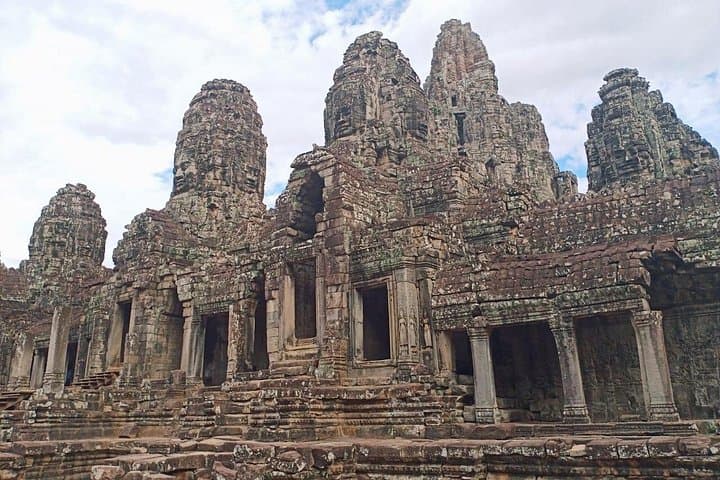
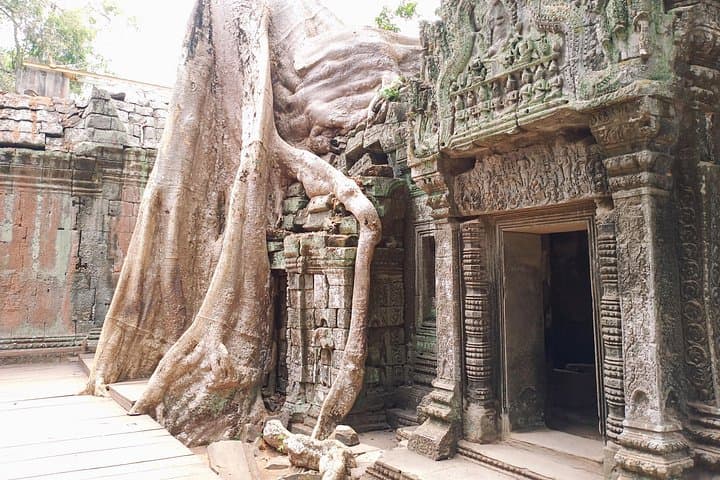
Ta Prohm’s Tetrameles roots still dare the masonry, gripping blocks as if to keep them from telling all their secrets. Bayon’s 216 smiling faces survey the plains with an almost human patience. Walking is mostly flat across causeways and shaded courtyards, though expect steep stone steps at Phimeanakas and uneven, moss-slick blocks in humid corners.
Practical rhythm: arrive before first light for the classic reflection shot, then follow a clockwise loop through Angkor Thom and Ta Prohm when crowds thin. Bring a valid Angkor Park pass (buy at the official ticket center), dress modestly (shoulders and knees covered), carry 2–3 liters of water, insect repellent and sun protection, and pick comfortable shoes with good grip. Respect temple barriers and local worship — these places are active cultural sites and conservation efforts depend on visitor care.
moderate.
7–8 hours.
Suitable for travelers who can walk several kilometers over uneven ground and climb short steep stone steps.
Yes — all visitors must present a valid Angkor Archaeological Park pass (single-day, multi-day) purchased at the official ticket center; bring ID for issuance.
Sunrise draws the largest crowds; arriving 30–45 minutes early improves photography options and lets you move to quieter parts of the temple afterward.
It's a long day with several hours of walking on uneven surfaces and climbing short steep steps; it's rated moderate but suitable for most reasonably fit travelers.
Some areas and the main causeways are level and accessible, but many inner galleries, steps and narrow passages at temples like Ta Prohm and Bayon are not fully wheelchair-friendly.
Angkor was the heart of the Khmer Empire (9th–15th centuries); Angkor Wat was built in the early 12th century under King Suryavarman II and later became a Buddhist site as religious practices shifted in the region.
High visitor numbers stress ancient stone and fragile conservation sites — stay on marked paths, avoid touching bas-reliefs and pay park fees, which fund preservation work.
Private Tour Guide-Cambodia operates guided outdoor trips and adventures with an emphasis on safety, stewardship, and memorable experiences.
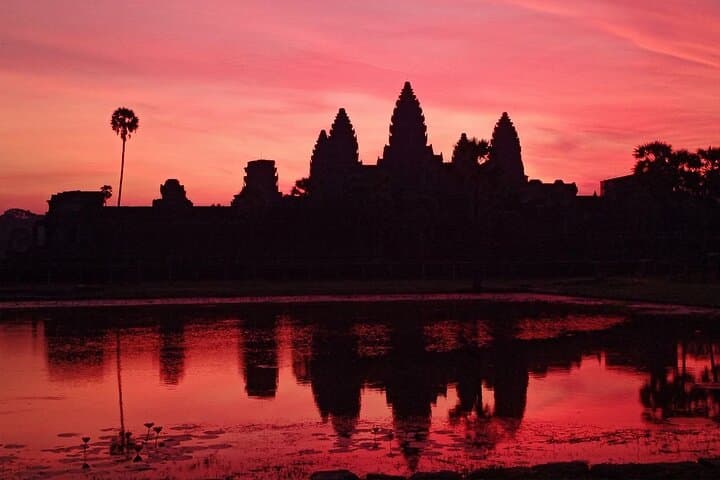
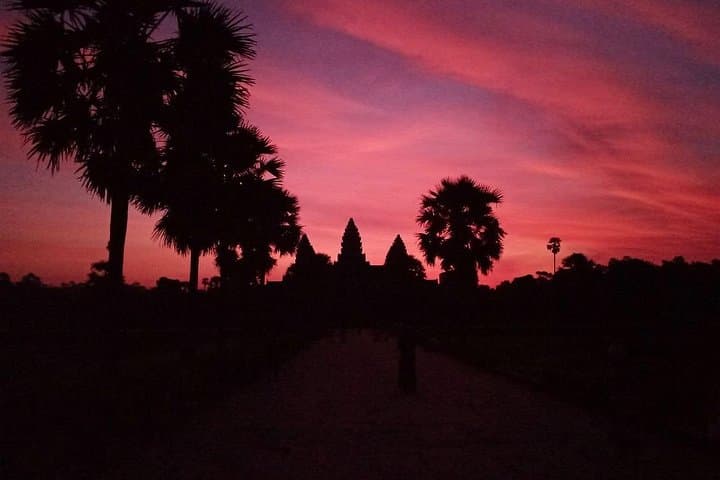
Before dawn, the west moat pares the world into shadow and reflection: the central towers of Angkor Wat rise like stone sentries, their silhouettes sharpening as the first light slices across the lotus ponds.
Before dawn, the west moat pares the world into shadow and reflection: the central towers of Angkor Wat rise like stone sentries, their silhouettes sharpening as the first light slices across the lotus ponds.
This private one-day route threads the best of Angkor — Angkor Wat, Angkor Thom’s South Gate and Bayon, Baphuon and Phimeanakas, the Terrace of the Elephants and the cinematic ruins of Ta Prohm. Built by the Khmer Empire between the 9th and 13th centuries, these complexes tell a practical story of theology, statecraft and regional geology: sandstone galleries quarried and dressed for bas-relief, laterite foundations resisting seasonal moisture, and temple roofs that once reached for the same sky you’ll watch a sun rise into.
Ta Prohm’s Tetrameles roots still dare the masonry, gripping blocks as if to keep them from telling all their secrets. Bayon’s 216 smiling faces survey the plains with an almost human patience. Walking is mostly flat across causeways and shaded courtyards, though expect steep stone steps at Phimeanakas and uneven, moss-slick blocks in humid corners.
Practical rhythm: arrive before first light for the classic reflection shot, then follow a clockwise loop through Angkor Thom and Ta Prohm when crowds thin. Bring a valid Angkor Park pass (buy at the official ticket center), dress modestly (shoulders and knees covered), carry 2–3 liters of water, insect repellent and sun protection, and pick comfortable shoes with good grip. Respect temple barriers and local worship — these places are active cultural sites and conservation efforts depend on visitor care.