THE ADVENTURE COLLECTIVE® · Independent discovery and booking for outdoor travel

Catch the first light on Angkor Wat with a private early-morning guide. This half-day experience pairs a iconic sunrise viewpoint with a guided walk through the temple’s carved galleries—ideal for photographers and first-time visitors.
Catch the first light on Angkor Wat with a private early-morning guide. This half-day experience pairs a iconic sunrise viewpoint with a guided walk through the temple’s carved galleries—ideal for photographers and first-time visitors.
The sky is still a bruise when your driver pulls up outside a quiet Siem Reap hotel at 4:30 a.m. You move through humid air toward the lotus pond as the silhouette of Angkor Wat slices into the light—sharpening towers and carved galleries appearing as the day insists itself into being.
Verified experiences and guided adventures in the surrounding area.
Operated by Private Tour Guide-Phnom Penh · Siem Reap, Siem Reap Province
The sky is still a bruise when your driver pulls up outside a quiet Siem Reap hotel at 4:30 a.m. You move through humid air toward the lotus pond as the silhouette of Angkor Wat slices into the light—sharpening towers and carved galleries appearing as the day insists itself into being.
Angkor Wat was raised in the early 12th century by King Suryavarman II as a state temple and mausoleum; its sandstone galleries and bas-reliefs record Hindu and later Buddhist stories. The monument sits on the flat Khmer plain where laterite foundations and sandstone blocks were hauled from quarries along the Kulen massif, creating a low, broad landscape that cradles wide reflective pools and rice fields.
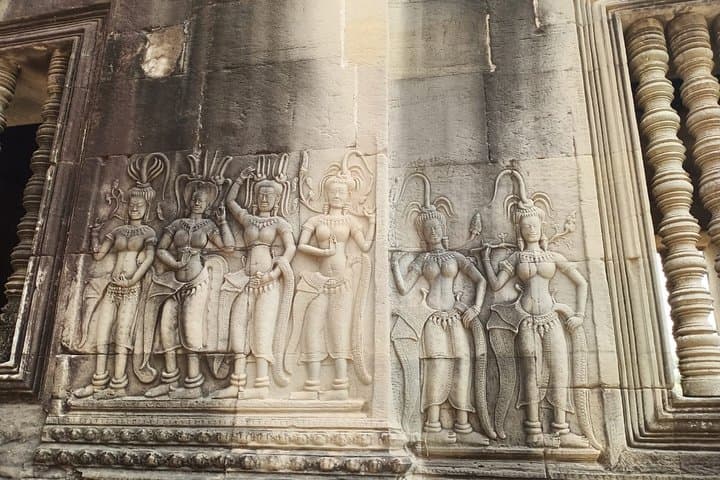
A local guide will animate the carvings, point out the long parade of apsaras and the cosmic churning depicted in the bas-reliefs, and steer you to quieter corners where roots thread through stone. Expect shifting light: reflections in the western moat, sun-struck lintels, and cool shadowed corridors where the air feels almost tactile.
Practical edge: the tour runs about four hours with hotel pickup and drop-off; the Angkor pass is not included and must be bought at the ticket center. Dress modestly (shoulders and knees covered) and wear comfortable, non-slip shoes for uneven stone. Bring water, mosquito repellent, and a small headlamp for early paths. If photography is the aim, arrive at the classic lotus-pond viewpoint early, then move deeper into the galleries for fewer crowds. Respect barriers and guide instructions—these ruins are fragile and the best preservation is careful visiting.
easy.
3–4 hours.
Suitable for most fitness levels; requires standing and walking on uneven stone surfaces for up to two hours.
Yes—an Angkor Pass (one-day or multi-day) is required for temple entry and is not included with this tour; buy it at the official ticket center or the day before.
Pickup is typically around 4:30 a.m. to reach Angkor Wat before sunrise; confirm exact pickup with your operator the night before.
The tour is family-friendly and listed as wheelchair accessible, but access to inner galleries may include steps and uneven terrain—check with the operator about specific mobility needs.
Yes; private guides can steer you away from the busiest viewpoints into quieter corridors and nearby temples for a more intimate experience.
Angkor Wat was constructed in the early 12th century under King Suryavarman II and served as a Hindu state temple before becoming an important Buddhist site.
Heavy visitation stresses sandstone carvings and foundations; follow paths, avoid touching bas-reliefs, and support certified guides to minimize impact.
Private Tour Guide-Phnom Penh operates guided outdoor trips and adventures with an emphasis on safety, stewardship, and memorable experiences.



The sky is still a bruise when your driver pulls up outside a quiet Siem Reap hotel at 4:30 a.m. You move through humid air toward the lotus pond as the silhouette of Angkor Wat slices into the light—sharpening towers and carved galleries appearing as the day insists itself into being.
The sky is still a bruise when your driver pulls up outside a quiet Siem Reap hotel at 4:30 a.m. You move through humid air toward the lotus pond as the silhouette of Angkor Wat slices into the light—sharpening towers and carved galleries appearing as the day insists itself into being.
Angkor Wat was raised in the early 12th century by King Suryavarman II as a state temple and mausoleum; its sandstone galleries and bas-reliefs record Hindu and later Buddhist stories. The monument sits on the flat Khmer plain where laterite foundations and sandstone blocks were hauled from quarries along the Kulen massif, creating a low, broad landscape that cradles wide reflective pools and rice fields.
A local guide will animate the carvings, point out the long parade of apsaras and the cosmic churning depicted in the bas-reliefs, and steer you to quieter corners where roots thread through stone. Expect shifting light: reflections in the western moat, sun-struck lintels, and cool shadowed corridors where the air feels almost tactile.
Practical edge: the tour runs about four hours with hotel pickup and drop-off; the Angkor pass is not included and must be bought at the ticket center. Dress modestly (shoulders and knees covered) and wear comfortable, non-slip shoes for uneven stone. Bring water, mosquito repellent, and a small headlamp for early paths. If photography is the aim, arrive at the classic lotus-pond viewpoint early, then move deeper into the galleries for fewer crowds. Respect barriers and guide instructions—these ruins are fragile and the best preservation is careful visiting.