THE ADVENTURE COLLECTIVE® · Independent discovery and booking for outdoor travel

Watch dawn unfold over Angkor Wat with a guided, small-group tour that combines sunrise views, in-depth history, and easy walking through Bayon and Ta Prohm. Expect early pickup, modest dress requirements, and about eight hours of cultural exploration.
Watch dawn unfold over Angkor Wat with a guided, small-group tour that combines sunrise views, in-depth history, and easy walking through Bayon and Ta Prohm. Expect early pickup, modest dress requirements, and about eight hours of cultural exploration.
Before dawn the causeway is a silhouette, and the central towers of Angkor Wat stand like a dark crown against the first pale light. You slip from an air-conditioned minivan into the cool, misted air and move with a small group toward the temple’s eastern edge where reflection pools catch the sky. The guide—steady, local, precise—leads you through cloistered corridors, past the longest bas-relief in the world, and up toward terraces that open panoramas of stone and jungle.
Verified experiences and guided adventures in the surrounding area.
Operated by Journey Cambodia · Siem Reap, Siem Reap Province
Before dawn the causeway is a silhouette, and the central towers of Angkor Wat stand like a dark crown against the first pale light. You slip from an air-conditioned minivan into the cool, misted air and move with a small group toward the temple’s eastern edge where reflection pools catch the sky. The guide—steady, local, precise—leads you through cloistered corridors, past the longest bas-relief in the world, and up toward terraces that open panoramas of stone and jungle.
Built in the early 12th century by King Suryavarman II, Angkor Wat anchors a landscape carved from sandstone and reclaimed by vegetation. The complex’s geology—Cambodia’s red-bed sandstones overlaid on ancient alluvial plains—gives the temples their warm hues and the mosses their slow green. Bayon’s many-faced towers and Ta Prohm’s root-choked galleries tell different chapters of Khmer religion, politics, and artistic skill, while nearby rice paddies and baray reservoirs speak to sophisticated hydraulic engineering.
Practically: arrive before dawn for sunrise, dress to cover shoulders and knees, and expect uneven steps and hot sun once light arrives. The tour runs about eight hours and uses an air-conditioned minivan with hotel pickup; bottled water and a cool towel are typically provided. Wear comfortable, closed-toe shoes for rough stone and bring a refillable bottle, sunscreen, and insect repellent. If you want quieter photos, linger after the main crowd moves on—small alleys and upper terraces reward patience. This is cultural exploration with a steady pace: part archaeology lesson, part walking tour, and entirely an encounter with one of Southeast Asia’s most powerful historical landscapes.
easy.
8 hours.
Suitable for most fitness levels; requires several hours of walking on uneven stone and short stair climbs.
No; Angkor Park entry tickets are purchased separately at the park entrance and can usually be bought with card before sunrise.
Yes; most departures include convenient hotel pickup and drop-off in Siem Reap by air-conditioned minivan.
Children are allowed but the supplier requires participants to be at least 8 years old due to early start times and walking involved.
Temples require shoulders and knees to be covered; light, breathable fabrics are recommended and scarves that simply drape may not meet requirements for inner sanctums.
Angkor Wat was constructed in the early 12th century under King Suryavarman II and served as both a state temple and mausoleum reflecting Hindu cosmology before later Buddhist use.
Visitor numbers and weathering threaten carved stone; follow paths, avoid touching bas-reliefs, and support local conservation fees and guides who fund preservation efforts.
Journey Cambodia operates guided outdoor trips and adventures with an emphasis on safety, stewardship, and memorable experiences.
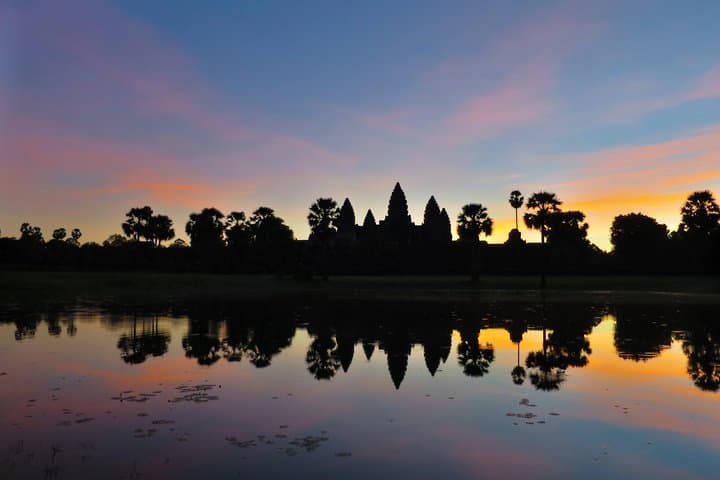
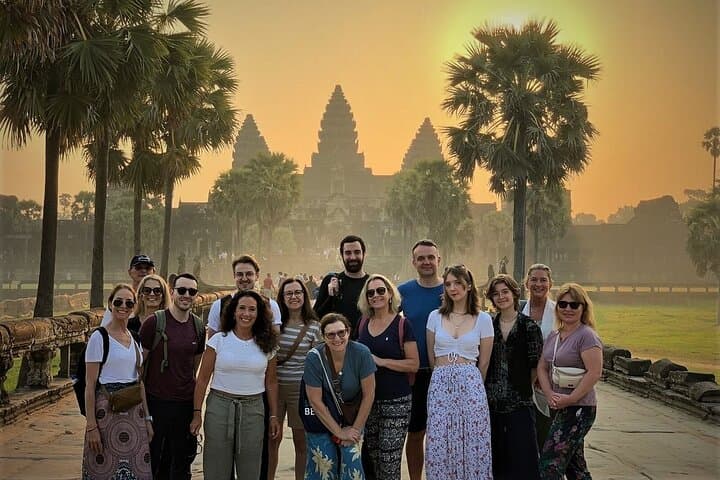


Before dawn the causeway is a silhouette, and the central towers of Angkor Wat stand like a dark crown against the first pale light. You slip from an air-conditioned minivan into the cool, misted air and move with a small group toward the temple’s eastern edge where reflection pools catch the sky. The guide—steady, local, precise—leads you through cloistered corridors, past the longest bas-relief in the world, and up toward terraces that open panoramas of stone and jungle.
Before dawn the causeway is a silhouette, and the central towers of Angkor Wat stand like a dark crown against the first pale light. You slip from an air-conditioned minivan into the cool, misted air and move with a small group toward the temple’s eastern edge where reflection pools catch the sky. The guide—steady, local, precise—leads you through cloistered corridors, past the longest bas-relief in the world, and up toward terraces that open panoramas of stone and jungle.
Built in the early 12th century by King Suryavarman II, Angkor Wat anchors a landscape carved from sandstone and reclaimed by vegetation. The complex’s geology—Cambodia’s red-bed sandstones overlaid on ancient alluvial plains—gives the temples their warm hues and the mosses their slow green. Bayon’s many-faced towers and Ta Prohm’s root-choked galleries tell different chapters of Khmer religion, politics, and artistic skill, while nearby rice paddies and baray reservoirs speak to sophisticated hydraulic engineering.
Practically: arrive before dawn for sunrise, dress to cover shoulders and knees, and expect uneven steps and hot sun once light arrives. The tour runs about eight hours and uses an air-conditioned minivan with hotel pickup; bottled water and a cool towel are typically provided. Wear comfortable, closed-toe shoes for rough stone and bring a refillable bottle, sunscreen, and insect repellent. If you want quieter photos, linger after the main crowd moves on—small alleys and upper terraces reward patience. This is cultural exploration with a steady pace: part archaeology lesson, part walking tour, and entirely an encounter with one of Southeast Asia’s most powerful historical landscapes.