THE ADVENTURE COLLECTIVE® · Independent discovery and booking for outdoor travel

Catch sunrise over Angkor Wat, then spend a full day exploring Angkor Thom, the Bayon, Baphuon and Ta Prohm with an English-speaking guide. This private tour times key viewpoints and covers the highlights in about 6–8 hours.
Catch sunrise over Angkor Wat, then spend a full day exploring Angkor Thom, the Bayon, Baphuon and Ta Prohm with an English-speaking guide. This private tour times key viewpoints and covers the highlights in about 6–8 hours.
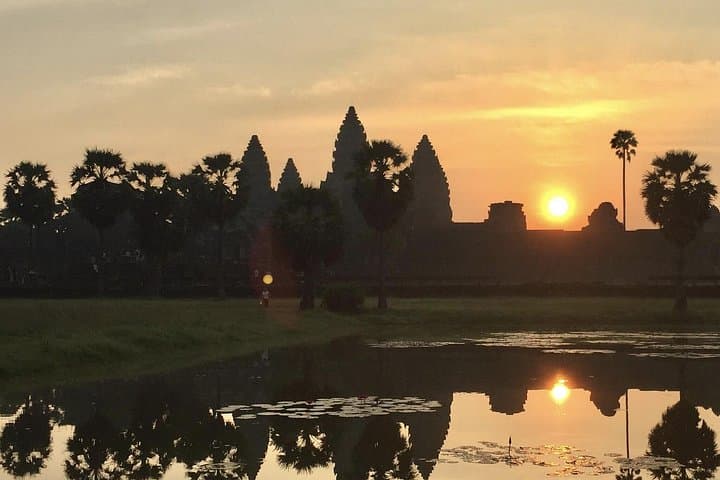
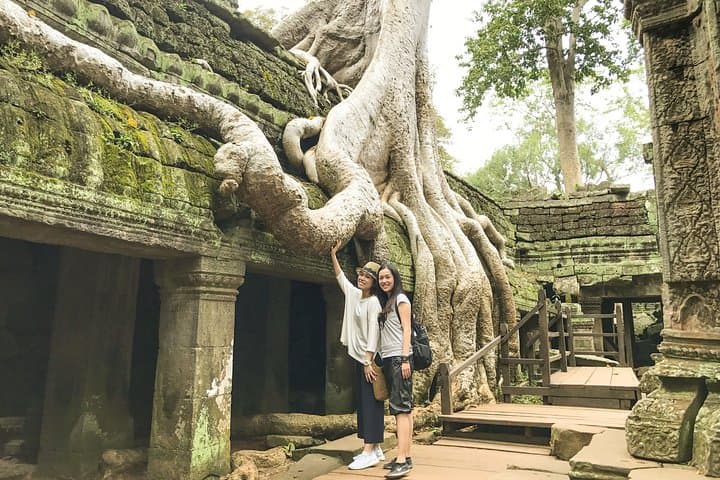
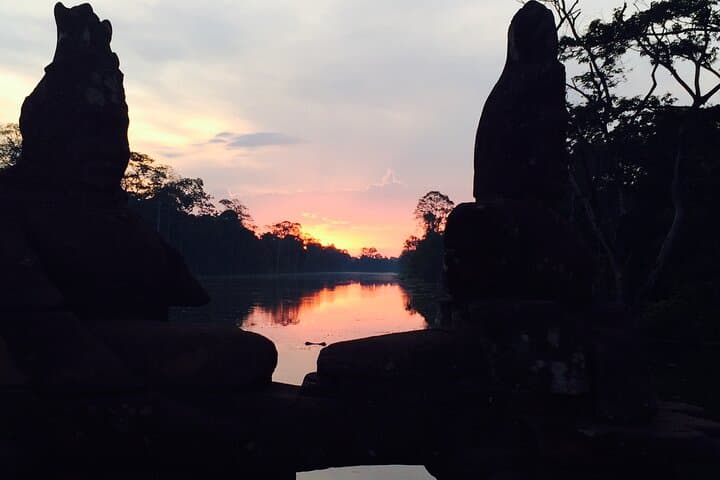
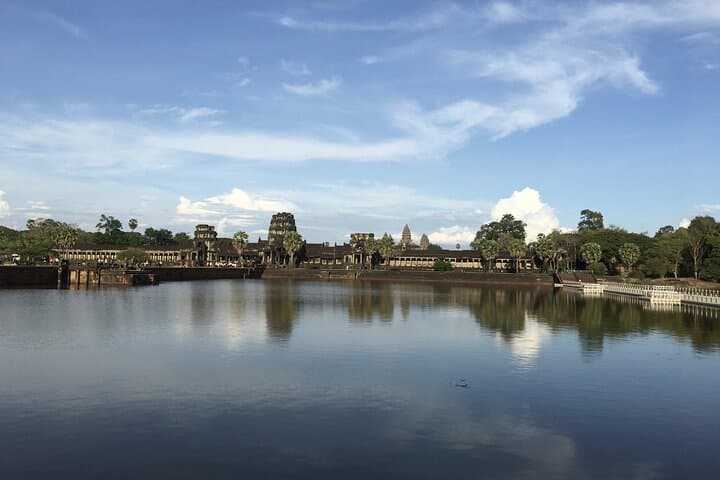
Before dawn the reflection pools hold still water like a waiting stage; you stand with other early risers as the sky lightens over Angkor Wat and the temple’s silhouette sharpens against the first color. The tour begins around 5:00 AM to catch that sunrise moment, then moves through Angkor Thom’s avenues and the carved faces of the Bayon, past the stepped terraces of Baphuon and along the root-strangled corridors of Ta Prohm.
Verified experiences and guided adventures in the surrounding area.
Operated by Day Trip Cambodia · Siem Reap, Siem Reap Province
Before dawn the reflection pools hold still water like a waiting stage; you stand with other early risers as the sky lightens over Angkor Wat and the temple’s silhouette sharpens against the first color. The tour begins around 5:00 AM to catch that sunrise moment, then moves through Angkor Thom’s avenues and the carved faces of the Bayon, past the stepped terraces of Baphuon and along the root-strangled corridors of Ta Prohm.
Angkor’s stone monuments were erected between the 9th and 13th centuries as capitals and temple complexes for the Khmer Empire. Angkor Wat, covering roughly 162.6 hectares, began as a Hindu temple to Vishnu before becoming principally Buddhist by the late 12th century. The Bayon, built by Jayavarman VII, is known for its towers with serene faces; Ta Prohm is famed for trees that push through lintels and courtyards, a visible tension between jungle and structure.
Practical guidance: expect a 6–8 hour private tour with an English-speaking guide, short walks across uneven sandstone, and some stairs. An Angkor Archaeological Park pass is required (purchase at the ticket center; prices vary — typically charged per day). Dress respectfully: shoulders and knees should be covered for temple entry. Bring water, sun protection, and a compact rain layer during monsoon season. Cameras are welcome, but be mindful of restricted areas and local worship practices.
The route balances iconic photo stops with quieter corners; move deliberately, let the stones feel like pages of history underfoot, and plan for heat by mid-morning.
easy.
6–8 hours.
Basic fitness for walking on uneven stone, short stair climbs, and several hours on your feet
You can buy the Angkor Archaeological Park pass at the official ticket center near Siem Reap on the day of your visit — many travelers purchase it before the tour starts to avoid delays.
Temples require modest dress: shoulders and knees should be covered. Avoid tank tops and short shorts; sarongs or lightweight wrap garments work well.
No — the itinerary is suitable for most fitness levels but involves walking on uneven stone and climbing stairs at several temples.
Tripod and drone rules vary by site and time; drones are generally restricted and tripods may be limited in crowded or sacred areas — check with your guide for current rules.
Angkor was the seat of the Khmer Empire from the 9th to 15th centuries; many temples shifted from Hindu to Buddhist use as the region’s religious landscape changed in the 12th century.
Visitor numbers and tropical vegetation both stress the ruins; follow marked paths, avoid climbing on fragile carvings, and support local conservation fees collected through park passes.
Day Trip Cambodia operates guided outdoor trips and adventures with an emphasis on safety, stewardship, and memorable experiences.
Before dawn the reflection pools hold still water like a waiting stage; you stand with other early risers as the sky lightens over Angkor Wat and the temple’s silhouette sharpens against the first color. The tour begins around 5:00 AM to catch that sunrise moment, then moves through Angkor Thom’s avenues and the carved faces of the Bayon, past the stepped terraces of Baphuon and along the root-strangled corridors of Ta Prohm.
Before dawn the reflection pools hold still water like a waiting stage; you stand with other early risers as the sky lightens over Angkor Wat and the temple’s silhouette sharpens against the first color. The tour begins around 5:00 AM to catch that sunrise moment, then moves through Angkor Thom’s avenues and the carved faces of the Bayon, past the stepped terraces of Baphuon and along the root-strangled corridors of Ta Prohm.
Angkor’s stone monuments were erected between the 9th and 13th centuries as capitals and temple complexes for the Khmer Empire. Angkor Wat, covering roughly 162.6 hectares, began as a Hindu temple to Vishnu before becoming principally Buddhist by the late 12th century. The Bayon, built by Jayavarman VII, is known for its towers with serene faces; Ta Prohm is famed for trees that push through lintels and courtyards, a visible tension between jungle and structure.
Practical guidance: expect a 6–8 hour private tour with an English-speaking guide, short walks across uneven sandstone, and some stairs. An Angkor Archaeological Park pass is required (purchase at the ticket center; prices vary — typically charged per day). Dress respectfully: shoulders and knees should be covered for temple entry. Bring water, sun protection, and a compact rain layer during monsoon season. Cameras are welcome, but be mindful of restricted areas and local worship practices.
The route balances iconic photo stops with quieter corners; move deliberately, let the stones feel like pages of history underfoot, and plan for heat by mid-morning.