THE ADVENTURE COLLECTIVE® · Independent discovery and booking for outdoor travel

Catch dawn over Angkor Wat and spend two full days tracing the major temples with an English-speaking local guide. This small-group tour balances iconic sunrises with detailed on-site history and quieter afternoon temples.
Catch dawn over Angkor Wat and spend two full days tracing the major temples with an English-speaking local guide. This small-group tour balances iconic sunrises with detailed on-site history and quieter afternoon temples.
You rise before the town exhales, a small van threading dark rice roads toward the silhouette of Angkor Wat. By torchlight you slip through the eastern entrance, the temple’s stone faces collecting the slow wash of dawn. The reflection pools sharpen, birds quarrel over the flooded margins, and the guide’s quiet narration begins to place each carving and corridor in context.
Verified experiences and guided adventures in the surrounding area.
Operated by Angkor Focus Travel · Siem Reap, Siem Reap Province
You rise before the town exhales, a small van threading dark rice roads toward the silhouette of Angkor Wat. By torchlight you slip through the eastern entrance, the temple’s stone faces collecting the slow wash of dawn. The reflection pools sharpen, birds quarrel over the flooded margins, and the guide’s quiet narration begins to place each carving and corridor in context.
These two days trace the arc of the Khmer Empire — ninth- to thirteenth-century capitals, temple-mountains, and intimate sandstone shrines. Geology here is simple but decisive: sandstone blocks quarried and transported across ancient barays rest on a soft laterite foundation that channels water and roots into the ruins. Culturally, the complex moves from Hindu cosmology to later Buddhist patronage; your guide will point out shifts in iconography, inscriptions, and ritual spaces.
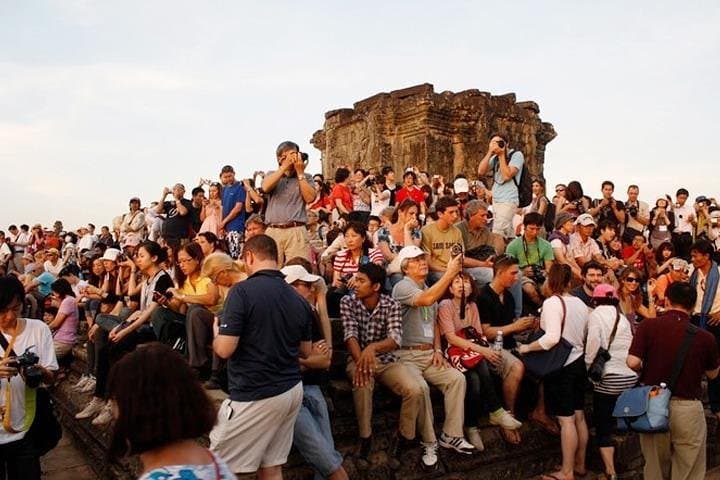
Practical notes: expect long days on uneven stone and packed earth — shoes with good grip matter. Angkor Park tickets are sold separately at the ticket center; buy in advance in high season. Weather dictates rhythm: early starts avoid heat and crowds, afternoons are prime for quieter corners such as Preah Khan or Banteay Kdei. Bring a refillable water bottle, sun protection, and modest clothing that covers shoulders and knees for temple entry.
The tour pairs cinematic sunrises with detailed on-site interpretation, making two full days the efficient way to see Angkor’s highlights while supporting local guides and small-group pacing.
easy.
2 days (approx. 8 hours/day).
Suitable for most fitness levels; you should be able to walk on uneven stone for several hours and climb short steep temple steps.
No — park tickets are sold separately at the Angkor ticket center; multi-day passes (1-, 3-, 7-day) are available and required for entry.
Pickups typically start 4:00–4:30am depending on the time of year; confirm exact pickup time with your operator the day before.
Breakfast outside Angkor is usually provided as a takeaway on day one; other meals are not included so bring cash for lunch or stop at local restaurants.
Yes — the itinerary is rated easy physically, but participants should be able to walk on uneven ground and manage temple steps; notify the operator of mobility issues for pickup arrangements.
Angkor was the center of the Khmer Empire from the 9th to 15th centuries; temples reflect shifts from Hindu state cults to Buddhist patronage.
High visitor numbers stress fragile sandstone and root-covered ruins — stick to marked paths, avoid touching bas-reliefs, and support licensed local guides to foster sustainable tourism.
Angkor Focus Travel operates guided outdoor trips and adventures with an emphasis on safety, stewardship, and memorable experiences.

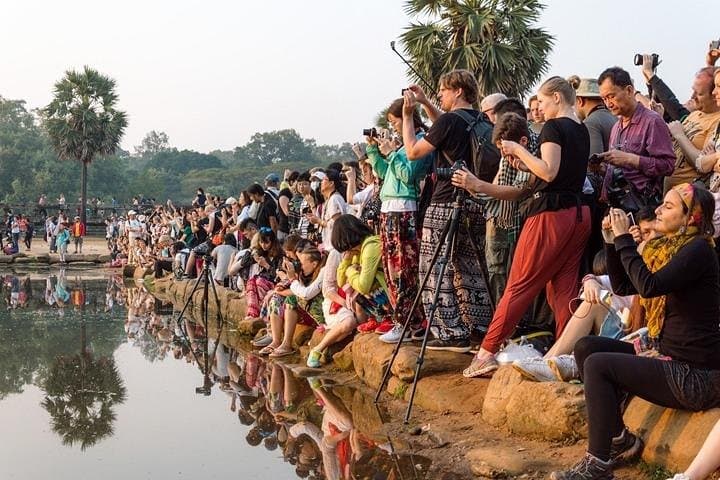

You rise before the town exhales, a small van threading dark rice roads toward the silhouette of Angkor Wat. By torchlight you slip through the eastern entrance, the temple’s stone faces collecting the slow wash of dawn. The reflection pools sharpen, birds quarrel over the flooded margins, and the guide’s quiet narration begins to place each carving and corridor in context.
You rise before the town exhales, a small van threading dark rice roads toward the silhouette of Angkor Wat. By torchlight you slip through the eastern entrance, the temple’s stone faces collecting the slow wash of dawn. The reflection pools sharpen, birds quarrel over the flooded margins, and the guide’s quiet narration begins to place each carving and corridor in context.
These two days trace the arc of the Khmer Empire — ninth- to thirteenth-century capitals, temple-mountains, and intimate sandstone shrines. Geology here is simple but decisive: sandstone blocks quarried and transported across ancient barays rest on a soft laterite foundation that channels water and roots into the ruins. Culturally, the complex moves from Hindu cosmology to later Buddhist patronage; your guide will point out shifts in iconography, inscriptions, and ritual spaces.
Practical notes: expect long days on uneven stone and packed earth — shoes with good grip matter. Angkor Park tickets are sold separately at the ticket center; buy in advance in high season. Weather dictates rhythm: early starts avoid heat and crowds, afternoons are prime for quieter corners such as Preah Khan or Banteay Kdei. Bring a refillable water bottle, sun protection, and modest clothing that covers shoulders and knees for temple entry.
The tour pairs cinematic sunrises with detailed on-site interpretation, making two full days the efficient way to see Angkor’s highlights while supporting local guides and small-group pacing.