THE ADVENTURE COLLECTIVE® · Independent discovery and booking for outdoor travel

Witness sunrise at Angkor Wat and spend two days tracing the heart of the Khmer Empire—from forest-engulfed Ta Prohm to the intricate pink reliefs of Banteay Srei. This private tour pairs early starts with flexible pacing and local insight to make the temples both accessible and unforgettable.
Witness sunrise at Angkor Wat and spend two days tracing the heart of the Khmer Empire—from forest-engulfed Ta Prohm to the intricate pink reliefs of Banteay Srei. This private tour pairs early starts with flexible pacing and local insight to make the temples both accessible and unforgettable.
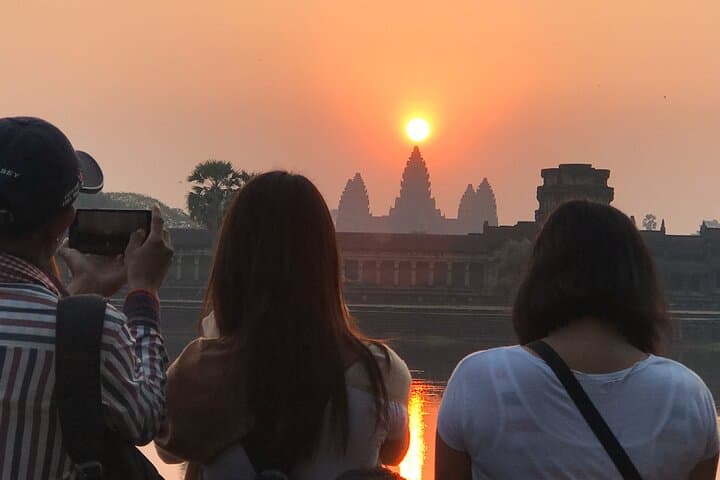
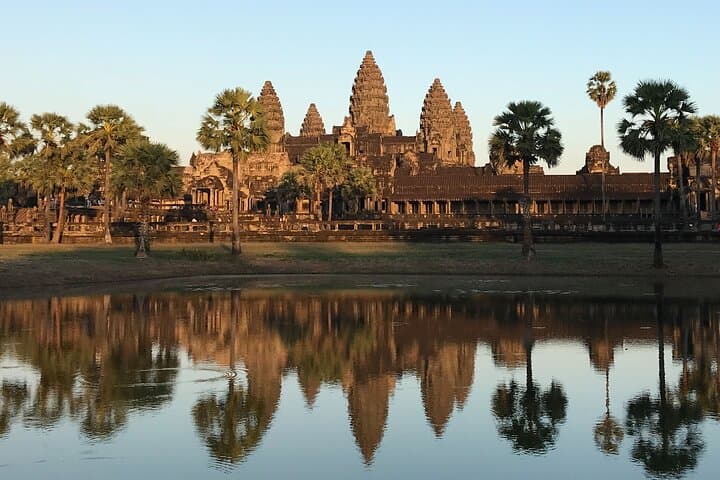
You rise before dawn and the air is thick with the promise of light. Reflections ripple in the temple pools as the first sun edges over Angkor Wat’s gabled towers—an hour when stone seems to hold its breath and the site belongs only to you and your guide.
Verified experiences and guided adventures in the surrounding area.
Operated by Bayon Guide · Siem Reap, Siem Reap Province
You rise before dawn and the air is thick with the promise of light. Reflections ripple in the temple pools as the first sun edges over Angkor Wat’s gabled towers—an hour when stone seems to hold its breath and the site belongs only to you and your guide.
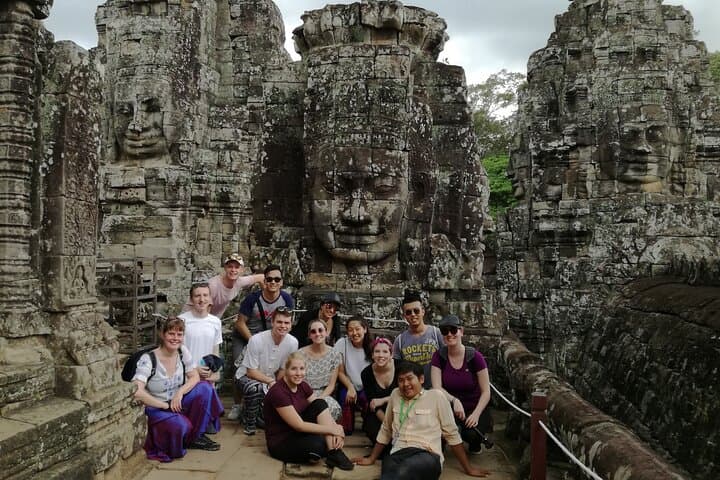
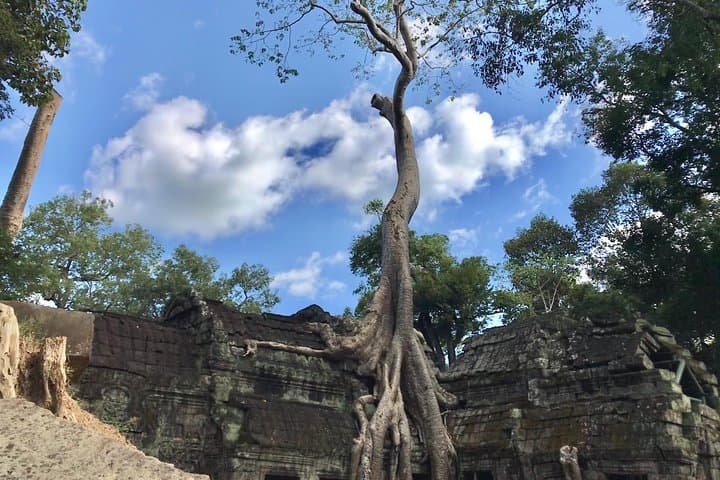
Over two days you move through epochs: the royal causeway of Angkor Thom, the many-faced calm of the Bayon, and Ta Prohm where strangler figs and silk-cotton roots have learned to read the old stones, loosening mortar like a patient historian. The Grand Circuit continues with Preah Khan’s forested corridors, the island profile of East Mebon, and the delicate pink carvings of Banteay Srei—each temple a different page in the Khmer Empire’s long record.
The sandstone here records both political power and hydraulic engineering: reservoirs like the East Baray once regulated monsoon water and supported a capital made for ceremony and rice. Local guides bring stories—royal foundation myths, Khmer cosmology, and the 19th–20th century rediscovery that reshaped Siem Reap into a travel hub.
Practicalities matter: an Angkor pass is required for temple entry, dress modestly (shoulders and knees covered), and expect long periods on foot over uneven stone and packed earth. Start early to dodge heat and crowds, bring sun protection and insect repellent, and leave time for quiet observation between photo stops. Private transport and an English-speaking guide make logistics simple—allowing the ruins and tree roots to lead the pace while you absorb the scale and detail of Angkor.
easy.
2 days (approx 8–10 hours per day).
Suitable for travelers who can walk several hours on uneven ground and climb short stone steps
Yes—an Angkor Pass is required for entry to the main temple sites; guides typically advise where to buy it and how long each pass type is valid.
Pickups are commonly around 4:30 AM to reach Angkor Wat before sunrise and secure a good viewing spot.
The itinerary is physically gentle and suitable for all ages, but expect walking on uneven surfaces and some short climbs; request a slower pace if needed.
Yes—the temples remain open year-round, though heavy rain can affect comfort and photography; waterproof gear and flexible timing help.
Angkor was the heart of the Khmer Empire from the 9th to 15th centuries; its temples functioned as state temples, hydraulic centers, and cosmological maps.
Visitor fees support site conservation; stay on marked paths, avoid touching carvings, and follow guide instructions to minimize wear on fragile stone.
Bayon Guide operates guided outdoor trips and adventures with an emphasis on safety, stewardship, and memorable experiences.
You rise before dawn and the air is thick with the promise of light. Reflections ripple in the temple pools as the first sun edges over Angkor Wat’s gabled towers—an hour when stone seems to hold its breath and the site belongs only to you and your guide.
You rise before dawn and the air is thick with the promise of light. Reflections ripple in the temple pools as the first sun edges over Angkor Wat’s gabled towers—an hour when stone seems to hold its breath and the site belongs only to you and your guide.
Over two days you move through epochs: the royal causeway of Angkor Thom, the many-faced calm of the Bayon, and Ta Prohm where strangler figs and silk-cotton roots have learned to read the old stones, loosening mortar like a patient historian. The Grand Circuit continues with Preah Khan’s forested corridors, the island profile of East Mebon, and the delicate pink carvings of Banteay Srei—each temple a different page in the Khmer Empire’s long record.
The sandstone here records both political power and hydraulic engineering: reservoirs like the East Baray once regulated monsoon water and supported a capital made for ceremony and rice. Local guides bring stories—royal foundation myths, Khmer cosmology, and the 19th–20th century rediscovery that reshaped Siem Reap into a travel hub.
Practicalities matter: an Angkor pass is required for temple entry, dress modestly (shoulders and knees covered), and expect long periods on foot over uneven stone and packed earth. Start early to dodge heat and crowds, bring sun protection and insect repellent, and leave time for quiet observation between photo stops. Private transport and an English-speaking guide make logistics simple—allowing the ruins and tree roots to lead the pace while you absorb the scale and detail of Angkor.