THE ADVENTURE COLLECTIVE® · Independent discovery and booking for outdoor travel

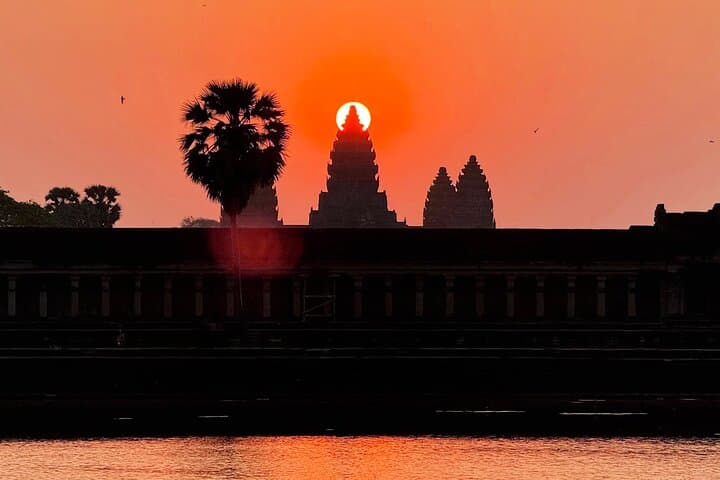
Catch the sun breaking over Angkor Wat on a private full‑day tour that combines iconic temples with quieter monuments. This guided itinerary pairs early‑morning light with practical logistics—ideal for visitors who want culture, comfort, and time to explore.
Catch the sun breaking over Angkor Wat on a private full‑day tour that combines iconic temples with quieter monuments. This guided itinerary pairs early‑morning light with practical logistics—ideal for visitors who want culture, comfort, and time to explore.
The sky lightens like a held breath as you step from the air‑conditioned car into the cool moat light of Angkor Wat. Dawn threads itself through lotus ponds and the temple’s central towers, and the first stone faces resolve out of shadow. For many visitors, that moment—watching sunlight climb the galleries—is what defines the Angkor Sunrise Adventure.
Verified experiences and guided adventures in the surrounding area.
Operated by Khmer Temples & Nature · Siem Reap, Siem Reap Province
The sky lightens like a held breath as you step from the air‑conditioned car into the cool moat light of Angkor Wat. Dawn threads itself through lotus ponds and the temple’s central towers, and the first stone faces resolve out of shadow. For many visitors, that moment—watching sunlight climb the galleries—is what defines the Angkor Sunrise Adventure.
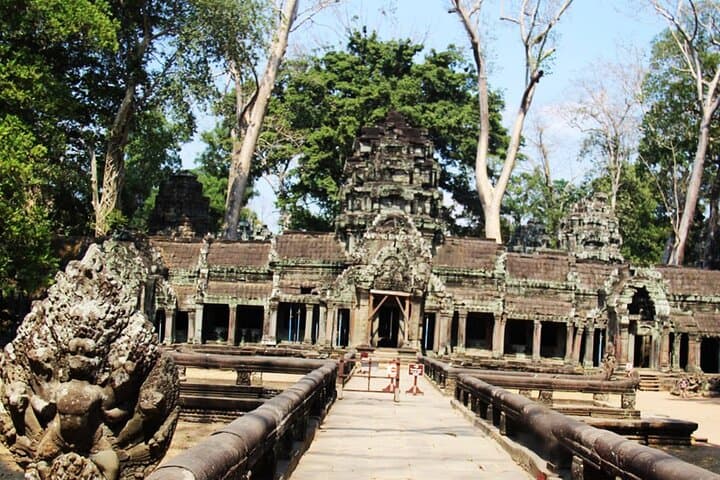
Built by Khmer kings between the 9th and 13th centuries, the temples at Angkor mark the heart of an empire that reshaped Southeast Asia. Angkor Wat began as a Hindu state temple dedicated to Vishnu and later became a major Buddhist site; nearby Bayon bears the smiling faces of Jayavarman VII, while Ta Prohm wears the wounds of the jungle, roots pushing and embracing the stone.
The local culture is present in small things: morning markets where rice sellers call, monks walking in ochre, and villagers whose livelihoods still orbit the park. Geologically, the sandstone and laterite of these structures have weathered centuries of monsoon, and conservation efforts now manage foot traffic and water tables to protect bas-reliefs and foundations.
Practical guidance: arrive before sunrise to secure a good viewpoint and allow time for purchasing an Angkor pass (not included). Expect uneven stone and short stair sections—closed shoes and a light rain shell in wet months are sensible. Bring cash for permits and tips, refillable water, and wear respectful clothing (shoulders and knees covered) inside sanctuaries. Your private driver and English-speaking guide make logistics simple—use early hours to avoid midday heat and crowds, and leave room in your day for quieter sites like Preah Khan after the main complexes.
moderate.
8–9 hours.
Moderate fitness: you'll be on your feet for long periods and on uneven surfaces; able-bodied travelers should manage comfortably.
No; the Angkor Archaeological Park pass must be purchased separately at the ticket center—daily and multi‑day options are available.
Private tours typically meet before sunrise (around 4:30–5:30am depending on the season) to reach viewpoint areas in time for dawn.
Many main areas have improved access, and the operator lists wheelchair accessibility, but specific temple access varies—confirm needs at booking.
Yes: the tour includes a private air‑conditioned vehicle and an English‑speaking driver; guide availability may be included depending on booking—confirm on purchase.
Angkor was the center of the Khmer Empire from roughly the 9th to 15th centuries; temples like Angkor Wat and Bayon reflect shifts between Hindu and Buddhist state religion and royal power.
High visitor numbers strain sandstone reliefs and foundations; stick to marked paths, avoid touching carvings, and support local guides and conservation fees where prompted.
Khmer Temples & Nature operates guided outdoor trips and adventures with an emphasis on safety, stewardship, and memorable experiences.

The sky lightens like a held breath as you step from the air‑conditioned car into the cool moat light of Angkor Wat. Dawn threads itself through lotus ponds and the temple’s central towers, and the first stone faces resolve out of shadow. For many visitors, that moment—watching sunlight climb the galleries—is what defines the Angkor Sunrise Adventure.
The sky lightens like a held breath as you step from the air‑conditioned car into the cool moat light of Angkor Wat. Dawn threads itself through lotus ponds and the temple’s central towers, and the first stone faces resolve out of shadow. For many visitors, that moment—watching sunlight climb the galleries—is what defines the Angkor Sunrise Adventure.
Built by Khmer kings between the 9th and 13th centuries, the temples at Angkor mark the heart of an empire that reshaped Southeast Asia. Angkor Wat began as a Hindu state temple dedicated to Vishnu and later became a major Buddhist site; nearby Bayon bears the smiling faces of Jayavarman VII, while Ta Prohm wears the wounds of the jungle, roots pushing and embracing the stone.
The local culture is present in small things: morning markets where rice sellers call, monks walking in ochre, and villagers whose livelihoods still orbit the park. Geologically, the sandstone and laterite of these structures have weathered centuries of monsoon, and conservation efforts now manage foot traffic and water tables to protect bas-reliefs and foundations.
Practical guidance: arrive before sunrise to secure a good viewpoint and allow time for purchasing an Angkor pass (not included). Expect uneven stone and short stair sections—closed shoes and a light rain shell in wet months are sensible. Bring cash for permits and tips, refillable water, and wear respectful clothing (shoulders and knees covered) inside sanctuaries. Your private driver and English-speaking guide make logistics simple—use early hours to avoid midday heat and crowds, and leave room in your day for quieter sites like Preah Khan after the main complexes.