THE ADVENTURE COLLECTIVE® · Independent discovery and booking for outdoor travel

Watch the first light wash over Ahu Tongariki’s line of moai on a guided pre-dawn tour. Learn island history, geology, and restoration stories while practical tips help you prepare for wind, uneven ground, and the required park admission.
Watch the first light wash over Ahu Tongariki’s line of moai on a guided pre-dawn tour. Learn island history, geology, and restoration stories while practical tips help you prepare for wind, uneven ground, and the required park admission.
Before the sun clears the horizon, the moai silhouette along Ahu Tongariki stands like a slow chorus facing the sea, their stone faces catching the first thin light.
Verified experiences and guided adventures in the surrounding area.
Operated by Hotumatur RapaNui · Hanga Roa, Valparaíso Region
Before the sun clears the horizon, the moai silhouette along Ahu Tongariki stands like a slow chorus facing the sea, their stone faces catching the first thin light.
A guided sunrise tour here is more than a photo stop; it’s a timed conversation with landscape and history. You arrive in the predawn hush, mug of coffee in hand, while guide narration stitches local myths to the island’s volcanic geology — the tuff and basalt quarried at Rano Raraku that formed these statues and the ash soils that shaped settlement patterns. Tongariki is the island’s largest restored ahu, reset after the 1960 tsunami, and its 15 moai offer a clear line into Rapa Nui ancestral practice and 19th-century upheavals.
Culturally the moment matters: dawn was an important time for rituals, and standing there you’ll hear about clan territories, the restoration work that began in the 20th century, and how the park fee helps maintain the site. Practically, the site sits on the island’s eastern coast about 20–25 km from Hanga Roa — a 30–40 minute drive depending on road conditions.
Expect uneven ground, salty wind, and dramatic shifts in light; the tour lasts roughly 3–4 hours and includes coffee and local interpretation. Bring layered clothing for chilly, wind-driven mornings, a headlamp for early walking, and your national park admission (foreign adults typically pay the park fee). Stay on marked paths, be mindful of fragile structures, and plan for a relaxed return to Hanga Roa as the island wakes.
easy.
3–4 hours.
Light physical ability — able to stand and walk short uneven trails and climb small steps
Yes — the tour requires Rapa Nui National Park admission; foreign adult fees apply and should be purchased before the tour to avoid delays.
Tours depart before dawn to catch sunrise and typically run about 3–4 hours including round-trip transport and interpretation.
Yes — the route involves short, easy walks and standing; adjust pace and tell the operator about mobility needs when booking.
Many guided sunrise tours include pickup from Hanga Roa hotels or a nearby meeting point — confirm pickup details at booking.
Ahu Tongariki was heavily damaged by the 1960 tsunami and later restored; its line of 15 moai is one of the island’s most complete restored platforms.
Visitors must follow marked paths and respect ahu to protect fragile archaeology; park fees support conservation and local cultural programs.
Hotumatur RapaNui operates guided outdoor trips and adventures with an emphasis on safety, stewardship, and memorable experiences.
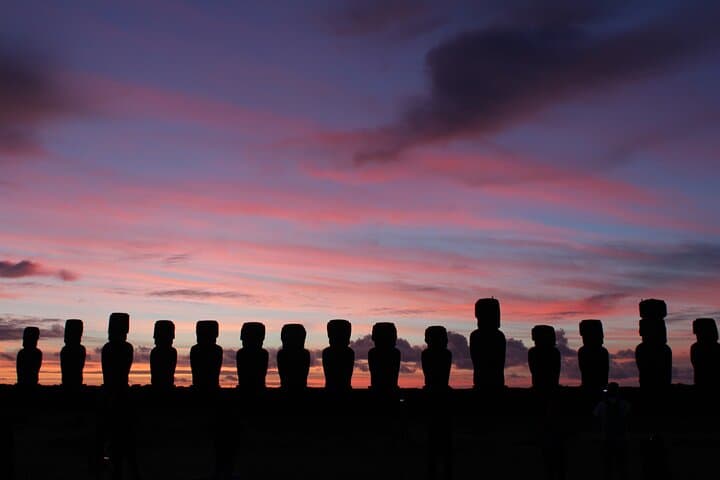
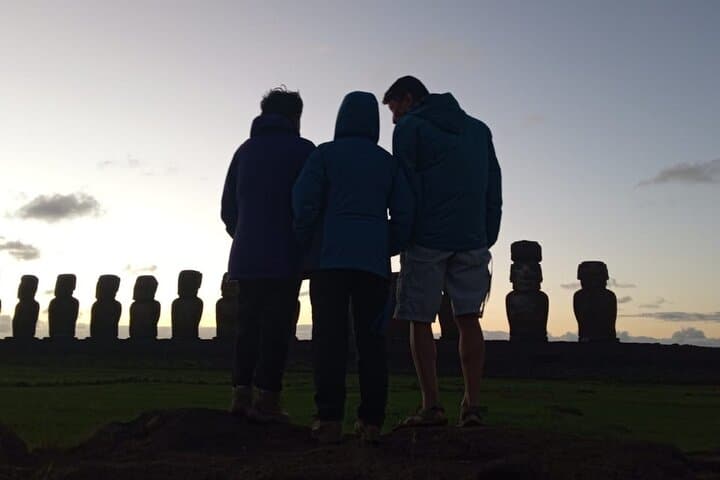
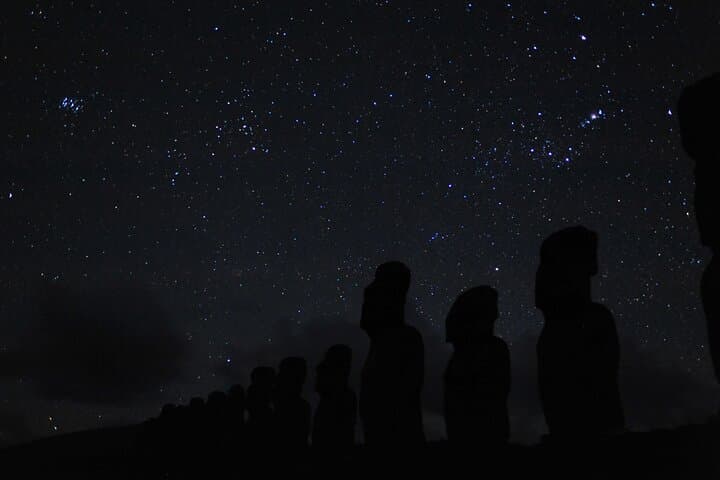
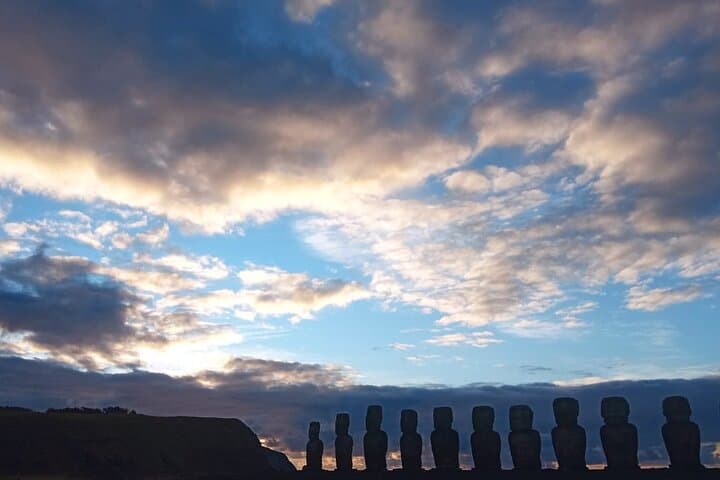
Before the sun clears the horizon, the moai silhouette along Ahu Tongariki stands like a slow chorus facing the sea, their stone faces catching the first thin light.
Before the sun clears the horizon, the moai silhouette along Ahu Tongariki stands like a slow chorus facing the sea, their stone faces catching the first thin light.
A guided sunrise tour here is more than a photo stop; it’s a timed conversation with landscape and history. You arrive in the predawn hush, mug of coffee in hand, while guide narration stitches local myths to the island’s volcanic geology — the tuff and basalt quarried at Rano Raraku that formed these statues and the ash soils that shaped settlement patterns. Tongariki is the island’s largest restored ahu, reset after the 1960 tsunami, and its 15 moai offer a clear line into Rapa Nui ancestral practice and 19th-century upheavals.
Culturally the moment matters: dawn was an important time for rituals, and standing there you’ll hear about clan territories, the restoration work that began in the 20th century, and how the park fee helps maintain the site. Practically, the site sits on the island’s eastern coast about 20–25 km from Hanga Roa — a 30–40 minute drive depending on road conditions.
Expect uneven ground, salty wind, and dramatic shifts in light; the tour lasts roughly 3–4 hours and includes coffee and local interpretation. Bring layered clothing for chilly, wind-driven mornings, a headlamp for early walking, and your national park admission (foreign adults typically pay the park fee). Stay on marked paths, be mindful of fragile structures, and plan for a relaxed return to Hanga Roa as the island wakes.