THE ADVENTURE COLLECTIVE® · Independent discovery and booking for outdoor travel

Watch the first light strike 15 restored moai at Ahu Tongariki on this guided Easter Island sunrise tour. Expect a short, immersive experience combining panoramic coastal views with practical cultural and historical interpretation.
Watch the first light strike 15 restored moai at Ahu Tongariki on this guided Easter Island sunrise tour. Expect a short, immersive experience combining panoramic coastal views with practical cultural and historical interpretation.
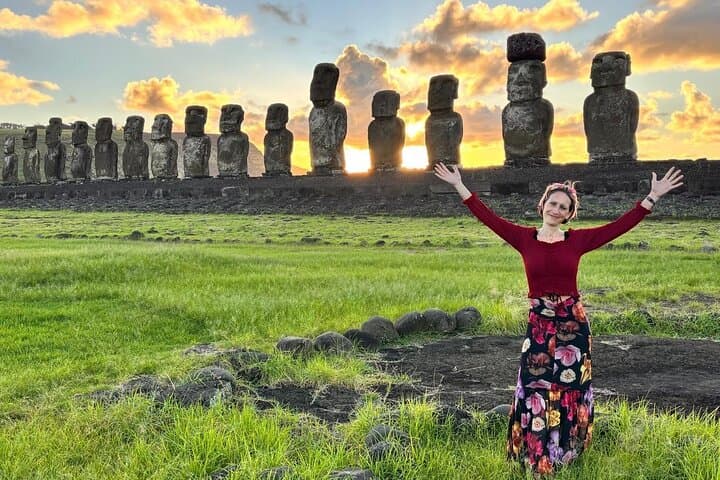
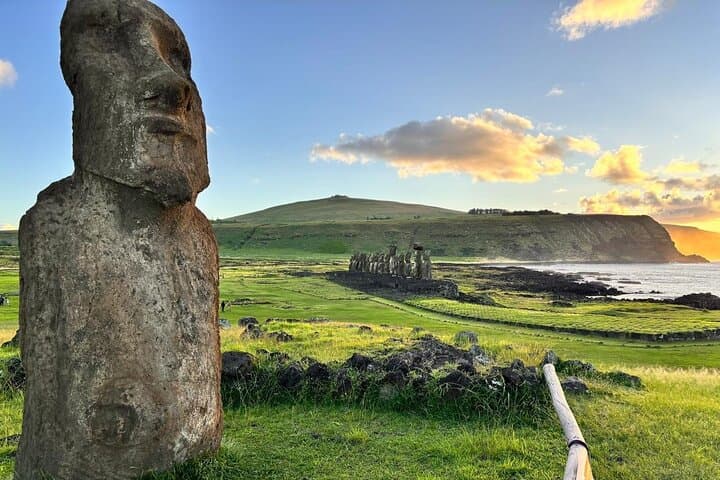
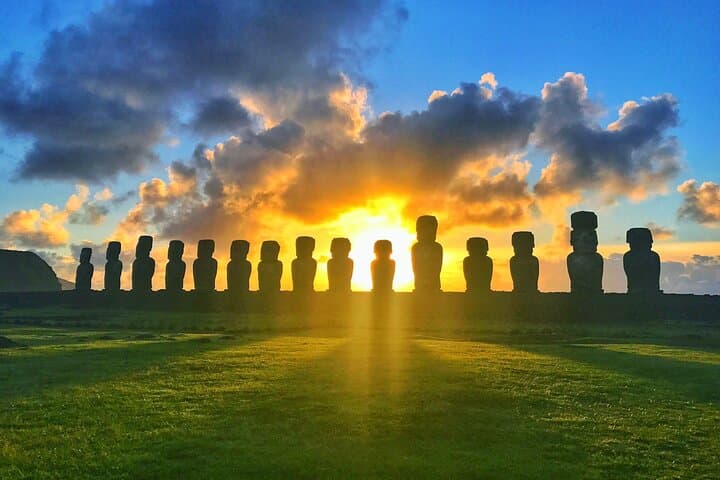
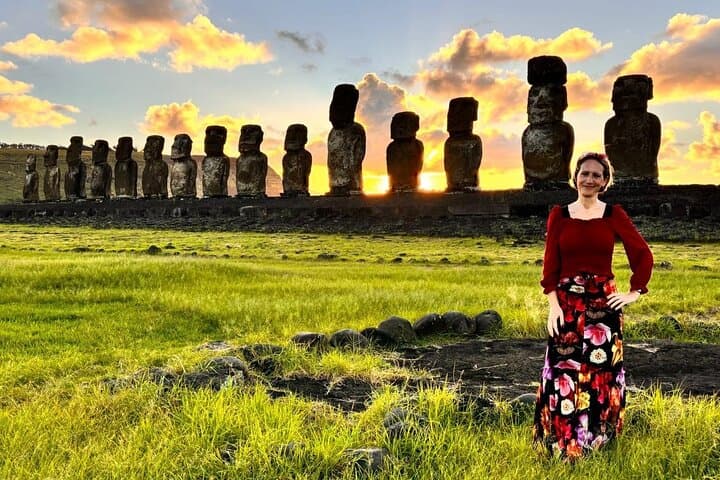
Before dawn the ocean reads like a single, dark page and the silhouettes of 15 moai stand like punctuation between sea and sky. On the long, eastern shore of Rapa Nui, Ahu Tongariki is stripped down to geometry at first light: stone faces, stacked ahu platform, and the horizon that pulls a thin ribbon of color through the silhouette.
Verified experiences and guided adventures in the surrounding area.
Operated by Kapua Tours & Experience · Hanga Roa, Valparaíso Region
Before dawn the ocean reads like a single, dark page and the silhouettes of 15 moai stand like punctuation between sea and sky. On the long, eastern shore of Rapa Nui, Ahu Tongariki is stripped down to geometry at first light: stone faces, stacked ahu platform, and the horizon that pulls a thin ribbon of color through the silhouette.
The site dates to the island’s prehistoric ceremonial era; the moai were carved from volcanic tuff in Rano Raraku and re-erected along this coast after restoration in the 1990s. Geologically, the place is volcanic bedrock and loose ash soils shaped by wind and surf—shoreline erosion continues to frame views and the moai’s setting.
Guides share oral histories and explain the engineering behind moving and restoring the statues, and local customs remain relevant: Tongariki is both archaeological site and cultural landscape. Expect the guide to discuss sacredness, the 1960 Chilean restoration work, and the island’s Polynesian heritage.
Practical guidance: arrive before civil sunrise (often 30–45 minutes early) to set up cameras and acclimate to cool, salty air. Footing on the coastal plain is uneven—closed-toe shoes with traction are recommended. Respect rope barriers and photo etiquette; flash and climbing are prohibited. Weather can shift quickly: wind and spray make layered clothing useful, and mornings are colder than Hanga Roa by several degrees. Transportation is usually private or small-group van service from Hanga Roa; confirm pickup time and luggage constraints when you book. With a local guide, this 2–3 hour experience blends a powerful visual moment with concise cultural context—ideal for photographers and anyone seeking a concentrated encounter with Rapa Nui’s past.
easy.
2–3 hours.
Suitable for most fitness levels; requires short walks on uneven ground and standing in cold conditions for photography.
Arrive 30–45 minutes before civil sunrise to claim a stable viewing spot and prepare camera gear.
Yes—paths are short and level, but participants should be able to stand and walk short distances on uneven ground; infants must sit on laps per tour rules.
Entrance to the park is managed through the island’s ticketing system; most tours include admission—confirm with your operator ahead of time.
Operators may cancel for heavy rain or dangerous surf; standard cancellation policies usually allow refunds if canceled at least 24 hours before departure.
Ahu Tongariki was a major ceremonial platform; many of its moai were toppled during internal conflict and later restored by international teams in the 1990s.
Visitor impact is monitored—stay on designated paths, avoid touching the moai, and follow guide instructions to help preserve fragile stone and coastal habitats.
Kapua Tours & Experience operates guided outdoor trips and adventures with an emphasis on safety, stewardship, and memorable experiences.
Before dawn the ocean reads like a single, dark page and the silhouettes of 15 moai stand like punctuation between sea and sky. On the long, eastern shore of Rapa Nui, Ahu Tongariki is stripped down to geometry at first light: stone faces, stacked ahu platform, and the horizon that pulls a thin ribbon of color through the silhouette.
Before dawn the ocean reads like a single, dark page and the silhouettes of 15 moai stand like punctuation between sea and sky. On the long, eastern shore of Rapa Nui, Ahu Tongariki is stripped down to geometry at first light: stone faces, stacked ahu platform, and the horizon that pulls a thin ribbon of color through the silhouette.
The site dates to the island’s prehistoric ceremonial era; the moai were carved from volcanic tuff in Rano Raraku and re-erected along this coast after restoration in the 1990s. Geologically, the place is volcanic bedrock and loose ash soils shaped by wind and surf—shoreline erosion continues to frame views and the moai’s setting.
Guides share oral histories and explain the engineering behind moving and restoring the statues, and local customs remain relevant: Tongariki is both archaeological site and cultural landscape. Expect the guide to discuss sacredness, the 1960 Chilean restoration work, and the island’s Polynesian heritage.
Practical guidance: arrive before civil sunrise (often 30–45 minutes early) to set up cameras and acclimate to cool, salty air. Footing on the coastal plain is uneven—closed-toe shoes with traction are recommended. Respect rope barriers and photo etiquette; flash and climbing are prohibited. Weather can shift quickly: wind and spray make layered clothing useful, and mornings are colder than Hanga Roa by several degrees. Transportation is usually private or small-group van service from Hanga Roa; confirm pickup time and luggage constraints when you book. With a local guide, this 2–3 hour experience blends a powerful visual moment with concise cultural context—ideal for photographers and anyone seeking a concentrated encounter with Rapa Nui’s past.