THE ADVENTURE COLLECTIVE® · Independent discovery and booking for outdoor travel

Ride a camel beneath the shadow of the Great Pyramids at sunrise or sunset on a private 4‑hour excursion. Expect quiet desert approaches, close-up views for photography, and a guided experience tailored to comfort and safety.
Ride a camel beneath the shadow of the Great Pyramids at sunrise or sunset on a private 4‑hour excursion. Expect quiet desert approaches, close-up views for photography, and a guided experience tailored to comfort and safety.
The first light slides across the limestone faces and the desert exhales — camels step low, sand sighs under padded feet, and the three great pyramids silhouette against a sky that shifts from purple to gold. On a private camel ride at Giza you’re not just viewing monuments; you move through the same open sand that has framed these tombs for 4,500 years.
Verified experiences and guided adventures in the surrounding area.
Operated by Camel Ride at Giza Pyramids · Giza, Giza Governorate
The first light slides across the limestone faces and the desert exhales — camels step low, sand sighs under padded feet, and the three great pyramids silhouette against a sky that shifts from purple to gold. On a private camel ride at Giza you’re not just viewing monuments; you move through the same open sand that has framed these tombs for 4,500 years.
Geology here is blunt: the Giza Plateau is a bed of Cenozoic limestone and wind-swept dunes carved by millennia of desert breeze. The pyramids themselves are funerary complexes from Egypt’s Old Kingdom—Khufu’s Great Pyramid, Khafre’s crest, Menkaure’s smaller stone—all arranged to align with celestial markers important to ancient ritual. Local camel handlers and guides carry threads of living culture: Arabic conversation, Bedouin horsemanship, and small-scale economies that service tourism.
Practically, expect a private 4-hour window that includes transfer from central Giza/Cairo and a guided camel or horseback accompaniment. Sunrise trips are cooler and crisper for photos; sunset rides offer warmer light and longer shadows. Wear closed-toe shoes, sun protection, and layers for cool desert mornings. Mobility limits (pregnancy, spinal or cardiac conditions) are noted by operators; handlers stay close and will mount/dismount animals for guests who need help. Bring cash for tipping handlers, a camera with a secure strap, and bottled water (often included). The route avoids busy streets via a quieter desert entrance, so you’ll get uninterrupted views—just keep to the guide’s path to protect archeology and the animals.
easy.
3–4 hours.
Basic mobility and balance recommended; suitable for most fitness levels but not for those with spinal, pregnancy, or cardiovascular restrictions.
Yes—many operators accept children but age and weight limits vary; handlers typically assist mounting and supervise closely.
Guides will stop at approved viewpoints; respect designated areas and signage—close access to the monuments themselves is restricted to protect the site.
Private pickups from central Cairo or Giza hotels are commonly included in the 4-hour tour; confirm pickup location when booking.
Not recommended for pregnant travelers or people with serious back or heart conditions; check with your provider and the operator before booking.
The Giza Pyramids are Old Kingdom royal tombs—most notably Khufu’s Great Pyramid—constructed around 2600–2500 BCE and aligned with astronomical and ritual purposes.
Tourism puts pressure on fragile archaeology and desert flora; stick to marked routes, avoid littering, and support operators who treat animals humanely.
Camel Ride at Giza Pyramids operates guided outdoor trips and adventures with an emphasis on safety, stewardship, and memorable experiences.

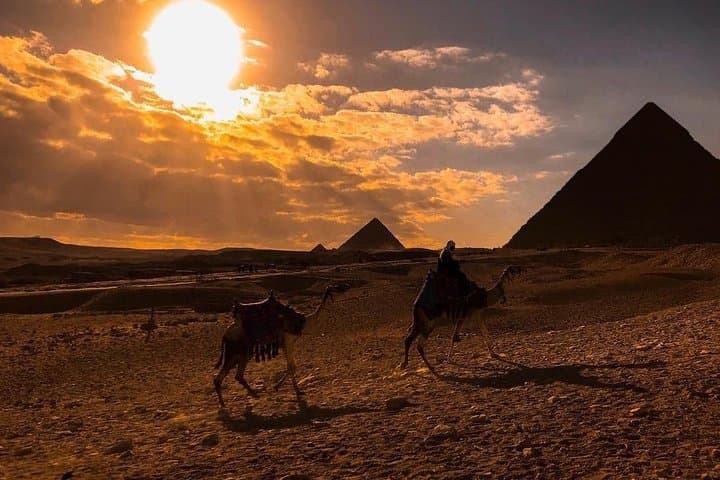

The first light slides across the limestone faces and the desert exhales — camels step low, sand sighs under padded feet, and the three great pyramids silhouette against a sky that shifts from purple to gold. On a private camel ride at Giza you’re not just viewing monuments; you move through the same open sand that has framed these tombs for 4,500 years.
The first light slides across the limestone faces and the desert exhales — camels step low, sand sighs under padded feet, and the three great pyramids silhouette against a sky that shifts from purple to gold. On a private camel ride at Giza you’re not just viewing monuments; you move through the same open sand that has framed these tombs for 4,500 years.
Geology here is blunt: the Giza Plateau is a bed of Cenozoic limestone and wind-swept dunes carved by millennia of desert breeze. The pyramids themselves are funerary complexes from Egypt’s Old Kingdom—Khufu’s Great Pyramid, Khafre’s crest, Menkaure’s smaller stone—all arranged to align with celestial markers important to ancient ritual. Local camel handlers and guides carry threads of living culture: Arabic conversation, Bedouin horsemanship, and small-scale economies that service tourism.
Practically, expect a private 4-hour window that includes transfer from central Giza/Cairo and a guided camel or horseback accompaniment. Sunrise trips are cooler and crisper for photos; sunset rides offer warmer light and longer shadows. Wear closed-toe shoes, sun protection, and layers for cool desert mornings. Mobility limits (pregnancy, spinal or cardiac conditions) are noted by operators; handlers stay close and will mount/dismount animals for guests who need help. Bring cash for tipping handlers, a camera with a secure strap, and bottled water (often included). The route avoids busy streets via a quieter desert entrance, so you’ll get uninterrupted views—just keep to the guide’s path to protect archeology and the animals.