THE ADVENTURE COLLECTIVE® · Independent discovery and booking for outdoor travel

Ride a camel into the open sands around the Great Pyramids at sunrise or sunset with a private Egyptologist guide. Quiet desert access, hotel transfers, and bottled water make this a straightforward, memorable way to experience Giza’s monuments.
Ride a camel into the open sands around the Great Pyramids at sunrise or sunset with a private Egyptologist guide. Quiet desert access, hotel transfers, and bottled water make this a straightforward, memorable way to experience Giza’s monuments.
The desert light softens and then sharpens: at sunrise the sand cools to blue-grey, at sunset it flames copper. On a private camel ride at Giza you move slowly across open sand, the animal’s gait setting a steady rhythm while the Great Pyramid rises ahead like a hulking, sunlit map of history. A local Egyptologist guide and an attendant on horseback flank the line, calling out details as the tombs and terraces pass.
Verified experiences and guided adventures in the surrounding area.
Operated by Cairo Dinner Cruise · Giza, Giza Governorate
The desert light softens and then sharpens: at sunrise the sand cools to blue-grey, at sunset it flames copper. On a private camel ride at Giza you move slowly across open sand, the animal’s gait setting a steady rhythm while the Great Pyramid rises ahead like a hulking, sunlit map of history. A local Egyptologist guide and an attendant on horseback flank the line, calling out details as the tombs and terraces pass.
Giza’s pyramids date to the Fourth Dynasty (around 2,500 BCE) and sit on the western edge of the Nile floodplain where wind and time sculpted the plateau’s compacted dunes. The site combines human engineering and stark desert geology: limestone bedrock under thin sand, scattered burial mastabas, and traces of ancient quarrying. Culturally the ride threads modern Bedouin handling and long-standing equestrian tradition into a visitor route that avoids busy streets, offering quieter approaches to the monuments.
Practical guidance is direct: rides typically run about four hours including transfers, and private pickup is standard. Travel light—carry water, sun protection, and a small pack for cameras and layers. Expect uneven soft sand and brief stretches around corrals; follow the guide’s route to respect protected areas. Morning trips are cooler and better for photography; sunset offers warmer tones but shorter light. Be mindful of animal welfare—choose operators who limit load and rest camels. With the right timing and modest preparation, a Giza camel ride translates ancient stones into a physical, paced encounter with landscape and history.
easy.
4 hours.
Suitable for most fitness levels; ability to mount/dismount and sit for extended periods on a camel required
Yes—operators provide experienced handlers and attendants; rides are paced for comfort, but mounting/dismounting assistance is recommended.
Yes—private A/C transfer with hotel pickup and drop-off is included in the tour package.
Absolutely—bring a camera or phone on a secure strap; the guide will stop at photogenic viewpoints near the plateau.
Reputable operators limit loads, schedule rests, and use experienced handlers; ask about welfare practices when booking and observe how animals are kept at stables.
The Giza complex was constructed in the Fourth Dynasty (c. 2600–2500 BCE); the Great Pyramid was built as a royal tomb for Pharaoh Khufu.
Stay on authorized tracks and avoid climbing monuments; limiting disturbance to sand and local fauna helps preserve the site and supports responsible tourism.
Cairo Dinner Cruise operates guided outdoor trips and adventures with an emphasis on safety, stewardship, and memorable experiences.
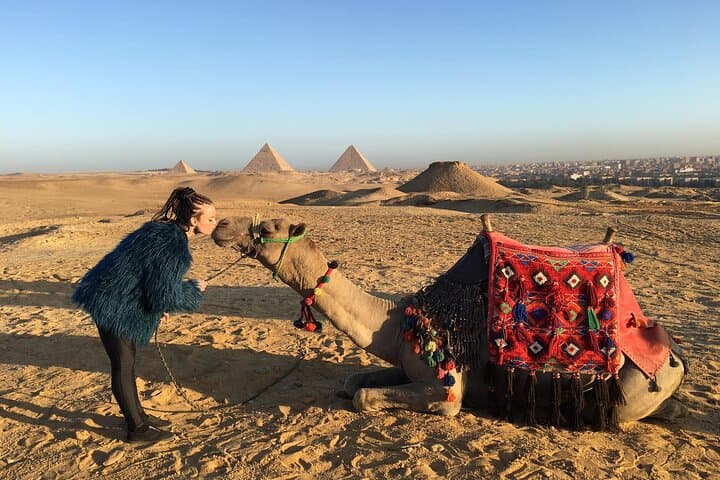
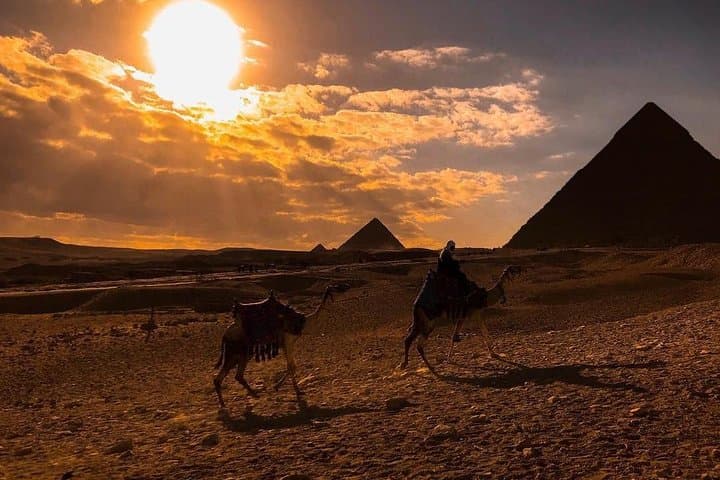
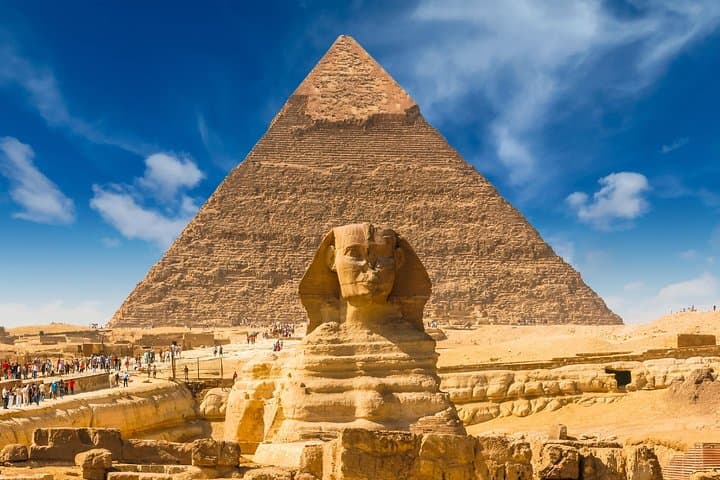
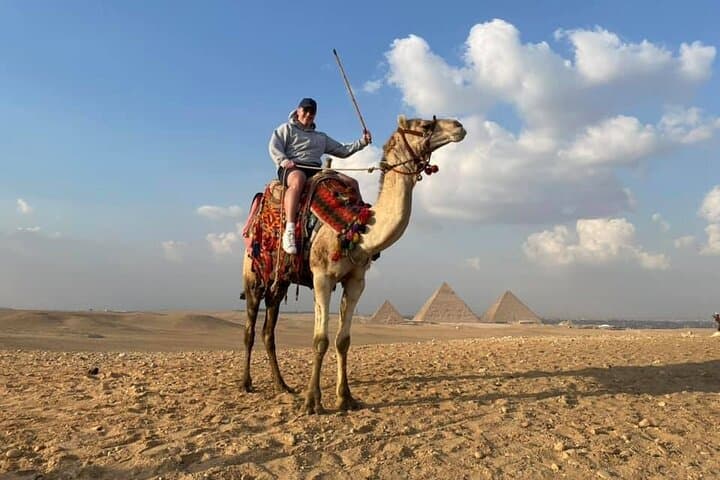
The desert light softens and then sharpens: at sunrise the sand cools to blue-grey, at sunset it flames copper. On a private camel ride at Giza you move slowly across open sand, the animal’s gait setting a steady rhythm while the Great Pyramid rises ahead like a hulking, sunlit map of history. A local Egyptologist guide and an attendant on horseback flank the line, calling out details as the tombs and terraces pass.
The desert light softens and then sharpens: at sunrise the sand cools to blue-grey, at sunset it flames copper. On a private camel ride at Giza you move slowly across open sand, the animal’s gait setting a steady rhythm while the Great Pyramid rises ahead like a hulking, sunlit map of history. A local Egyptologist guide and an attendant on horseback flank the line, calling out details as the tombs and terraces pass.
Giza’s pyramids date to the Fourth Dynasty (around 2,500 BCE) and sit on the western edge of the Nile floodplain where wind and time sculpted the plateau’s compacted dunes. The site combines human engineering and stark desert geology: limestone bedrock under thin sand, scattered burial mastabas, and traces of ancient quarrying. Culturally the ride threads modern Bedouin handling and long-standing equestrian tradition into a visitor route that avoids busy streets, offering quieter approaches to the monuments.
Practical guidance is direct: rides typically run about four hours including transfers, and private pickup is standard. Travel light—carry water, sun protection, and a small pack for cameras and layers. Expect uneven soft sand and brief stretches around corrals; follow the guide’s route to respect protected areas. Morning trips are cooler and better for photography; sunset offers warmer tones but shorter light. Be mindful of animal welfare—choose operators who limit load and rest camels. With the right timing and modest preparation, a Giza camel ride translates ancient stones into a physical, paced encounter with landscape and history.