THE ADVENTURE COLLECTIVE® · Independent discovery and booking for outdoor travel

Spend a day off Antalya exploring Kekova’s submerged ruins, the rock-cut Lycian tombs at Myra, and the Church of St. Nicholas in Demre. This full-day tour combines an easy boat cruise with short archaeological walks and a village lunch.
Spend a day off Antalya exploring Kekova’s submerged ruins, the rock-cut Lycian tombs at Myra, and the Church of St. Nicholas in Demre. This full-day tour combines an easy boat cruise with short archaeological walks and a village lunch.
Morning light fractures on the Lycian coast as the boat slips from Antalya’s shore and the sea dares you forward toward Kekova’s half-submerged walls. Salt-slick wind pushes the bow past islets where stone foundations disappear beneath turquoise water; gulls cut the sky as local fishermen haul nets near Üçağız’s low harbor.
Verified experiences and guided adventures in the surrounding area.
Operated by Tourmania · Demre, Antalya Province
Morning light fractures on the Lycian coast as the boat slips from Antalya’s shore and the sea dares you forward toward Kekova’s half-submerged walls. Salt-slick wind pushes the bow past islets where stone foundations disappear beneath turquoise water; gulls cut the sky as local fishermen haul nets near Üçağız’s low harbor.
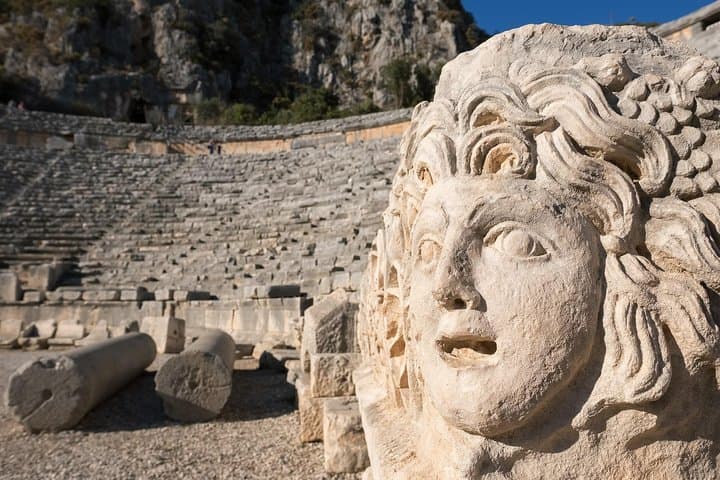
This one-day loop stitches together layers of history: Lycian cliff tombs hewn into Myra’s limestone, the Byzantine stonework around Demre, and the fragments of houses and piers that mark Kekova’s “sunken city,” a result of earthquakes and gradual subsidence. Culture here is plainspoken—olive terraces, small family harbors, and churches that recall St. Nicholas, the fourth-century bishop whose tomb sits in Demre.
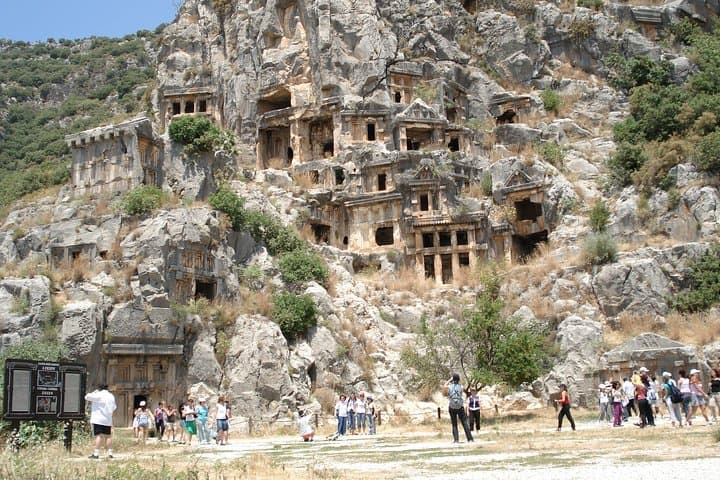
Expect a mix of gentle boat time and short land visits. The Kekova leg is typically a one-hour glass-bottom or open-deck cruise that shows submerged ruins from above; at Myra you’ll climb uneven rock steps to view tomb façades carved into the cliff. Guides usually include lunch and hotel transfers for a full 10-hour day.
Practical edge: wear sturdy, grippy shoes for rocky ruin approaches, bring sun protection and 1–2 liters of water, and keep small-change for village cafes. Midday heat is strong—start early, sit forward on the boat for photos, and follow guide instructions around fragile archaeological sites. Respect no-anchor zones and local signage: the coast is ecologically sensitive and recovering from decades of tourism.
easy.
10 hours.
Suitable for most fitness levels; involves short walks on uneven surfaces and boarding a small boat.
The tour runs about 10 hours and typically includes hotel pickup/drop-off, a one-hour Kekova boat trip, a guided visit to Myra and Demre, and lunch.
Many boats offer glass-bottom sections or clear views from open decks—confirm with the operator when booking if a glass-bottom option matters to you.
A professional guide and lunch are included; some site entrance fees may be covered but confirm specifics at booking, as policies vary.
Yes—operators rate it as physically easy, but expect boat transfers and short climbs; mobility limitations should be discussed pre-booking.
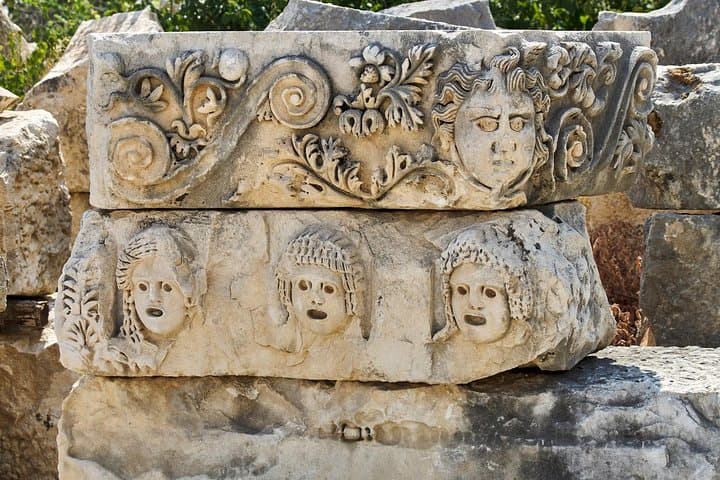
This coast was heartland of the Lycian civilization; cliff tomb façades and Byzantine churches chronicle a long sequence of maritime and religious history, including the tomb of St. Nicholas in Demre.
Kekova lies near protected seagrass beds and archaeological zones—avoid anchoring on reefs, take all litter with you, and support licensed local operators.
Tourmania operates guided outdoor trips and adventures with an emphasis on safety, stewardship, and memorable experiences.
Morning light fractures on the Lycian coast as the boat slips from Antalya’s shore and the sea dares you forward toward Kekova’s half-submerged walls. Salt-slick wind pushes the bow past islets where stone foundations disappear beneath turquoise water; gulls cut the sky as local fishermen haul nets near Üçağız’s low harbor.
Morning light fractures on the Lycian coast as the boat slips from Antalya’s shore and the sea dares you forward toward Kekova’s half-submerged walls. Salt-slick wind pushes the bow past islets where stone foundations disappear beneath turquoise water; gulls cut the sky as local fishermen haul nets near Üçağız’s low harbor.
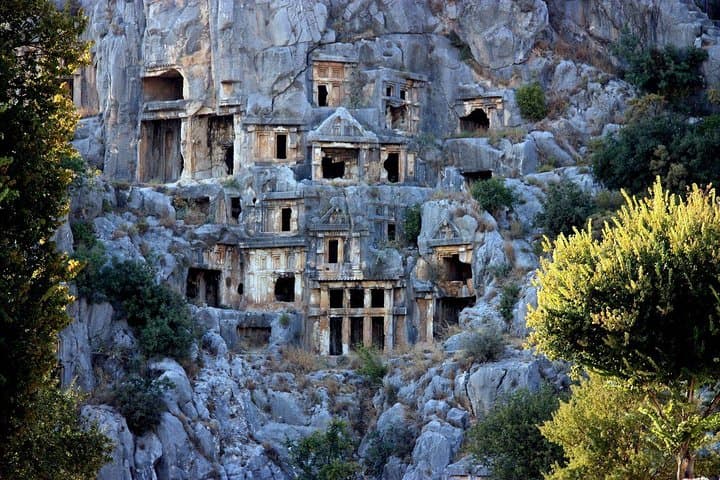
This one-day loop stitches together layers of history: Lycian cliff tombs hewn into Myra’s limestone, the Byzantine stonework around Demre, and the fragments of houses and piers that mark Kekova’s “sunken city,” a result of earthquakes and gradual subsidence. Culture here is plainspoken—olive terraces, small family harbors, and churches that recall St. Nicholas, the fourth-century bishop whose tomb sits in Demre.
Expect a mix of gentle boat time and short land visits. The Kekova leg is typically a one-hour glass-bottom or open-deck cruise that shows submerged ruins from above; at Myra you’ll climb uneven rock steps to view tomb façades carved into the cliff. Guides usually include lunch and hotel transfers for a full 10-hour day.
Practical edge: wear sturdy, grippy shoes for rocky ruin approaches, bring sun protection and 1–2 liters of water, and keep small-change for village cafes. Midday heat is strong—start early, sit forward on the boat for photos, and follow guide instructions around fragile archaeological sites. Respect no-anchor zones and local signage: the coast is ecologically sensitive and recovering from decades of tourism.