THE ADVENTURE COLLECTIVE® · Independent discovery and booking for outdoor travel

Meet retired sumo wrestlers, watch sparring demonstrations, and share a bowl of chanko nabe in a theater‑style restaurant in Tokyo. This 90‑minute experience pairs hands‑on interaction with cultural context and a hearty meal.
Meet retired sumo wrestlers, watch sparring demonstrations, and share a bowl of chanko nabe in a theater‑style restaurant in Tokyo. This 90‑minute experience pairs hands‑on interaction with cultural context and a hearty meal.
Step into a low-lit hall in Tokyo where the clay ring commands attention and the low thud of a wrestler’s stomp stills the room.
Verified experiences and guided adventures in the surrounding area.
Operated by Beauty of Japan · Tokyo, Tokyo
Step into a low-lit hall in Tokyo where the clay ring commands attention and the low thud of a wrestler’s stomp stills the room.
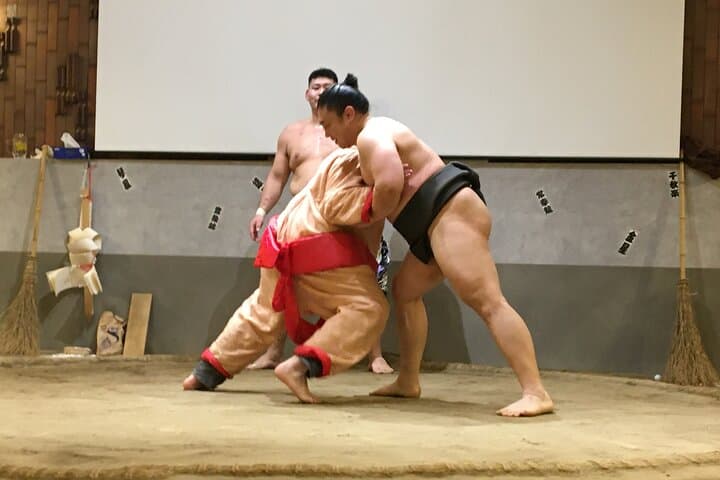
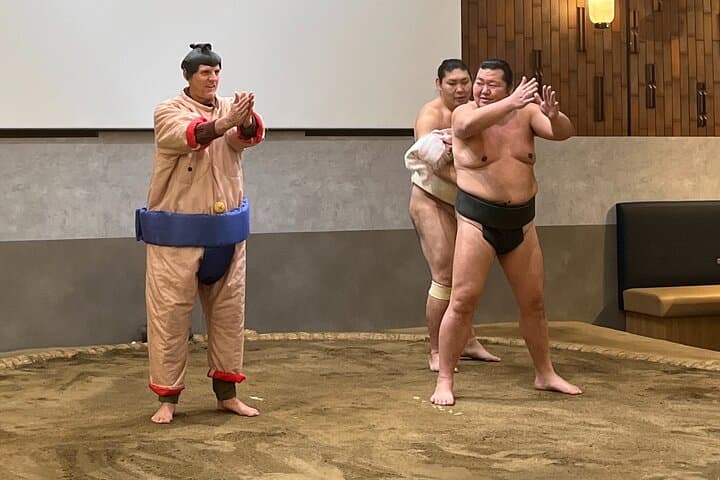
The SUMO show pairs a compact performance with a communal meal: retired rikishi demonstrate fundamental moves, explain training and etiquette, and stage short sparring matches before inviting guests to try basic holds in a supplied mawashi costume. The meal—tonkatsu paired with hearty chanko nabe—reflects the practical fuel that built professional careers.
Sumo’s roots are ceremonial and Shinto-derived; professional sumo codified through the Edo period evolved into today’s ranked stables and seasonal tournaments. The restaurant setting compresses that history into a participatory hour and a half: you’ll hear about prohibited techniques, watch real sparring, and leave with a souvenir photo.
Practical guidance: arrive on time, note the 90‑minute fixed duration, and report dietary restrictions at booking (requests under five days are unlikely to be accommodated). The venue is wheelchair accessible and suitable for most fitness levels; physical participation is optional and supervised. Wear sensible shoes you can slip off quickly—tatami or low-floor seating is possible—and bring a camera for photos but follow staff directions during demos.
Cultural courtesy matters: observe bowing etiquette, avoid loud interruptions, and accept that seating may be shared. For travelers seeking a compact, high‑contact cultural encounter in central Tokyo, this experience delivers direct interaction with retired wrestlers, an introduction to sumo technique, and a filling taste of chanko nabe that underpins the sport.
easy.
1.5 hours.
Suitable for most fitness levels; light physical participation is optional
Yes—guests are invited to try basic moves with retired wrestlers using a provided costume; participation is supervised and optional.
Yes—the venue is wheelchair accessible and surfaces are accessible, but confirm any special needs at booking.
Vegetarian and non‑pork substitutions may be available at the restaurant’s discretion—state restrictions when booking; requests under five days before the date may not be met.
Photos are generally allowed, but follow staff directions during demonstrations and for souvenir photo opportunities with wrestlers.
Sumo originated from Shinto ritual and court sport; modern professional sumo organized during the Edo period, with chanko nabe emerging as rikishi staple cuisine.
Support venues that respect retired wrestlers and reduce food waste; follow local guidance on behavior to help preserve this living cultural tradition.
Beauty of Japan operates guided outdoor trips and adventures with an emphasis on safety, stewardship, and memorable experiences.


Step into a low-lit hall in Tokyo where the clay ring commands attention and the low thud of a wrestler’s stomp stills the room.
Step into a low-lit hall in Tokyo where the clay ring commands attention and the low thud of a wrestler’s stomp stills the room.
The SUMO show pairs a compact performance with a communal meal: retired rikishi demonstrate fundamental moves, explain training and etiquette, and stage short sparring matches before inviting guests to try basic holds in a supplied mawashi costume. The meal—tonkatsu paired with hearty chanko nabe—reflects the practical fuel that built professional careers.
Sumo’s roots are ceremonial and Shinto-derived; professional sumo codified through the Edo period evolved into today’s ranked stables and seasonal tournaments. The restaurant setting compresses that history into a participatory hour and a half: you’ll hear about prohibited techniques, watch real sparring, and leave with a souvenir photo.
Practical guidance: arrive on time, note the 90‑minute fixed duration, and report dietary restrictions at booking (requests under five days are unlikely to be accommodated). The venue is wheelchair accessible and suitable for most fitness levels; physical participation is optional and supervised. Wear sensible shoes you can slip off quickly—tatami or low-floor seating is possible—and bring a camera for photos but follow staff directions during demos.
Cultural courtesy matters: observe bowing etiquette, avoid loud interruptions, and accept that seating may be shared. For travelers seeking a compact, high‑contact cultural encounter in central Tokyo, this experience delivers direct interaction with retired wrestlers, an introduction to sumo technique, and a filling taste of chanko nabe that underpins the sport.