THE ADVENTURE COLLECTIVE® · Independent discovery and booking for outdoor travel

Take a guided ascent from Rifugio Sapienza up to around 3,000 m on Mount Etna, crossing recent lava cones and the Valle del Bove rim. This 5‑hour volcanological trek combines dramatic geology, summit crater views, and practical route guidance—cable car ride included on the return.
Take a guided ascent from Rifugio Sapienza up to around 3,000 m on Mount Etna, crossing recent lava cones and the Valle del Bove rim. This 5‑hour volcanological trek combines dramatic geology, summit crater views, and practical route guidance—cable car ride included on the return.
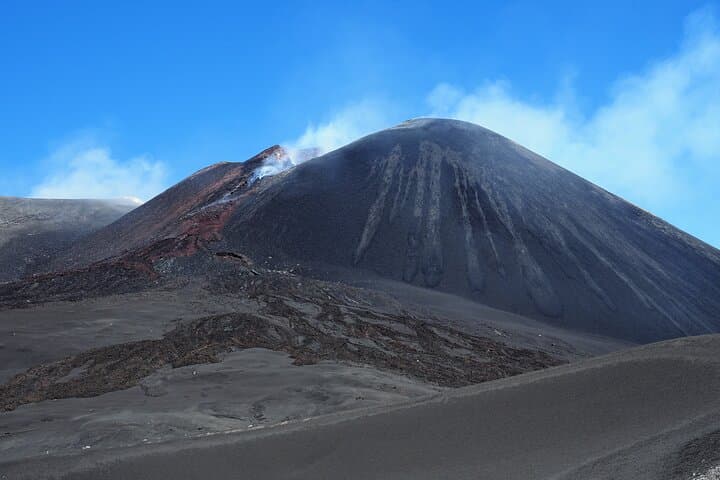
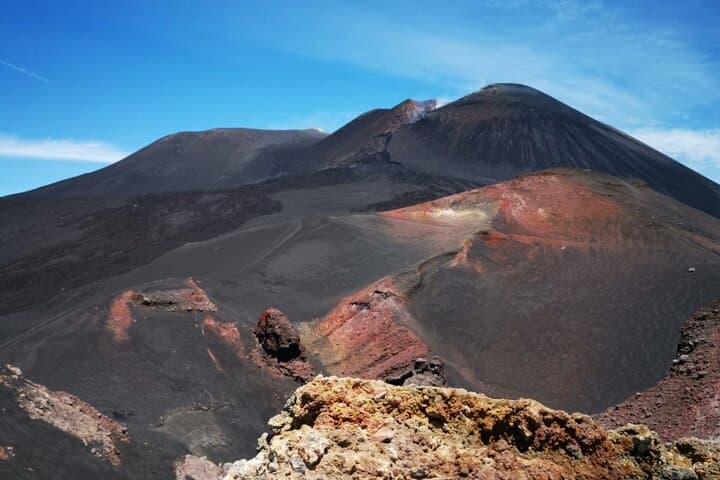
A wind-swept parking lot at Rifugio G. Sapienza is where the day begins: guides check boots, maps, and the cable car schedule while steam curls from nearby vents. Within an hour the cable car lifts the group toward the sparse, pumice-strewn high slopes; above 2,500 meters the landscape sharpens—black basalt, recent scoria cones, and a wide emptiness that makes each step feel purposeful.
Verified experiences and guided adventures in the surrounding area.
Operated by Gruppo Guide Etna Nord · Nicolosi, Sicily
A wind-swept parking lot at Rifugio G. Sapienza is where the day begins: guides check boots, maps, and the cable car schedule while steam curls from nearby vents. Within an hour the cable car lifts the group toward the sparse, pumice-strewn high slopes; above 2,500 meters the landscape sharpens—black basalt, recent scoria cones, and a wide emptiness that makes each step feel purposeful.
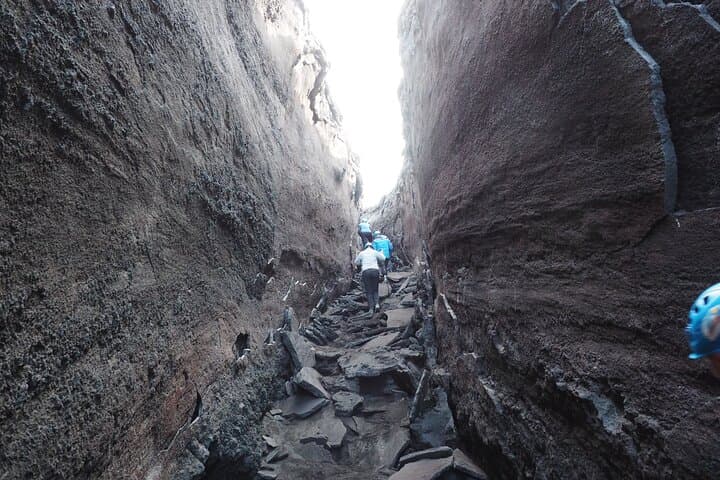
Mount Etna’s layers tell a long story of fire and renewal. The trek skirts the fresh cones formed in 2001–2002 and traverses channels of recent lava flows, offering a volcanological primer in the open air. Culturally, the southern slopes have supported shepherding and vineyards for generations; nearby towns like Nicolosi retain a practical connection to the mountain’s cycles.
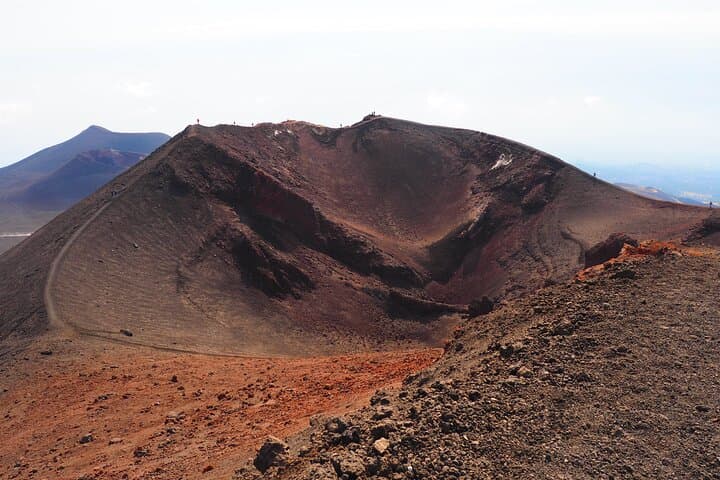
Geologically, Etna is one of Europe’s most active stratovolcanoes and a UNESCO World Heritage Site; the route toward Torre del Filosofo (Barbagallo craters) provides direct visual access to summit crater activity, including changes from eruptions as recent as 2021. Guides emphasize staying on hardened lava and respecting fragile lichens and fumaroles.
Practically: the guided outing runs about five hours, starting at 1,900 m with a cable car ascent to ~2,500 m, then a guided trek to roughly 3,000 m and return by cable car. Cable car tickets are paid on site; expect rocky, loose volcanic scree underfoot, windy conditions, and rapid temperature swings. Hikers should carry 2+ liters of water, sun protection, sturdy boots, and layered clothing for wind and altitude. The experience is educational, physically engaging, and best undertaken with a guide familiar with Etna’s shifting terrain.
moderate.
4–5 hours.
Suitable for hikers with moderate fitness who can handle sustained walking on loose volcanic rock and short steep sections
No—the guide fee covers the guide service only; cable car tickets to reach 2,500 m must be purchased on site before departure.
The trek is feasible for children from about 7 years upward; participants should have a moderate fitness level and be comfortable with rocky terrain and altitude.
The operator may cancel for poor weather or insufficient participants; cancellations made at least 24 hours prior are fully refundable under the standard policy.
Yes—trekking poles and helmets are included with the guide service, though some hikers prefer to bring personal poles for fit and comfort.
Etna has been erupting for hundreds of thousands of years; the mountain’s frequent activity shaped local agriculture and settlement patterns and earned UNESCO World Heritage status for its geological importance.
Stay on established paths to protect fragile crusts and lichens; guides enforce rules to minimize impact and discourage rock removal or vent disturbance.
Gruppo Guide Etna Nord operates guided outdoor trips and adventures with an emphasis on safety, stewardship, and memorable experiences.
A wind-swept parking lot at Rifugio G. Sapienza is where the day begins: guides check boots, maps, and the cable car schedule while steam curls from nearby vents. Within an hour the cable car lifts the group toward the sparse, pumice-strewn high slopes; above 2,500 meters the landscape sharpens—black basalt, recent scoria cones, and a wide emptiness that makes each step feel purposeful.
A wind-swept parking lot at Rifugio G. Sapienza is where the day begins: guides check boots, maps, and the cable car schedule while steam curls from nearby vents. Within an hour the cable car lifts the group toward the sparse, pumice-strewn high slopes; above 2,500 meters the landscape sharpens—black basalt, recent scoria cones, and a wide emptiness that makes each step feel purposeful.
Mount Etna’s layers tell a long story of fire and renewal. The trek skirts the fresh cones formed in 2001–2002 and traverses channels of recent lava flows, offering a volcanological primer in the open air. Culturally, the southern slopes have supported shepherding and vineyards for generations; nearby towns like Nicolosi retain a practical connection to the mountain’s cycles.
Geologically, Etna is one of Europe’s most active stratovolcanoes and a UNESCO World Heritage Site; the route toward Torre del Filosofo (Barbagallo craters) provides direct visual access to summit crater activity, including changes from eruptions as recent as 2021. Guides emphasize staying on hardened lava and respecting fragile lichens and fumaroles.
Practically: the guided outing runs about five hours, starting at 1,900 m with a cable car ascent to ~2,500 m, then a guided trek to roughly 3,000 m and return by cable car. Cable car tickets are paid on site; expect rocky, loose volcanic scree underfoot, windy conditions, and rapid temperature swings. Hikers should carry 2+ liters of water, sun protection, sturdy boots, and layered clothing for wind and altitude. The experience is educational, physically engaging, and best undertaken with a guide familiar with Etna’s shifting terrain.