THE ADVENTURE COLLECTIVE® · Independent discovery and booking for outdoor travel

A compact, supported ascent of Mount Toubkal from Marrakech via Imlil — two days of steady uphill, a night in the Neltner refuge, and a non-technical summit at 4,167 m. Ideal for fit trekkers ready for long days and high-altitude walking.
A compact, supported ascent of Mount Toubkal from Marrakech via Imlil — two days of steady uphill, a night in the Neltner refuge, and a non-technical summit at 4,167 m. Ideal for fit trekkers ready for long days and high-altitude walking.
Dawn in Imlil arrives as a thin blue light over dry-stone terraces and the clack of mule hooves. You set out beneath a sky that feels sharp with altitude, following irrigation canals past the small shrine at Sidi Chamharouch while the valley loosens into arid scree and scrub. By late afternoon the Neltner refuge (3,210 m) sits like a practical outpost where tea, a hot meal, and a bunk reset your legs for the summit push.
Verified experiences and guided adventures in the surrounding area.
Operated by top of tours · Imlil, Marrakesh-Safi
Dawn in Imlil arrives as a thin blue light over dry-stone terraces and the clack of mule hooves. You set out beneath a sky that feels sharp with altitude, following irrigation canals past the small shrine at Sidi Chamharouch while the valley loosens into arid scree and scrub. By late afternoon the Neltner refuge (3,210 m) sits like a practical outpost where tea, a hot meal, and a bunk reset your legs for the summit push.
Toubkal (4,167 m) is the crown of the High Atlas — a range born where the African and Eurasian plates press together — and has been a homeland of Berber shepherding communities for centuries. The route is a managed trekking line rather than a technical climb: local guides, cooks and muleteers support groups, and the refuge system dates back to early mountaineering ties between Europe and Morocco.
Practically, the logistics are straightforward: private transfer from Marrakech (~1.5–2 hours) to Imlil; day one gains roughly 1,470 m to the refuge along rocky tracks and some easy scrambling; day two rises ~960 m to the summit with early starts and probable snow above 3,500 m in cooler months. From November to April expect snow slopes where crampons and an ice axe are used for security.
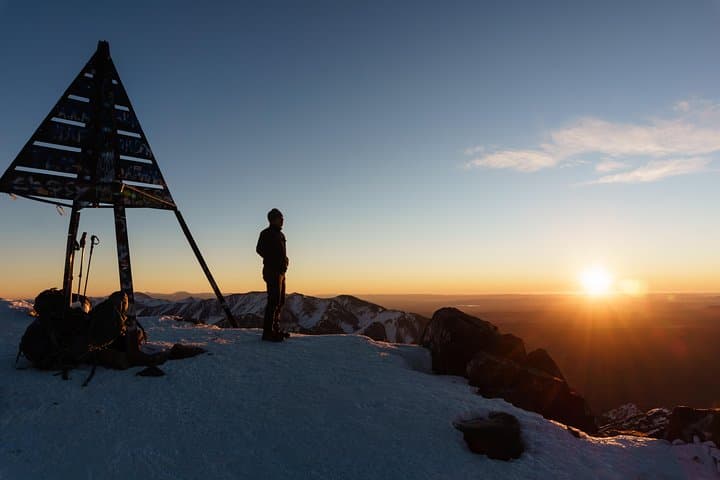
Pack layered clothing, sun protection, and a good pair of boots. Hydrate early, move steadily to manage altitude, and plan summit starts around 1–3 a.m. so you reach the ridge in calm air. The reward is a broad panorama of the High Atlas and a sense of having walked between old villages, terraced fields, and high alpine stone.
challenging.
2 days.
Good cardiovascular fitness and experience with sustained uphill hiking; able to carry a daypack for long hours.
You should have good aerobic fitness and experience with long uphill days; the trek is non-technical but involves sustained elevation gain and high altitude.
No technical climbing is necessary in summer, but from November to April crampons and an ice axe are used for safety on snow slopes.
Typical inclusions are private transfers from Marrakech, guided trekking, a local cook, mule support, refuge accommodation, and meals as listed—confirm details with the operator.
Fit beginners who have trained for long days and have no serious medical issues can join, but the operator excludes travelers with serious heart or back problems and pregnancy.
Toubkal sits in the High Atlas, a range shaped by plate collision; the valleys are long-inhabited by Berber communities with pastoral traditions and terraced agriculture.
Trekking concentrates impact on a few routes and refuges—pack out waste, stick to established paths, and support licensed local guides and muleteers to keep the mountains healthy.
top of tours operates guided outdoor trips and adventures with an emphasis on safety, stewardship, and memorable experiences.
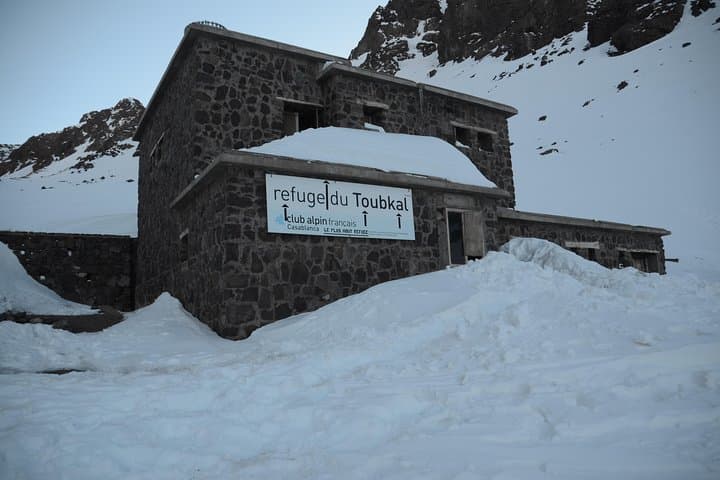
Dawn in Imlil arrives as a thin blue light over dry-stone terraces and the clack of mule hooves. You set out beneath a sky that feels sharp with altitude, following irrigation canals past the small shrine at Sidi Chamharouch while the valley loosens into arid scree and scrub. By late afternoon the Neltner refuge (3,210 m) sits like a practical outpost where tea, a hot meal, and a bunk reset your legs for the summit push.
Dawn in Imlil arrives as a thin blue light over dry-stone terraces and the clack of mule hooves. You set out beneath a sky that feels sharp with altitude, following irrigation canals past the small shrine at Sidi Chamharouch while the valley loosens into arid scree and scrub. By late afternoon the Neltner refuge (3,210 m) sits like a practical outpost where tea, a hot meal, and a bunk reset your legs for the summit push.
Toubkal (4,167 m) is the crown of the High Atlas — a range born where the African and Eurasian plates press together — and has been a homeland of Berber shepherding communities for centuries. The route is a managed trekking line rather than a technical climb: local guides, cooks and muleteers support groups, and the refuge system dates back to early mountaineering ties between Europe and Morocco.
Practically, the logistics are straightforward: private transfer from Marrakech (~1.5–2 hours) to Imlil; day one gains roughly 1,470 m to the refuge along rocky tracks and some easy scrambling; day two rises ~960 m to the summit with early starts and probable snow above 3,500 m in cooler months. From November to April expect snow slopes where crampons and an ice axe are used for security.
Pack layered clothing, sun protection, and a good pair of boots. Hydrate early, move steadily to manage altitude, and plan summit starts around 1–3 a.m. so you reach the ridge in calm air. The reward is a broad panorama of the High Atlas and a sense of having walked between old villages, terraced fields, and high alpine stone.