THE ADVENTURE COLLECTIVE® · Independent discovery and booking for outdoor travel

A compact, challenging 2-day ascent of Jbel Toubkal from Marrakech that pushes you over 4,100 m. Move through Berber villages, sleep at the mountain refuge, and summit at dawn for sweeping High Atlas views.
A compact, challenging 2-day ascent of Jbel Toubkal from Marrakech that pushes you over 4,100 m. Move through Berber villages, sleep at the mountain refuge, and summit at dawn for sweeping High Atlas views.
You stand at dawn on the stony track above Imlil, the Atlas ridgelines cutting a hard silhouette against a frozen sky. Cold wind wakes your shoulders; the path climbs quickly, passing terraced fields and small Berber hamlets where donkeys and shepherds mark the day.
Verified experiences and guided adventures in the surrounding area.
Operated by Marrakech Tours Excursions · Imlil, Marrakesh-Safi
You stand at dawn on the stony track above Imlil, the Atlas ridgelines cutting a hard silhouette against a frozen sky. Cold wind wakes your shoulders; the path climbs quickly, passing terraced fields and small Berber hamlets where donkeys and shepherds mark the day.
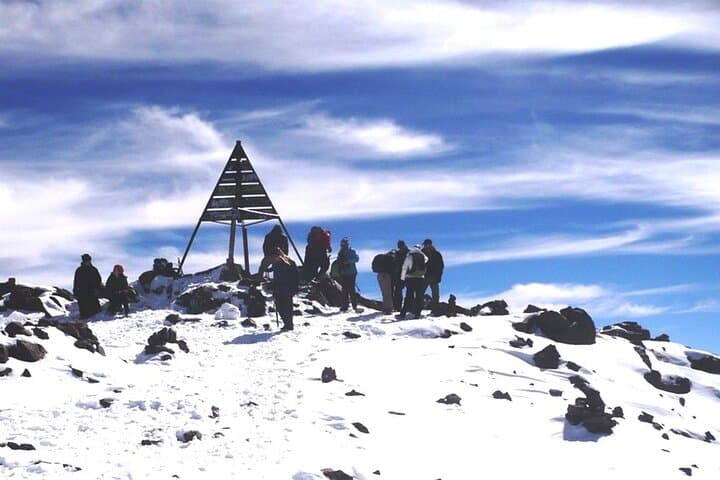
Jbel Toubkal (4,167 m) is the highest peak in North Africa and a compact lesson in geology and human history: volcanic and metamorphic rock folded into sharp ridges, used for centuries by Amazigh (Berber) communities for grazing and trade. The two-day itinerary moves fast—day one gains ground to the Toubkal refuge at ~3,207 m, day two begins pre-dawn for summit and descent back to Imlil and Marrakech.
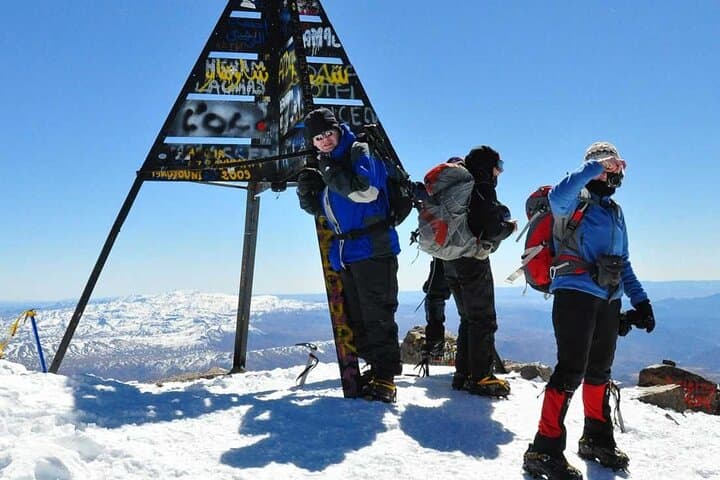
Expect steep scree and stone steps, exposed sections near the summit, and a refuge with basic bunks and hot tea. Weather can change suddenly; snow is common outside summer and may require crampons. Cultural touches are immediate—tea offered in village courtyards, stone-built kasbahs, and the clipped French-Arabic cadence of mountain markets.
Practical guidance: start early on day two to avoid afternoon winds and clouds, use a light pack for the summit push, and acclimatize mildly by moving slowly on the first ascent to the refuge. Hydrate and layer: temperatures swing from below freezing at night to warm sun on south-facing slopes. Local guides from Imlil know the safest lines and carry emergency gear; consider hiring one if you’re unfamiliar with high-altitude navigation. With preparation, the summit delivers raw, panoramic views across the High Atlas and toward Marrakech—a demanding two-day climb with a clear, earned reward.
challenging.
2 days (overnight).
Good aerobic fitness with experience on sustained uphill hikes; able to carry a 8–12 kg daypack and ascend 900–1,200 m in a day.
A guide is strongly recommended—local guides know current route conditions, weather windows, and can coordinate logistics and refuge arrangements.
Nighttime at the refuge often falls below freezing outside summer; summit temperatures can be well below 0°C with wind chill, even in late spring or early fall.
In summer the route is non-technical and requires trekking gear; in winter or after snowfall you may need crampons and ice axe—check conditions before departure.
Most operators provide private transport to the trailhead near Imlil; expect a 1–1.5 hour drive depending on traffic and pickup point.
The High Atlas has long been home to Amazigh (Berber) communities who farm terraced slopes and guided early caravan routes; many trails follow old transhumance paths.
Trail erosion and litter are local concerns—pack out waste, stay on established tracks, and use local guides who support village economies.
Marrakech Tours Excursions operates guided outdoor trips and adventures with an emphasis on safety, stewardship, and memorable experiences.
You stand at dawn on the stony track above Imlil, the Atlas ridgelines cutting a hard silhouette against a frozen sky. Cold wind wakes your shoulders; the path climbs quickly, passing terraced fields and small Berber hamlets where donkeys and shepherds mark the day.
You stand at dawn on the stony track above Imlil, the Atlas ridgelines cutting a hard silhouette against a frozen sky. Cold wind wakes your shoulders; the path climbs quickly, passing terraced fields and small Berber hamlets where donkeys and shepherds mark the day.
Jbel Toubkal (4,167 m) is the highest peak in North Africa and a compact lesson in geology and human history: volcanic and metamorphic rock folded into sharp ridges, used for centuries by Amazigh (Berber) communities for grazing and trade. The two-day itinerary moves fast—day one gains ground to the Toubkal refuge at ~3,207 m, day two begins pre-dawn for summit and descent back to Imlil and Marrakech.
Expect steep scree and stone steps, exposed sections near the summit, and a refuge with basic bunks and hot tea. Weather can change suddenly; snow is common outside summer and may require crampons. Cultural touches are immediate—tea offered in village courtyards, stone-built kasbahs, and the clipped French-Arabic cadence of mountain markets.
Practical guidance: start early on day two to avoid afternoon winds and clouds, use a light pack for the summit push, and acclimatize mildly by moving slowly on the first ascent to the refuge. Hydrate and layer: temperatures swing from below freezing at night to warm sun on south-facing slopes. Local guides from Imlil know the safest lines and carry emergency gear; consider hiring one if you’re unfamiliar with high-altitude navigation. With preparation, the summit delivers raw, panoramic views across the High Atlas and toward Marrakech—a demanding two-day climb with a clear, earned reward.