THE ADVENTURE COLLECTIVE® · Independent discovery and booking for outdoor travel

Climb to Pico da Tijuca for sweeping city views, forested switchbacks, and a post-hike waterfall dip. This guided full-day hike mixes history, geology, and wildlife in one of the world’s largest urban forests.
Climb to Pico da Tijuca for sweeping city views, forested switchbacks, and a post-hike waterfall dip. This guided full-day hike mixes history, geology, and wildlife in one of the world’s largest urban forests.
You push through a shelf of Atlantic Forest—ferns brushing your forearms, sunlight fracturing through broad leaves—and the city noise thins to a distant hum. The trail angles up, stair by stair, until the forest opens and the summit demands your attention: a 360-degree sweep of Rio, the bay, and the distant coastline.
Verified experiences and guided adventures in the surrounding area.
Operated by Be Adventure · Rio de Janeiro, Rio de Janeiro
You push through a shelf of Atlantic Forest—ferns brushing your forearms, sunlight fracturing through broad leaves—and the city noise thins to a distant hum. The trail angles up, stair by stair, until the forest opens and the summit demands your attention: a 360-degree sweep of Rio, the bay, and the distant coastline.
Pico da Tijuca sits inside Tijuca National Park, one of the largest urban forests in the world. The park is largely a 19th-century reforestation project that reclaimed watersheds for the growing city; its volcanic-origin peaks and weathered granite outcrops offer abrupt elevation change and raw viewpoints. Cultural history here mixes imperial-era estates, conservation efforts, and the everyday life of Cariocas who come to escape the heat.
On the route you’ll pass Cascatinha Taunay and smaller falls where water dares you to cool off. Wildlife—marmosets, toucans, and agile city foxes—pepper the canopy, always watching, occasionally posing. Rock steps toward the summit can feel like an old staircase built by the mountain itself.
Practical guidance: the route typically takes 4–6 hours round trip depending on pace and stops; expect steep stairs and uneven rock. Start early to avoid midday sun and crowds, carry at least 1.5–2L of water, and wear grippy footwear for wet stone near waterfalls. Guides often include transport back to the city and a chance to refresh in a waterfall pool—bring swimwear.
Respect trail closures, keep a safe distance from wildlife, and leave no trace: the forest is resilient but visitor impact is real.
moderate.
6 hours.
Moderate fitness: comfortable with sustained uphill hiking, stairs, and uneven terrain for several hours.
The guided itinerary is about 6 hours total; expect sustained uphill, stair sections, and uneven rock—suitable for moderately fit hikers.
Guided tours add transport and local knowledge; no special permit is typically required for the main trails, but park rules apply.
Many tours include a stop at a safe waterfall pool for a refresh—bring swimwear and be cautious on slippery rocks.
Common sightings include marmosets, toucans and a variety of forest birds; never approach or feed wildlife.
Tijuca National Park largely stems from 19th-century reforestation efforts to restore city watersheds and was later protected as a national park, preserving its steep granite peaks and Atlantic Forest cover.
The park is a protected urban forest; stay on marked trails, avoid feeding animals, and pack out waste to limit erosion and wildlife disturbance.
Be Adventure operates guided outdoor trips and adventures with an emphasis on safety, stewardship, and memorable experiences.
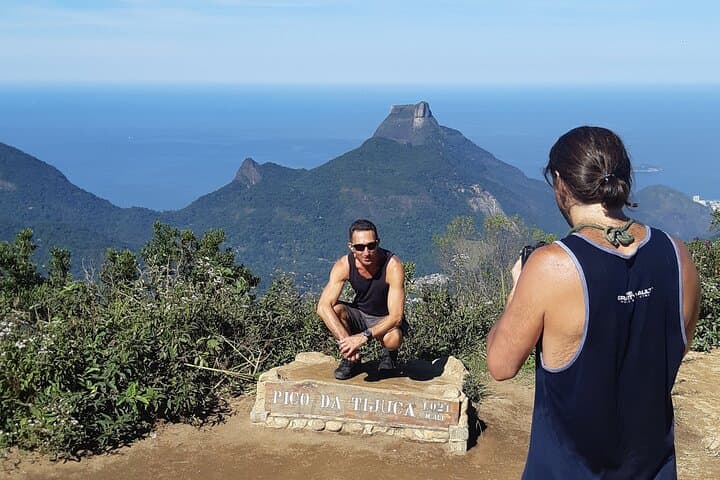
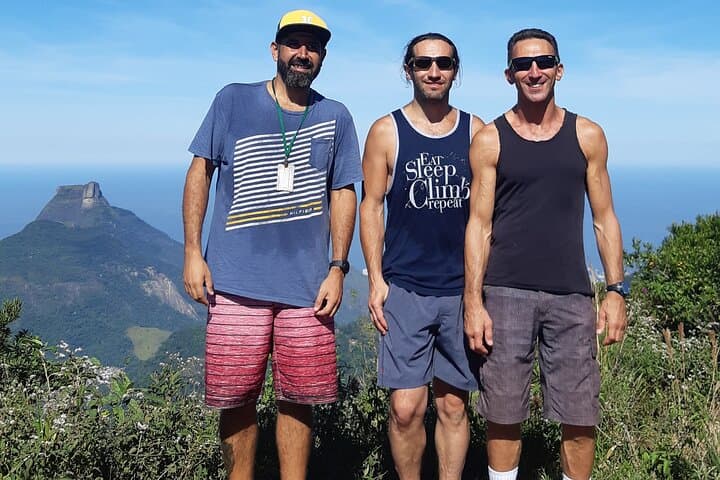
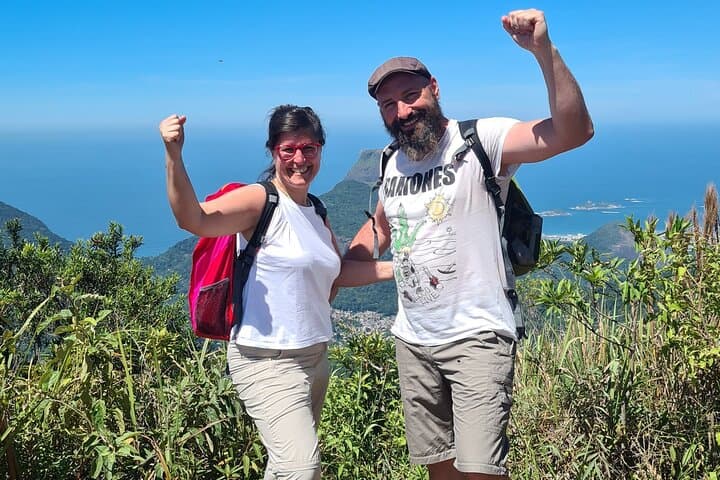
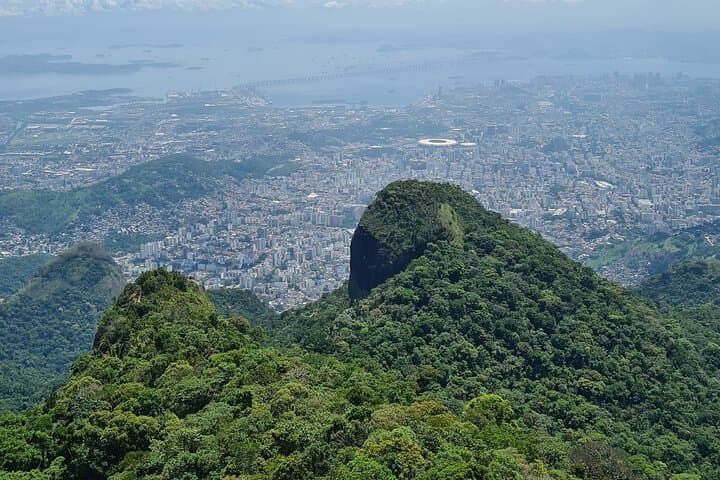
You push through a shelf of Atlantic Forest—ferns brushing your forearms, sunlight fracturing through broad leaves—and the city noise thins to a distant hum. The trail angles up, stair by stair, until the forest opens and the summit demands your attention: a 360-degree sweep of Rio, the bay, and the distant coastline.
You push through a shelf of Atlantic Forest—ferns brushing your forearms, sunlight fracturing through broad leaves—and the city noise thins to a distant hum. The trail angles up, stair by stair, until the forest opens and the summit demands your attention: a 360-degree sweep of Rio, the bay, and the distant coastline.
Pico da Tijuca sits inside Tijuca National Park, one of the largest urban forests in the world. The park is largely a 19th-century reforestation project that reclaimed watersheds for the growing city; its volcanic-origin peaks and weathered granite outcrops offer abrupt elevation change and raw viewpoints. Cultural history here mixes imperial-era estates, conservation efforts, and the everyday life of Cariocas who come to escape the heat.
On the route you’ll pass Cascatinha Taunay and smaller falls where water dares you to cool off. Wildlife—marmosets, toucans, and agile city foxes—pepper the canopy, always watching, occasionally posing. Rock steps toward the summit can feel like an old staircase built by the mountain itself.
Practical guidance: the route typically takes 4–6 hours round trip depending on pace and stops; expect steep stairs and uneven rock. Start early to avoid midday sun and crowds, carry at least 1.5–2L of water, and wear grippy footwear for wet stone near waterfalls. Guides often include transport back to the city and a chance to refresh in a waterfall pool—bring swimwear.
Respect trail closures, keep a safe distance from wildlife, and leave no trace: the forest is resilient but visitor impact is real.