THE ADVENTURE COLLECTIVE® · Independent discovery and booking for outdoor travel

A full-day guided ascent to Daecheongbong (1,708 m) that pairs exposed ridge walking with deep valley views. Choose a ridge or valley descent, expect 10 hours on trail, and plan for steep granite scrambling and dramatic panoramas.
A full-day guided ascent to Daecheongbong (1,708 m) that pairs exposed ridge walking with deep valley views. Choose a ridge or valley descent, expect 10 hours on trail, and plan for steep granite scrambling and dramatic panoramas.
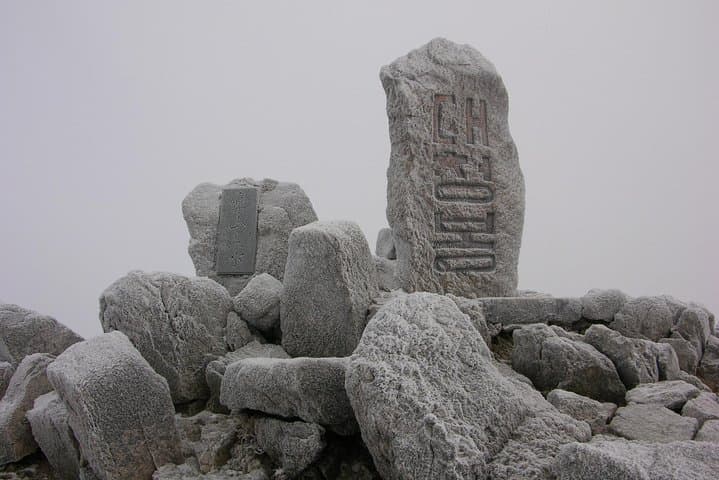
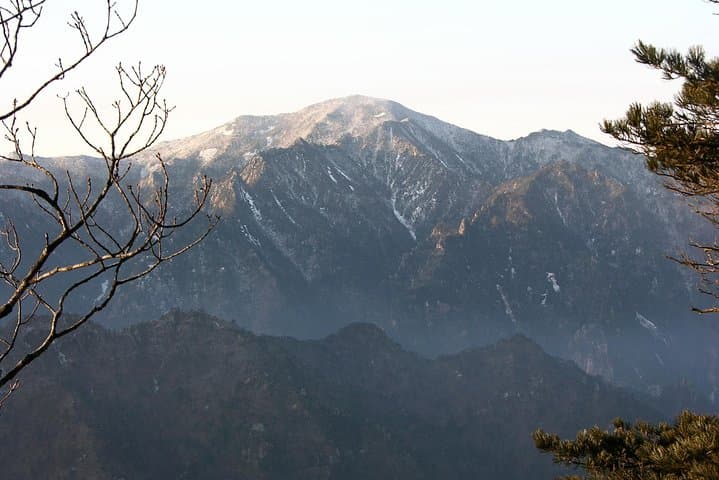
A cold wind slices across granite slabs as you step onto the trailhead and the ridgeline opens—Seoraksan’s Daecheongbong rising ahead at 1,708 m, Korea’s third-highest summit. The day begins before dawn with a shuttle from Seoul, then a steady climb through spruce and mixed deciduous forest, the trees thinning as the path pitches up into exposed granite and iron chains that steady every handhold.
Verified experiences and guided adventures in the surrounding area.
Operated by Outdoors Korea · Sokcho, Gangwon-do
A cold wind slices across granite slabs as you step onto the trailhead and the ridgeline opens—Seoraksan’s Daecheongbong rising ahead at 1,708 m, Korea’s third-highest summit. The day begins before dawn with a shuttle from Seoul, then a steady climb through spruce and mixed deciduous forest, the trees thinning as the path pitches up into exposed granite and iron chains that steady every handhold.
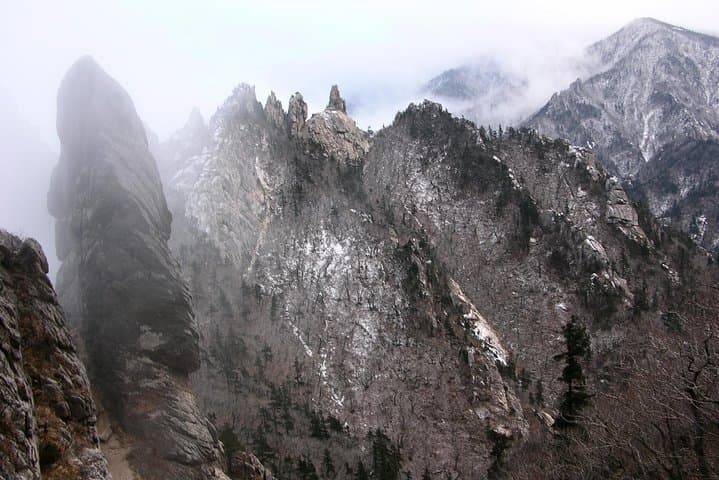
Geology here is honest: hard granite sculpted by frost and time into sharp ridges and bowl-like valleys. The route climbs roughly 1,200–1,400 meters depending on the trail choice and commonly covers 12–18 km round trip, with steep steps, carved rock, and short sections of scrambling. Culturally, Seoraksan National Park has long been a pilgrimage landscape—temples like Sinheungsa lie down-valley, and local mountain lore frames peaks as places of reflection and endurance.
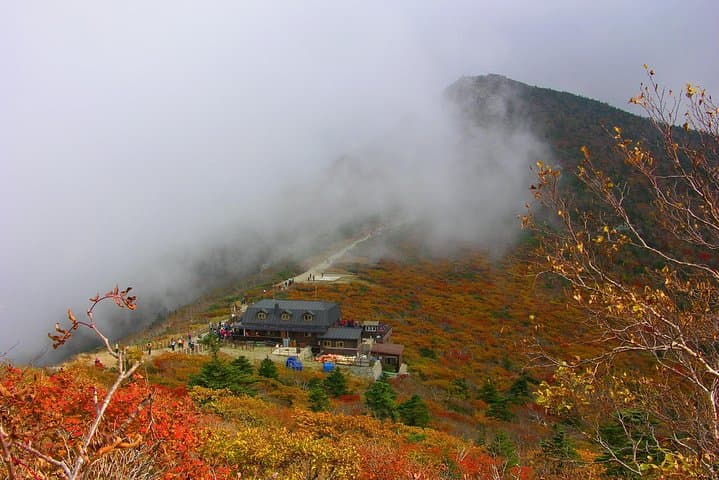
You’ll choose either the exposed Dinosaur Ridge for drama and narrow skyline walking, or the Cheonbuldong valley for river-snap views and waterfall features on descent. Expect 10 hours total on a guided day tour: about four hours to summit and six hours down, with breaks for a shelter breakfast and sweeping photo stops. After the hike, many groups head to nearby Sokcho for fresh seafood and hot broth.
Practical advice: wear stiff hiking boots with good traction, layer for sharp temperature swings, carry 2–3 liters of water and wind/rain protection, and be ready for chain-assisted sections and crowding on popular weekends. Weather can turn fast—book flexible travel and respect park rules: stay on marked trails and pack out all waste.
challenging.
10 hours.
Suitable for strong hikers comfortable with sustained uphill, long descents, and several hours of standing and scrambling; high aerobic fitness recommended.
Guided day tours run about 10 hours total—roughly four hours up and six hours down. Expect 12–18 km and 1,200–1,400 m of elevation gain with steep, exposed sections.
No technical climbing certification is required, but hikers should be comfortable with exposure, short scrambling, and steep, sustained uphill walking.
Weather in Seoraksan changes quickly; guides may cancel or reroute in heavy rain, high winds, or snow—bring layers and expect the operator to prioritize safety.
Yes, this day tour offers hotel pickup in Seoul and returns the same day, with transfers to the mountain trailhead by air-conditioned vehicle.
Seoraksan became a national park in 1970 and has long been central to local mountain worship and Korean hiking culture; Daecheongbong is celebrated as one of the country’s highest summits.
Stay on designated trails to protect fragile alpine vegetation; avoid feeding wildlife and pack out all waste—park authorities enforce rules to protect habitat and cultural sites.
Outdoors Korea operates guided outdoor trips and adventures with an emphasis on safety, stewardship, and memorable experiences.
A cold wind slices across granite slabs as you step onto the trailhead and the ridgeline opens—Seoraksan’s Daecheongbong rising ahead at 1,708 m, Korea’s third-highest summit. The day begins before dawn with a shuttle from Seoul, then a steady climb through spruce and mixed deciduous forest, the trees thinning as the path pitches up into exposed granite and iron chains that steady every handhold.
A cold wind slices across granite slabs as you step onto the trailhead and the ridgeline opens—Seoraksan’s Daecheongbong rising ahead at 1,708 m, Korea’s third-highest summit. The day begins before dawn with a shuttle from Seoul, then a steady climb through spruce and mixed deciduous forest, the trees thinning as the path pitches up into exposed granite and iron chains that steady every handhold.
Geology here is honest: hard granite sculpted by frost and time into sharp ridges and bowl-like valleys. The route climbs roughly 1,200–1,400 meters depending on the trail choice and commonly covers 12–18 km round trip, with steep steps, carved rock, and short sections of scrambling. Culturally, Seoraksan National Park has long been a pilgrimage landscape—temples like Sinheungsa lie down-valley, and local mountain lore frames peaks as places of reflection and endurance.
You’ll choose either the exposed Dinosaur Ridge for drama and narrow skyline walking, or the Cheonbuldong valley for river-snap views and waterfall features on descent. Expect 10 hours total on a guided day tour: about four hours to summit and six hours down, with breaks for a shelter breakfast and sweeping photo stops. After the hike, many groups head to nearby Sokcho for fresh seafood and hot broth.
Practical advice: wear stiff hiking boots with good traction, layer for sharp temperature swings, carry 2–3 liters of water and wind/rain protection, and be ready for chain-assisted sections and crowding on popular weekends. Weather can turn fast—book flexible travel and respect park rules: stay on marked trails and pack out all waste.