THE ADVENTURE COLLECTIVE® · Independent discovery and booking for outdoor travel

A three-day guided ascent of Nevado Pisco (≈5,752 m) from Huaraz that combines glacier travel with sweeping Cordillera Blanca views. Expect early starts, guided glacier crossings, and panoramic summits—with logistics, meals and gear included.
A three-day guided ascent of Nevado Pisco (≈5,752 m) from Huaraz that combines glacier travel with sweeping Cordillera Blanca views. Expect early starts, guided glacier crossings, and panoramic summits—with logistics, meals and gear included.
You wake at 2 a.m., the camp a scatter of breath and headlamp cones, crampons whispering as guides check ropes. Above, the ridge of Pisco slopes into a blue-black sky; the glacier ahead is both highway and test, its crevasses daring careful footsteps. By dawn the summit light cuts the Andes into planes—Huascarán, Chopicalqui, Huandoys and Artesonraju laid out like a chain of hard-won peaks.
Verified experiences and guided adventures in the surrounding area.
Operated by Andean Summit Multiservicios S.R.L. · Huaraz, Ancash
You wake at 2 a.m., the camp a scatter of breath and headlamp cones, crampons whispering as guides check ropes. Above, the ridge of Pisco slopes into a blue-black sky; the glacier ahead is both highway and test, its crevasses daring careful footsteps. By dawn the summit light cuts the Andes into planes—Huascarán, Chopicalqui, Huandoys and Artesonraju laid out like a chain of hard-won peaks.
The Cordillera Blanca is young in geological terms, uplifted by the Nazca–South American plate collision and carved by Pleistocene ice. Quechua communities have shared this landscape for centuries; the mountain’s name now also nods to the region’s deep cultural ties to highland agriculture and Andean cosmology. Modern climbing here balances village life, seasonal herds and rapidly changing glaciers.
Practical guidance: the trip runs three days from Huaraz with hotel pickup, a 3-hour drive to Yuraq Corral then a ~4-hour march to base camp. The summit push starts ~2 a.m.—expect ~3 hours on moraine and ~4 hours on glacier to reach the 5,752 m top, 40 minutes to take in the view, then return. Included: professional guide, climbing and safety equipment, two nights’ accommodation and meals. Minimum two people, age 18+, and a moderate to strong aerobic base are required; the greatest hazard is altitude, not technical climbing.
Plan 1–2 days extra in Huaraz to acclimatize, use layered, waterproof clothing, and practice walking on crampons if you can. Respect glacial crevasses, carry personal water and sun protection, and leave no trace—these peaks need careful stewardship as the ice recedes.
challenging.
3 days.
Need good aerobic fitness, prior trekking experience recommended; acclimatization is essential
No prior glacier experience is required—the guides teach basic glacier travel and safety, but you should be comfortable walking in steep terrain.
Significant—Pisco tops near 5,750 m; acute mountain sickness can occur. Allow time to acclimatize and report symptoms to your guide immediately.
Price typically includes professional guide, climbing and safety equipment, bottled water, two nights’ accommodation, meals listed, and round-trip transfers from Huaraz.
Yes—there’s often an option to visit Laguna 69 on the return day, though it depends on timing and weather.
The Cordillera Blanca has long been central to local Quechua communities; peaks here were historically part of agricultural calendars and ritual life.
Glaciers in the Cordillera Blanca are retreating—stick to established routes, pack out waste, and use local guides who support sustainable practices.
Andean Summit Multiservicios S.R.L. operates guided outdoor trips and adventures with an emphasis on safety, stewardship, and memorable experiences.
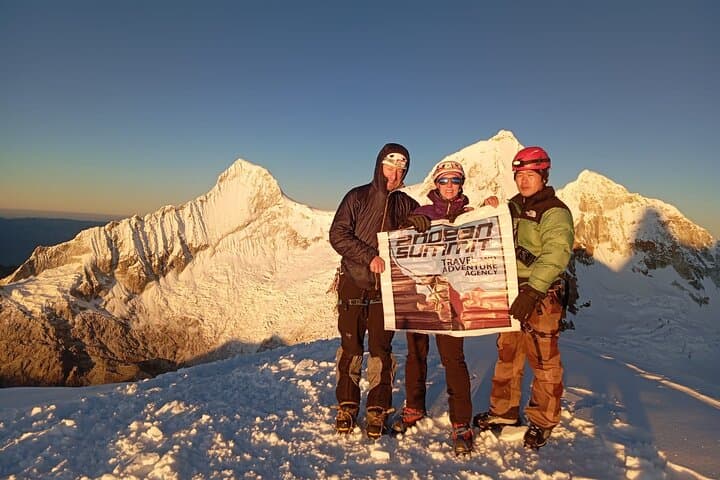
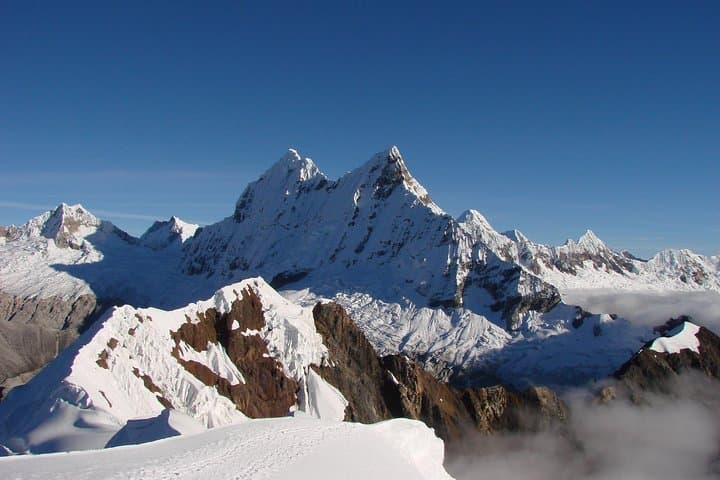
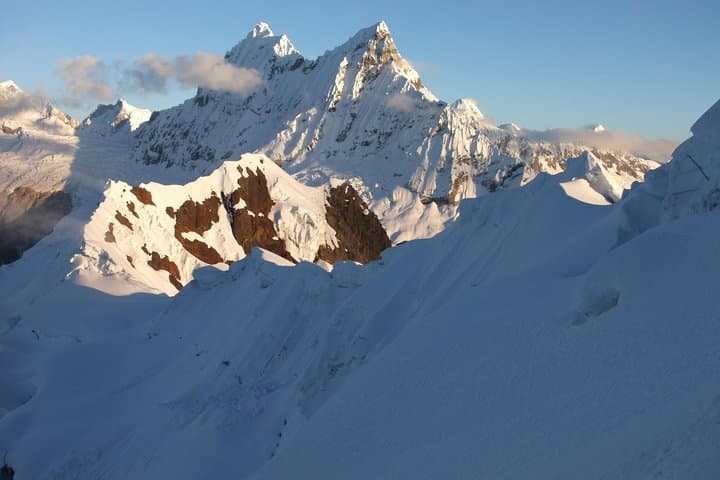
You wake at 2 a.m., the camp a scatter of breath and headlamp cones, crampons whispering as guides check ropes. Above, the ridge of Pisco slopes into a blue-black sky; the glacier ahead is both highway and test, its crevasses daring careful footsteps. By dawn the summit light cuts the Andes into planes—Huascarán, Chopicalqui, Huandoys and Artesonraju laid out like a chain of hard-won peaks.
You wake at 2 a.m., the camp a scatter of breath and headlamp cones, crampons whispering as guides check ropes. Above, the ridge of Pisco slopes into a blue-black sky; the glacier ahead is both highway and test, its crevasses daring careful footsteps. By dawn the summit light cuts the Andes into planes—Huascarán, Chopicalqui, Huandoys and Artesonraju laid out like a chain of hard-won peaks.
The Cordillera Blanca is young in geological terms, uplifted by the Nazca–South American plate collision and carved by Pleistocene ice. Quechua communities have shared this landscape for centuries; the mountain’s name now also nods to the region’s deep cultural ties to highland agriculture and Andean cosmology. Modern climbing here balances village life, seasonal herds and rapidly changing glaciers.
Practical guidance: the trip runs three days from Huaraz with hotel pickup, a 3-hour drive to Yuraq Corral then a ~4-hour march to base camp. The summit push starts ~2 a.m.—expect ~3 hours on moraine and ~4 hours on glacier to reach the 5,752 m top, 40 minutes to take in the view, then return. Included: professional guide, climbing and safety equipment, two nights’ accommodation and meals. Minimum two people, age 18+, and a moderate to strong aerobic base are required; the greatest hazard is altitude, not technical climbing.
Plan 1–2 days extra in Huaraz to acclimatize, use layered, waterproof clothing, and practice walking on crampons if you can. Respect glacial crevasses, carry personal water and sun protection, and leave no trace—these peaks need careful stewardship as the ice recedes.