THE ADVENTURE COLLECTIVE® · Independent discovery and booking for outdoor travel

Climb Pico do Fogo on a guided hike that crosses lava fields and reaches Cape Verde’s highest summit. Expect steep, narrow trails, dramatic crater views above the clouds, and a challenging 1,050 m ascent.
Climb Pico do Fogo on a guided hike that crosses lava fields and reaches Cape Verde’s highest summit. Expect steep, narrow trails, dramatic crater views above the clouds, and a challenging 1,050 m ascent.
A wind-swept lane opens onto black pumice and stunted shrubs as the van drops you at the caldera rim; the volcano seems to dare you onward. Guides set the pace, voices clipped against the altitude, while the trail climbs through lava fields that still smell faintly of sulfur. Halfway up you cross a stitched line of volcanic rock and vegetation—fertile pockets that push green through the ash—before the world falls away into a sea of cloud.
Verified experiences and guided adventures in the surrounding area.
Operated by Bu Country Tours · São Filipe, Fogo
A wind-swept lane opens onto black pumice and stunted shrubs as the van drops you at the caldera rim; the volcano seems to dare you onward. Guides set the pace, voices clipped against the altitude, while the trail climbs through lava fields that still smell faintly of sulfur. Halfway up you cross a stitched line of volcanic rock and vegetation—fertile pockets that push green through the ash—before the world falls away into a sea of cloud.
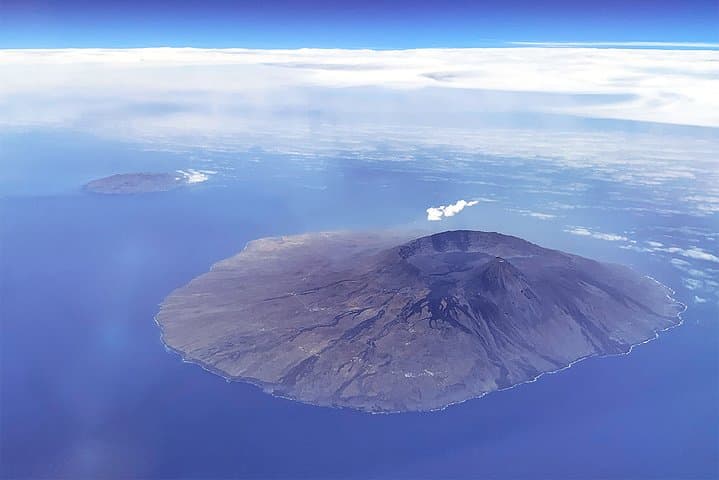
Geology here is raw and recent: Pico do Fogo is an active stratovolcano whose 2014 eruption reshaped nearby villages and spread new lava flows across the island. The climb follows historic eruption paths and offers a window into how oceanic volcanism builds islands. Locally, Fogo’s wine terraces and colonial-era houses tell a story of human adaptation to a restless landscape; São Filipe at the coast serves as the cultural and logistical hub.
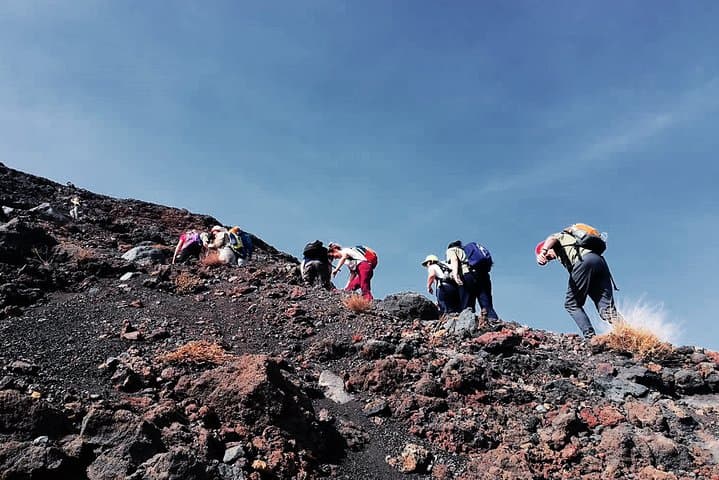
Practically, expect 9 km round-trip with roughly 1,050 m of gain and 5–6 hours of walking. Trails are steep, narrow, and switchback through scree and packed ash; a guided group will manage pacing and route-finding. Start early for stable weather and views over neighbouring islands; bring layers for a cold, windy summit and plenty of water—the volcanic ground drains fast. Good hiking boots, poles, and sunscreen are essential. Descents can be fast and loose over volcanic ash—trust your guide, control your pace, and leave time to watch light crawl across the crater before heading back to São Filipe.
difficult.
5–6 hours (hiking time).
Requires high aerobic fitness and strong legs; comfortable with sustained steep climbs and altitude.
The route is classified difficult: roughly 9 km round-trip with ~1,050 m ascent, narrow trails, and loose volcanic terrain; guided pacing helps less-experienced hikers.
No technical climbing is required, but hikers should be comfortable with steep, sustained ascents and basic scrambling; guides adjust pace to ability.
Start early to avoid afternoon clouds and stronger winds; sunrise departures improve visibility and summit conditions.
No special permit is typically required for guided hikes; bring sturdy boots, warm layers, sun protection, and sufficient water.
Fogo’s eruptions have repeatedly reshaped settlement patterns; the 2014 eruption covered parts of nearby villages and is integral to local memory and land use.
Trails cross fragile volcanic soil and recovering village lands—stick to paths, pack out waste, and support local guides and communities to minimize impact.
Bu Country Tours operates guided outdoor trips and adventures with an emphasis on safety, stewardship, and memorable experiences.
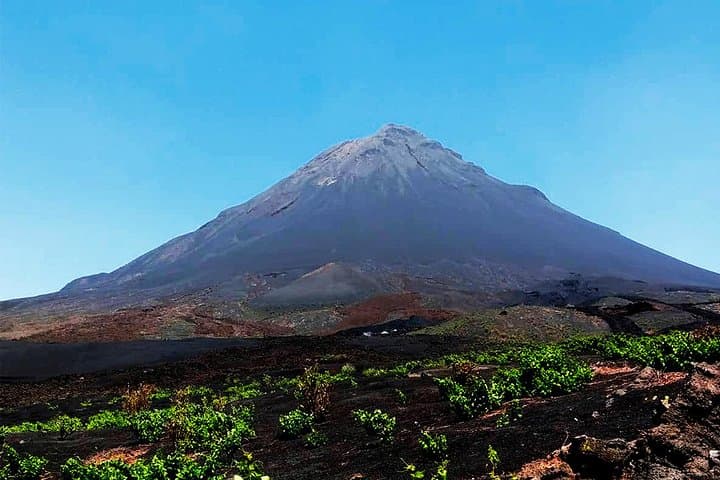
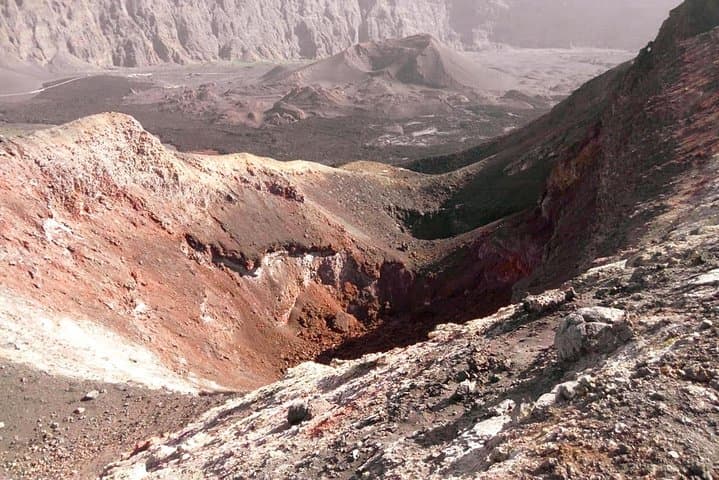
A wind-swept lane opens onto black pumice and stunted shrubs as the van drops you at the caldera rim; the volcano seems to dare you onward. Guides set the pace, voices clipped against the altitude, while the trail climbs through lava fields that still smell faintly of sulfur. Halfway up you cross a stitched line of volcanic rock and vegetation—fertile pockets that push green through the ash—before the world falls away into a sea of cloud.
A wind-swept lane opens onto black pumice and stunted shrubs as the van drops you at the caldera rim; the volcano seems to dare you onward. Guides set the pace, voices clipped against the altitude, while the trail climbs through lava fields that still smell faintly of sulfur. Halfway up you cross a stitched line of volcanic rock and vegetation—fertile pockets that push green through the ash—before the world falls away into a sea of cloud.
Geology here is raw and recent: Pico do Fogo is an active stratovolcano whose 2014 eruption reshaped nearby villages and spread new lava flows across the island. The climb follows historic eruption paths and offers a window into how oceanic volcanism builds islands. Locally, Fogo’s wine terraces and colonial-era houses tell a story of human adaptation to a restless landscape; São Filipe at the coast serves as the cultural and logistical hub.
Practically, expect 9 km round-trip with roughly 1,050 m of gain and 5–6 hours of walking. Trails are steep, narrow, and switchback through scree and packed ash; a guided group will manage pacing and route-finding. Start early for stable weather and views over neighbouring islands; bring layers for a cold, windy summit and plenty of water—the volcanic ground drains fast. Good hiking boots, poles, and sunscreen are essential. Descents can be fast and loose over volcanic ash—trust your guide, control your pace, and leave time to watch light crawl across the crater before heading back to São Filipe.