THE ADVENTURE COLLECTIVE® · Independent discovery and booking for outdoor travel

A demanding full-day hike up Pedra da Gávea takes you through Tijuca’s urban rainforest to a 842 m summit with sweeping views of Rio. Expect steep climbs, a short technical scramble with provided safety gear, and unforgettable city-to-forest panoramas.
A demanding full-day hike up Pedra da Gávea takes you through Tijuca’s urban rainforest to a 842 m summit with sweeping views of Rio. Expect steep climbs, a short technical scramble with provided safety gear, and unforgettable city-to-forest panoramas.
You start on a narrow trail under the heavy green of Tijuca Forest; humidity presses against your shirt and distant traffic hums below. The path climbs steadily, roots and boulders testing your footing, and the forest seems to push you upward until the trees thin and the city below unfurls — beaches, favelas, and Sugarloaf all reduced to a living map.
Verified experiences and guided adventures in the surrounding area.
Operated by Gray Line Brazil · Rio de Janeiro, Rio de Janeiro
You start on a narrow trail under the heavy green of Tijuca Forest; humidity presses against your shirt and distant traffic hums below. The path climbs steadily, roots and boulders testing your footing, and the forest seems to push you upward until the trees thin and the city below unfurls — beaches, favelas, and Sugarloaf all reduced to a living map.
Pedra da Gávea is a 842 m (2,763 ft) granite-gneiss monolith carved by ancient geology and modern weather. Locals have long given it an almost mythic status — talk of a carved face and disputed inscriptions — while the 19th-century reforestation of Tijuca National Park turned a denuded landscape back into urban rainforest. The route crosses rocky ledges and ridge lines, and it's easy to feel the mountain's personality: the wind scours, trees hold fast, and birds punctuate the climb.
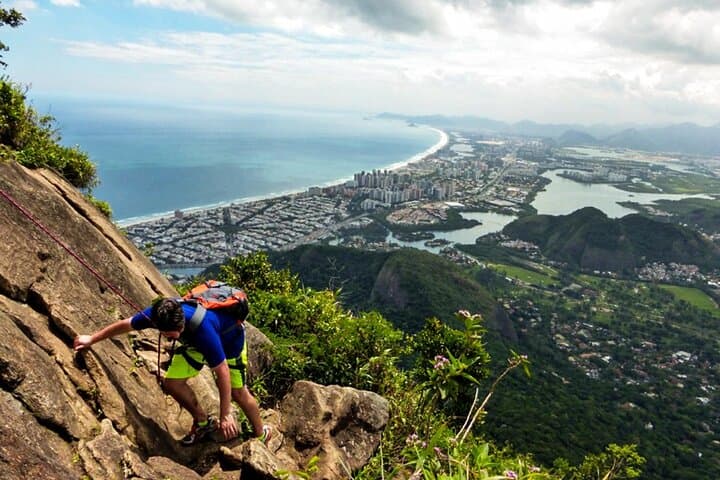
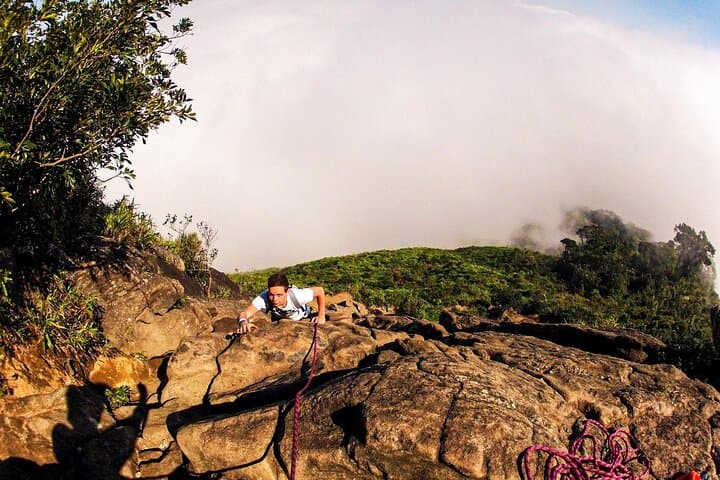
Practical guidance comes after the views. Expect about 3.7 miles round-trip with roughly 2.5 hours to ascend and 1.5 to descend; technical sections include a short 15 m scramble requiring a harness or fixed protection supplied by your guide. Start early to avoid heat and unstable weather; bring 2–3 liters of water, sun protection, and steady footwear with good traction. The operator provides transfers from São Conrado, Leblon, Ipanema and Copacabana and supplies safety equipment for the scramble.
For fit hikers comfortable with exposure, the summit rewards persistent effort with 30–40 minutes of panorama — an uncompromising, urban-meets-wild view that explains why this climb remains one of Rio's most sought-after experiences.
challenging.
7–8 hours.
Best for hikers with high aerobic fitness and experience on uneven, steep terrain; you should be comfortable with multi-hour ascents and short exposed scrambles.
The tour runs about 7–8 hours with roughly 3.7 miles total; expect a steep 2.5-hour ascent and a 1.5-hour descent — it’s physically demanding and recommended for fit hikers.
No prior climbing experience is required — guides supply safety gear for the short 15 m scramble, but you should be comfortable with exposure and basic rope-assisted movement.
The operator recommends participants be over 12 and in good cardiovascular health; not suitable for persons with serious spinal or heart conditions.
Yes — roundtrip transfers from many Rio neighborhoods are included and safety equipment for the scramble is provided; bring your own water and appropriate footwear.
Pedra da Gávea is a Precambrian granite and gneiss monolith (842 m) with local lore about carved faces and debated inscriptions; its prominence made it a navigational reference for early sailors.
Tijuca is one of the world’s largest urban reforestation projects; stay on trails, pack out waste, and avoid feeding wildlife to limit human impact.
Gray Line Brazil operates guided outdoor trips and adventures with an emphasis on safety, stewardship, and memorable experiences.
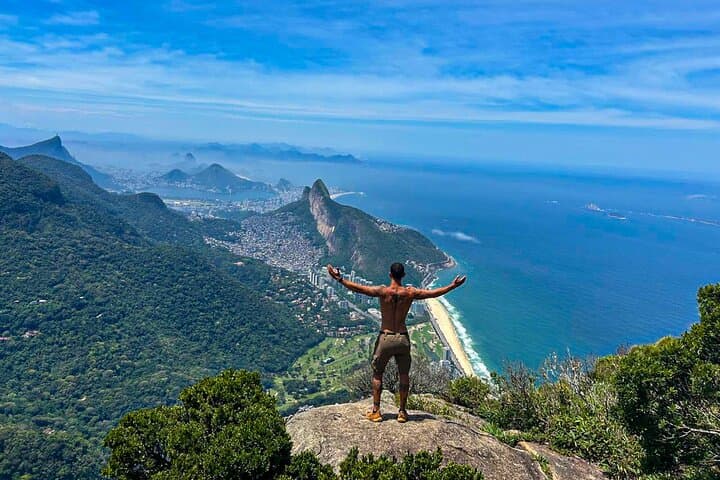
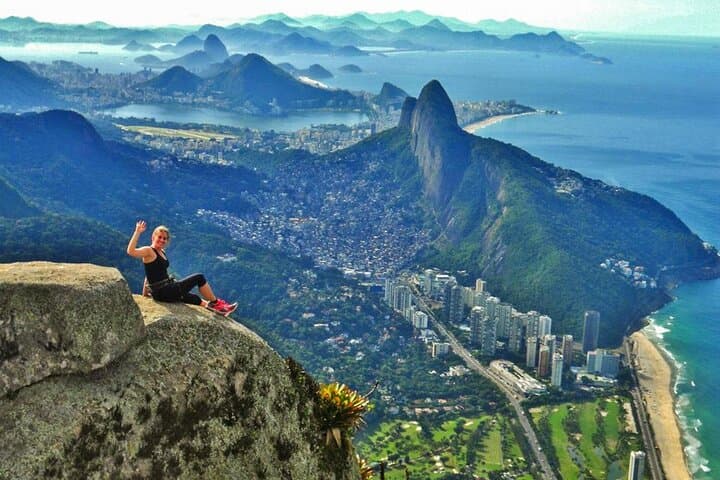
You start on a narrow trail under the heavy green of Tijuca Forest; humidity presses against your shirt and distant traffic hums below. The path climbs steadily, roots and boulders testing your footing, and the forest seems to push you upward until the trees thin and the city below unfurls — beaches, favelas, and Sugarloaf all reduced to a living map.
You start on a narrow trail under the heavy green of Tijuca Forest; humidity presses against your shirt and distant traffic hums below. The path climbs steadily, roots and boulders testing your footing, and the forest seems to push you upward until the trees thin and the city below unfurls — beaches, favelas, and Sugarloaf all reduced to a living map.
Pedra da Gávea is a 842 m (2,763 ft) granite-gneiss monolith carved by ancient geology and modern weather. Locals have long given it an almost mythic status — talk of a carved face and disputed inscriptions — while the 19th-century reforestation of Tijuca National Park turned a denuded landscape back into urban rainforest. The route crosses rocky ledges and ridge lines, and it's easy to feel the mountain's personality: the wind scours, trees hold fast, and birds punctuate the climb.
Practical guidance comes after the views. Expect about 3.7 miles round-trip with roughly 2.5 hours to ascend and 1.5 to descend; technical sections include a short 15 m scramble requiring a harness or fixed protection supplied by your guide. Start early to avoid heat and unstable weather; bring 2–3 liters of water, sun protection, and steady footwear with good traction. The operator provides transfers from São Conrado, Leblon, Ipanema and Copacabana and supplies safety equipment for the scramble.
For fit hikers comfortable with exposure, the summit rewards persistent effort with 30–40 minutes of panorama — an uncompromising, urban-meets-wild view that explains why this climb remains one of Rio's most sought-after experiences.