THE ADVENTURE COLLECTIVE® · Independent discovery and booking for outdoor travel

A compact two-day trek to the rim of Mount Nyiragongo that rewards endurance with a view into an active lava lake. Expect steep, hot trails, basic summit accommodation, and close-up volcanic drama.
A compact two-day trek to the rim of Mount Nyiragongo that rewards endurance with a view into an active lava lake. Expect steep, hot trails, basic summit accommodation, and close-up volcanic drama.
You crest a black ridge just after dusk and the crater ahead glows like a furnace—the lava lake throbs and breathes, throwing a low, red light across the rim where your hut waits. Night wind bites at 3,470 meters; the air smells of sulphur and stone. This two-day climb to Nyiragongo places you on one of Africa’s most visceral volcanic stages.
Verified experiences and guided adventures in the surrounding area.
Operated by Sahihi Africa Tours · Goma, North Kivu
You crest a black ridge just after dusk and the crater ahead glows like a furnace—the lava lake throbs and breathes, throwing a low, red light across the rim where your hut waits. Night wind bites at 3,470 meters; the air smells of sulphur and stone. This two-day climb to Nyiragongo places you on one of Africa’s most visceral volcanic stages.
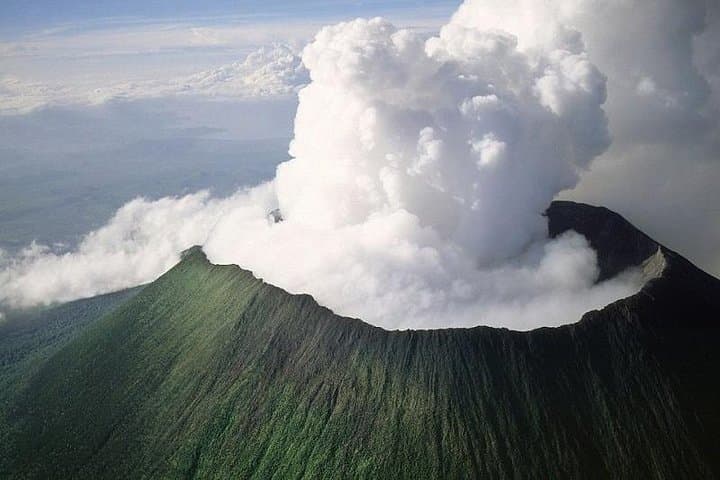
Nyiragongo sits inside Virunga National Park, established in 1925, its basalt flows and unusually fluid lava producing the world’s largest persistent lava lake. Eruptions in 1977 and 2002 reshaped local settlements and the Kivu shoreline; rangers and guides know the patterns and routes by heart. The ascent from Kibati follows worn tracks through montane forest, past volcanic scree and occasional thermal vents, and offers birdlife and small mammal sightings en route.
Culturally, expect interactions with Congolese guides, cooks, and porters; food on the rim is often a simple hot stew prepared by your team. Permits and park fees are required and typically arranged by tour operators.
Practical guidance: the hike is strenuous—plan 5–6 hours up and about 3 hours down, with thin air near the summit and hot conditions lower on the flank. Carry 2–3 liters of water, pack layered clothing for cold nights, and bring a headlamp for the final push. Sleeping bags and a summit cook are commonly provided; hiring a porter reduces load stress. Follow ranger instructions, stay on marked trails, and expect variable weather—clear views of the lava lake are best after dusk or in early morning when clouds thin.
challenging.
2 days (20–30 hours including travel and rests).
Require high cardiovascular fitness and strong legs; previous day-hike experience at elevation recommended.
Expect about 5–6 hours to the rim from Kibati (day 1) and roughly 2–3 hours to descend to base camp on day 2, depending on pace and conditions.
Permits, park fees, and basic rescue fees are normally arranged by tour operators and often listed in the inclusions; confirm before booking.
Not guaranteed—visibility depends on weather and time of day; arriving at dusk or early morning gives the best chance to watch the lake glow.
No; the route is strenuous with altitude stress and uneven ground. Travelers with cardiovascular or spinal conditions, or pregnant travelers, are generally advised not to attempt the climb.
Nyiragongo’s eruptions in 1977 and 2002 reshaped local communities and the Kivu coastline; the volcano sits within Virunga National Park, East Africa’s oldest protected area (est. 1925).
Virunga faces security and conservation challenges; stay on trails, carry out all waste, and respect ranger guidance to minimize impact.
Sahihi Africa Tours operates guided outdoor trips and adventures with an emphasis on safety, stewardship, and memorable experiences.
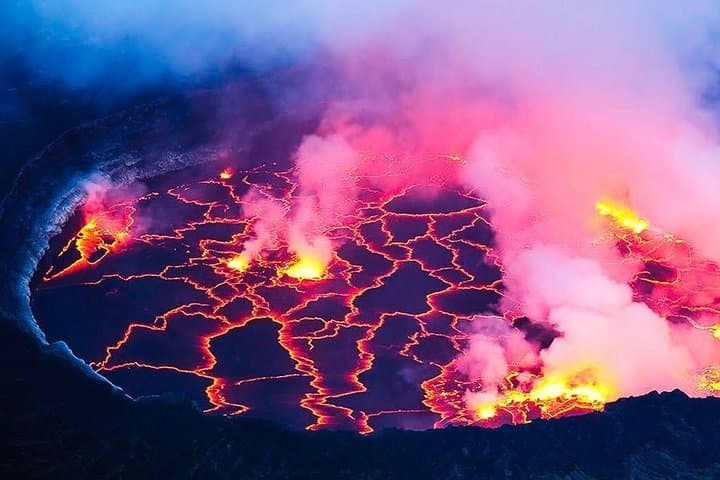


You crest a black ridge just after dusk and the crater ahead glows like a furnace—the lava lake throbs and breathes, throwing a low, red light across the rim where your hut waits. Night wind bites at 3,470 meters; the air smells of sulphur and stone. This two-day climb to Nyiragongo places you on one of Africa’s most visceral volcanic stages.
You crest a black ridge just after dusk and the crater ahead glows like a furnace—the lava lake throbs and breathes, throwing a low, red light across the rim where your hut waits. Night wind bites at 3,470 meters; the air smells of sulphur and stone. This two-day climb to Nyiragongo places you on one of Africa’s most visceral volcanic stages.
Nyiragongo sits inside Virunga National Park, established in 1925, its basalt flows and unusually fluid lava producing the world’s largest persistent lava lake. Eruptions in 1977 and 2002 reshaped local settlements and the Kivu shoreline; rangers and guides know the patterns and routes by heart. The ascent from Kibati follows worn tracks through montane forest, past volcanic scree and occasional thermal vents, and offers birdlife and small mammal sightings en route.
Culturally, expect interactions with Congolese guides, cooks, and porters; food on the rim is often a simple hot stew prepared by your team. Permits and park fees are required and typically arranged by tour operators.
Practical guidance: the hike is strenuous—plan 5–6 hours up and about 3 hours down, with thin air near the summit and hot conditions lower on the flank. Carry 2–3 liters of water, pack layered clothing for cold nights, and bring a headlamp for the final push. Sleeping bags and a summit cook are commonly provided; hiring a porter reduces load stress. Follow ranger instructions, stay on marked trails, and expect variable weather—clear views of the lava lake are best after dusk or in early morning when clouds thin.