THE ADVENTURE COLLECTIVE® · Independent discovery and booking for outdoor travel

Tackle the steep, humid ascent of Mount Liamuiga for rainforest, crater views and wide Caribbean panoramas. This 4–5 hour volcano hike combines raw geology with accessible guiding and local logistics from Basseterre.
Tackle the steep, humid ascent of Mount Liamuiga for rainforest, crater views and wide Caribbean panoramas. This 4–5 hour volcano hike combines raw geology with accessible guiding and local logistics from Basseterre.
Fog clings to the crater rim like a slow-moving tide as you climb—mud soft underfoot, rainforest pressing close, and the island slipping away in emerald wedges below. Mount Liamuiga rises to about 3,792 feet (1,156 m), a dormant stratovolcano whose trail snakes through lowland coastal forest into moss-draped cloud forest and finally a rim that opens onto a hulking caldera.
Verified experiences and guided adventures in the surrounding area.
Operated by Welcome To Saint Kitts · Basseterre, Saint Kitts
Fog clings to the crater rim like a slow-moving tide as you climb—mud soft underfoot, rainforest pressing close, and the island slipping away in emerald wedges below. Mount Liamuiga rises to about 3,792 feet (1,156 m), a dormant stratovolcano whose trail snakes through lowland coastal forest into moss-draped cloud forest and finally a rim that opens onto a hulking caldera.
Geology here is visceral: layers of basalt and ash tell of powerful eruptions that shaped St. Kitts and its neighbors. European sugar-plantation history sits in the lowlands, but inland the mountain holds older stories—indigenous pre-Columbian use of the island’s resources and a landscape that supported successive waves of settlers. Birdsong and the occasional chitter of agouti punctuate the ascent; tropical birds and ferns change with elevation as humidity climbs.
Expect steep pitches, rooty steps, and stretches of loose volcanic scree near the top. Weather shifts fast—sun to squall in an hour—so timing matters. Guides usually provide bottled water, snacks and basic first aid; routes and pick-up logistics are typically handled from Basseterre or cruise ports. Plan for a 4–5 hour outing with 900–1,100 meters of elevation gain depending on start point, and budget extra time for photos at the crater rim.
Practical tips: wear grippy hiking shoes, pack a breathable rain shell and insect repellent, bring at least 1.5–2 liters of water, and note that trails can be slippery after rain. The reward is raw, panoramic Caribbean—the island dropping away and neighboring isles hazed on the horizon.
moderate.
4–5 hours.
Moderate fitness required — able to sustain uphill hiking for several hours and handle uneven, sometimes slippery terrain.
Guided trips typically take 4–5 hours round-trip depending on the trailhead and group pace.
A guide is strongly recommended for navigation, safety and to handle rapid weather and trail conditions; many operators include one.
Breathable layers, sturdy hiking shoes, a light waterproof, and a hat; insect repellent is recommended.
Altitude is moderate but expect steep climbs; anyone with heart or respiratory conditions should consult a doctor and consider the trip difficulty.
Mount Liamuiga formed from repeated volcanic eruptions; the island’s plantation-era history unfolded in the lowlands while the interior remained mostly forested.
Stay on designated trails to protect fragile cloud-forest plants; visitors are encouraged to pack out waste and support local guides who practice Leave No Trace.
Welcome To Saint Kitts operates guided outdoor trips and adventures with an emphasis on safety, stewardship, and memorable experiences.
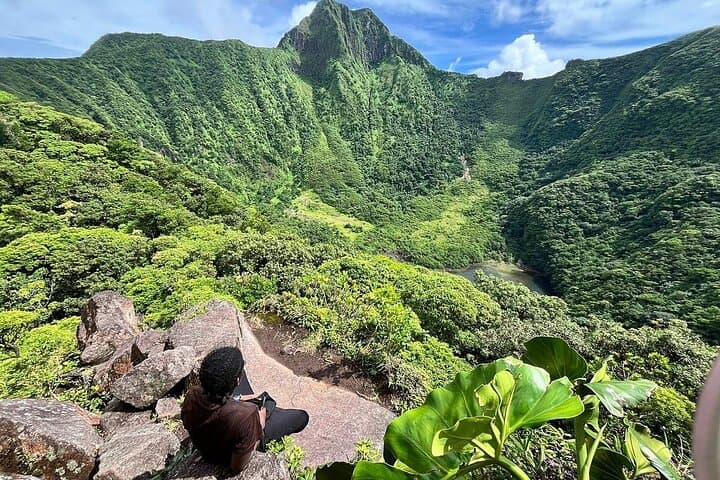


Fog clings to the crater rim like a slow-moving tide as you climb—mud soft underfoot, rainforest pressing close, and the island slipping away in emerald wedges below. Mount Liamuiga rises to about 3,792 feet (1,156 m), a dormant stratovolcano whose trail snakes through lowland coastal forest into moss-draped cloud forest and finally a rim that opens onto a hulking caldera.
Fog clings to the crater rim like a slow-moving tide as you climb—mud soft underfoot, rainforest pressing close, and the island slipping away in emerald wedges below. Mount Liamuiga rises to about 3,792 feet (1,156 m), a dormant stratovolcano whose trail snakes through lowland coastal forest into moss-draped cloud forest and finally a rim that opens onto a hulking caldera.
Geology here is visceral: layers of basalt and ash tell of powerful eruptions that shaped St. Kitts and its neighbors. European sugar-plantation history sits in the lowlands, but inland the mountain holds older stories—indigenous pre-Columbian use of the island’s resources and a landscape that supported successive waves of settlers. Birdsong and the occasional chitter of agouti punctuate the ascent; tropical birds and ferns change with elevation as humidity climbs.
Expect steep pitches, rooty steps, and stretches of loose volcanic scree near the top. Weather shifts fast—sun to squall in an hour—so timing matters. Guides usually provide bottled water, snacks and basic first aid; routes and pick-up logistics are typically handled from Basseterre or cruise ports. Plan for a 4–5 hour outing with 900–1,100 meters of elevation gain depending on start point, and budget extra time for photos at the crater rim.
Practical tips: wear grippy hiking shoes, pack a breathable rain shell and insect repellent, bring at least 1.5–2 liters of water, and note that trails can be slippery after rain. The reward is raw, panoramic Caribbean—the island dropping away and neighboring isles hazed on the horizon.