THE ADVENTURE COLLECTIVE® · Independent discovery and booking for outdoor travel

Take on North Africa’s highest summit with this three-day trek from Marrakech to Mount Toubkal. Navigate rugged terrain, soak in Berber culture, and stand atop peaks that stretch toward the Sahara. Discover practical insights to prepare for this challenging, unforgettable adventure.
Take on North Africa’s highest summit with this three-day trek from Marrakech to Mount Toubkal. Navigate rugged terrain, soak in Berber culture, and stand atop peaks that stretch toward the Sahara. Discover practical insights to prepare for this challenging, unforgettable adventure.
The first light of dawn spills over the rugged High Atlas, casting long shadows that stretch across the trail leading out of Imlil. Here begins the journey to Mount Toubkal, North Africa's towering giant standing at 4,167 meters. This three-day trek unfolds through shifting landscapes—from sunlit valleys and terraced villages to sparse alpine pastures and jagged rocky ridges—each step drawing you closer to the peak’s commanding summit.
Verified experiences and guided adventures in the surrounding area.
Operated by Toubkal Guide · Imlil, Marrakech-Safi
The first light of dawn spills over the rugged High Atlas, casting long shadows that stretch across the trail leading out of Imlil. Here begins the journey to Mount Toubkal, North Africa's towering giant standing at 4,167 meters. This three-day trek unfolds through shifting landscapes—from sunlit valleys and terraced villages to sparse alpine pastures and jagged rocky ridges—each step drawing you closer to the peak’s commanding summit.
Starting from Marrakech, a city alive with colors and the hum of souks, the transfer to Imlil introduces a more tranquil world. Imlil serves as the gateway, a small Berber village perched at about 1,740 meters altitude, where mules and local guides await. The path rises incrementally as it follows the Mizane Valley, bypassing the village of Aremd, then winding past the shrine of Sidi Chamarouch—a site steeped in local legend and spiritual significance, attracting pilgrims who seek the mountain’s blessing.
The trek’s first day covers roughly 14 kilometers with an elevation gain of about 1,400 meters, navigating rocky mule tracks and flood plains before reaching the refuge at 3,206 meters. The terrain demands steady footing as the trail snakes upward, teasing trekkers with glimpses of snowline soils and the craggy high cliffs that command the horizon.
Day two is the summit push, unfolding in the cold, thin mountain air. Starting before sunrise, you ascend via the south cirque, crossing a rocky stream above the refuge. The trail alternates between scree slopes and sporadic scrambling—technical skills aren’t required, but sturdy boots, an ice axe, and crampons (in snowy conditions) are essential. At summit, the panorama opens wide: the vast plains around Marrakech, the High Atlas ridges slicing through the sky, and, far south, the fading sands of the Sahara daring you to explore beyond.
Descending retraces the route back to the refuge for a final night before the return to Imlil and ultimately Marrakech. This trek balances challenge with accessibility, best suited for those in good physical shape and comfortable with high-altitude walking. Along the way, you move in step with the mountain’s moods—its winds, shadows, and the quiet resilience of its Berber inhabitants.
If planning your ascent, remember to bring layered clothing for rapidly changing conditions, sun protection, and hydration systems to negotiate the mountain’s dry air. The weather can shift swiftly, especially between November and April when snow adds a technical layer to the hike. The local guides and cooks ensure logistical support and a window into the region’s culture, making this more than a climb—it’s a full immersion in Morocco’s heartland.
Mount Toubkal is elemental and commanding, a mountain that speaks with wind and rock, offering both a physical test and a canvas for reflection high above the world below.
challenging.
3 days.
Good cardiovascular fitness required due to significant elevation gain and altitude
No technical climbing is involved, but trekkers should be comfortable with steep hiking and basic scrambling.
Spring to early autumn offers mild weather, while November to April requires snow gear due to winter conditions.
The trail starts around 1,740m in Imlil, ascending to the refuge at 3,206m, and finally the summit at 4,167m.
Yes, a local English-speaking guide, cook, and mule support are part of the service.
It is challenging due to altitude and steep sections; a good fitness level is required.
Overnight stays at mountain refuges are included along the route.
Mount Toubkal is part of the High Atlas, a range that has long defined Berber culture and resistance; its trails follow ancient trade and pilgrimage routes.
Efforts by local communities and guides focus on minimizing impact through controlled trekking and waste management to preserve the fragile alpine ecosystem.
Toubkal Guide operates guided outdoor trips and adventures with an emphasis on safety, stewardship, and memorable experiences.
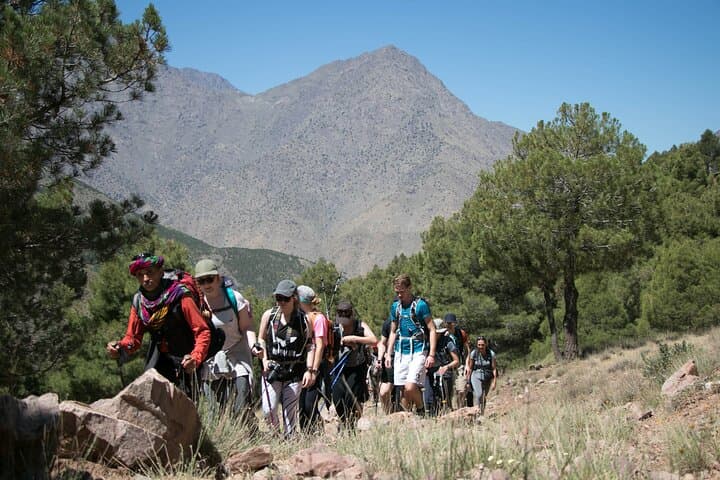
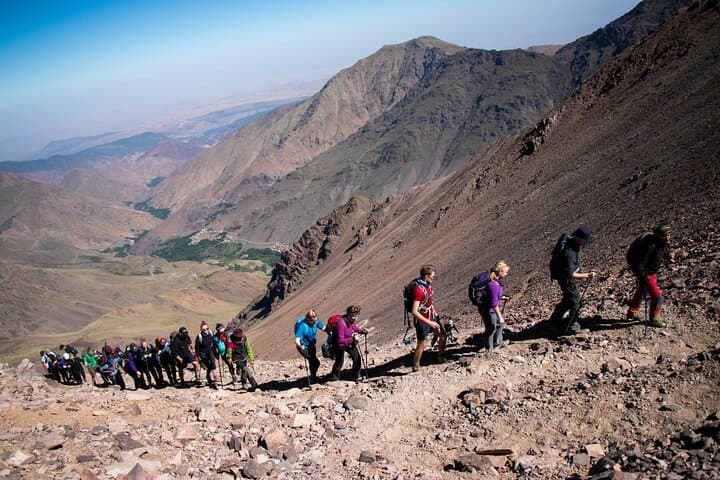
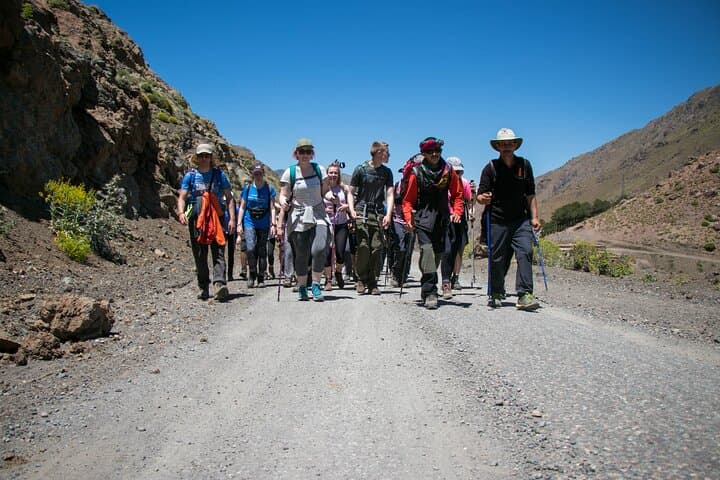
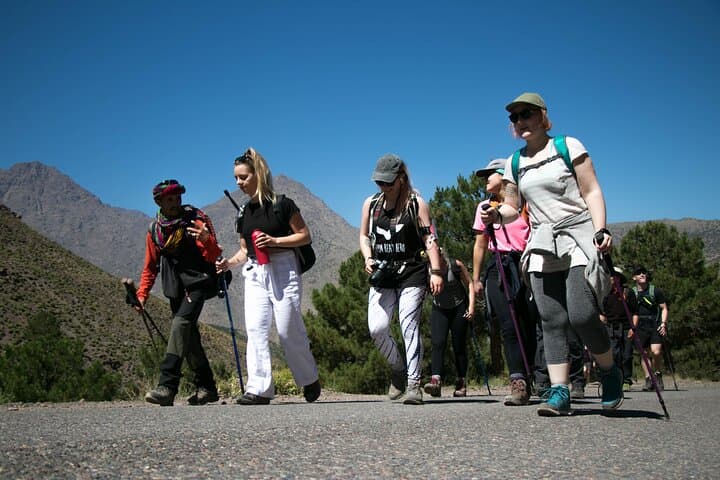
The first light of dawn spills over the rugged High Atlas, casting long shadows that stretch across the trail leading out of Imlil. Here begins the journey to Mount Toubkal, North Africa's towering giant standing at 4,167 meters. This three-day trek unfolds through shifting landscapes—from sunlit valleys and terraced villages to sparse alpine pastures and jagged rocky ridges—each step drawing you closer to the peak’s commanding summit.
The first light of dawn spills over the rugged High Atlas, casting long shadows that stretch across the trail leading out of Imlil. Here begins the journey to Mount Toubkal, North Africa's towering giant standing at 4,167 meters. This three-day trek unfolds through shifting landscapes—from sunlit valleys and terraced villages to sparse alpine pastures and jagged rocky ridges—each step drawing you closer to the peak’s commanding summit.
Starting from Marrakech, a city alive with colors and the hum of souks, the transfer to Imlil introduces a more tranquil world. Imlil serves as the gateway, a small Berber village perched at about 1,740 meters altitude, where mules and local guides await. The path rises incrementally as it follows the Mizane Valley, bypassing the village of Aremd, then winding past the shrine of Sidi Chamarouch—a site steeped in local legend and spiritual significance, attracting pilgrims who seek the mountain’s blessing.
The trek’s first day covers roughly 14 kilometers with an elevation gain of about 1,400 meters, navigating rocky mule tracks and flood plains before reaching the refuge at 3,206 meters. The terrain demands steady footing as the trail snakes upward, teasing trekkers with glimpses of snowline soils and the craggy high cliffs that command the horizon.
Day two is the summit push, unfolding in the cold, thin mountain air. Starting before sunrise, you ascend via the south cirque, crossing a rocky stream above the refuge. The trail alternates between scree slopes and sporadic scrambling—technical skills aren’t required, but sturdy boots, an ice axe, and crampons (in snowy conditions) are essential. At summit, the panorama opens wide: the vast plains around Marrakech, the High Atlas ridges slicing through the sky, and, far south, the fading sands of the Sahara daring you to explore beyond.
Descending retraces the route back to the refuge for a final night before the return to Imlil and ultimately Marrakech. This trek balances challenge with accessibility, best suited for those in good physical shape and comfortable with high-altitude walking. Along the way, you move in step with the mountain’s moods—its winds, shadows, and the quiet resilience of its Berber inhabitants.
If planning your ascent, remember to bring layered clothing for rapidly changing conditions, sun protection, and hydration systems to negotiate the mountain’s dry air. The weather can shift swiftly, especially between November and April when snow adds a technical layer to the hike. The local guides and cooks ensure logistical support and a window into the region’s culture, making this more than a climb—it’s a full immersion in Morocco’s heartland.
Mount Toubkal is elemental and commanding, a mountain that speaks with wind and rock, offering both a physical test and a canvas for reflection high above the world below.