THE ADVENTURE COLLECTIVE® · Independent discovery and booking for outdoor travel

Three days of high Atlas terrain, Berber hospitality and a summit at 4,167 m: this private trek from Marrakech delivers panoramic views and serious altitude gain. Read on for route details, terrain notes and practical tips to plan the climb.
Three days of high Atlas terrain, Berber hospitality and a summit at 4,167 m: this private trek from Marrakech delivers panoramic views and serious altitude gain. Read on for route details, terrain notes and practical tips to plan the climb.
A cold pre-dawn breeze from the high ridgelines pushes across the stone courtyard as guides lace boots and pack mules nicker outside. By headlamp you climb out of the Toubkal Refuge into black sky; stars shutter and then a single ridge of light reveals the peak’s silhouette. The ascent to Jebel Toubkal (4,167 m) is a sequence of switchbacks, scree fields and granite outcrops that demands steady legs and calm breathing.
Verified experiences and guided adventures in the surrounding area.
Operated by Marrakesh Day Tours · Marrakech, Marrakech-Safi
A cold pre-dawn breeze from the high ridgelines pushes across the stone courtyard as guides lace boots and pack mules nicker outside. By headlamp you climb out of the Toubkal Refuge into black sky; stars shutter and then a single ridge of light reveals the peak’s silhouette. The ascent to Jebel Toubkal (4,167 m) is a sequence of switchbacks, scree fields and granite outcrops that demands steady legs and calm breathing.
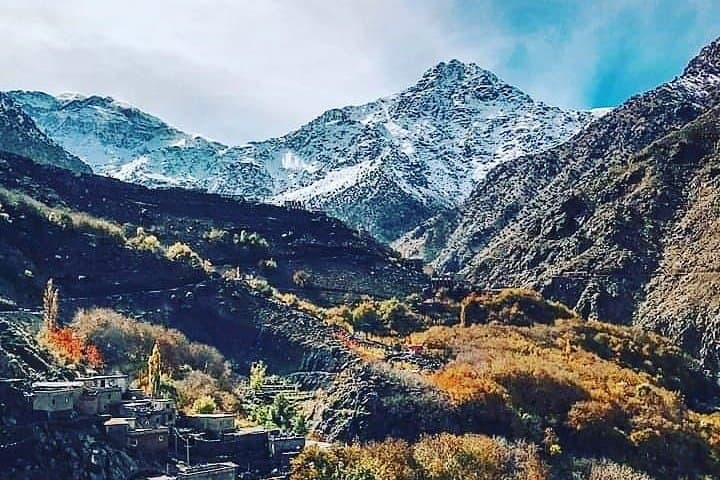
The High Atlas were carved by tectonic pressure and erosion; on this route you cross younger volcanic deposits and exposed crystalline rock that record Morocco’s rugged uplift. Imlil and the surrounding villages are Berber-speaking, with seasonal terraces and small kasbah-like guesthouses where local families host trekkers and serve slow-simmered tagines.
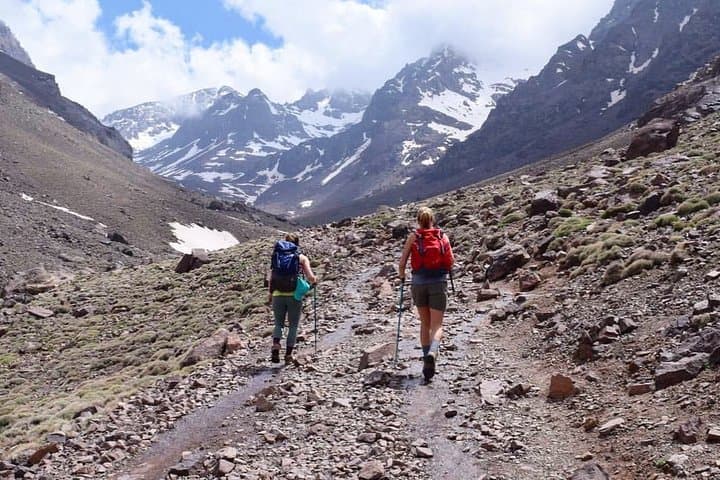
Over three days the trek moves from Imlil (1,740 m) through the pilgrimage site of Sidi Chamharouch to the Toubkal Refuge (3,207 m) and the summit, then a long descent back to the valley. Expect steady climbs: roughly 1,467 m gain to the refuge and about 960 m from refuge to summit; the final day can reach 9–10 hours on foot. Terrain ranges from dusty mule tracks to loose scree near the top; winter brings hard-packed snow and possible cornices.
Practical essentials: acclimatize in Marrakech or Imlil, carry 2–3 L of water, layer for high diurnal swings, and use trekking poles to protect knees on descent. Guides handle route-finding and luggage shuttles; strong cardiovascular fitness and previous full-day mountain hikes make the experience safer and more enjoyable.
challenging.
3 days (summit day 9–10 hours).
Good aerobic fitness and experience with multi-hour mountain days; able to carry a daypack and tolerate altitude.
It’s a strenuous high-altitude trek requiring good fitness; the summit day involves steep sections, loose scree and long hours on foot—guides assist with pacing.
In summer no technical gear is required beyond poles and good boots; in winter crampons and an ice axe and the skills to use them are recommended.
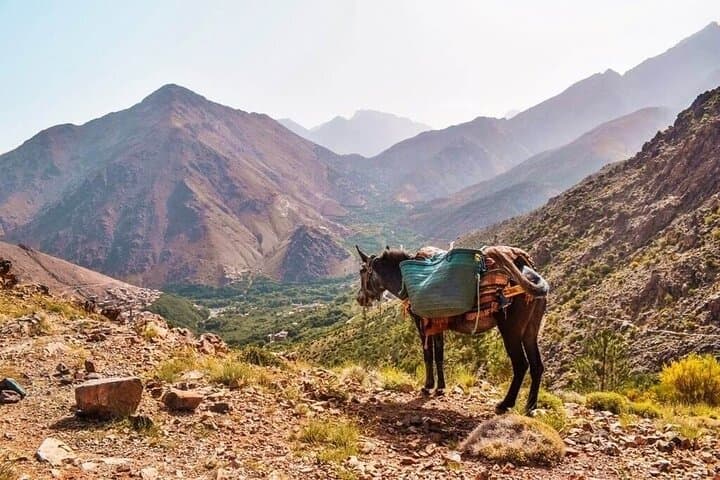
Light luggage is usually carried by mules to the refuge; larger bags can be stored with your Marrakech accommodation or arranged with the operator.
Late spring to early autumn (May–October) offers the most stable conditions; winter brings snow and requires alpine experience and equipment.
The High Atlas have long been home to Berber communities with trade routes linking valleys; the area was important historically as a summer grazing zone and a crossroad of local cultures.
Stick to established trails, pack out waste and support guesthouses that use local water and grazing management to limit erosion and pressure on fragile alpine plants.
Marrakesh Day Tours operates guided outdoor trips and adventures with an emphasis on safety, stewardship, and memorable experiences.
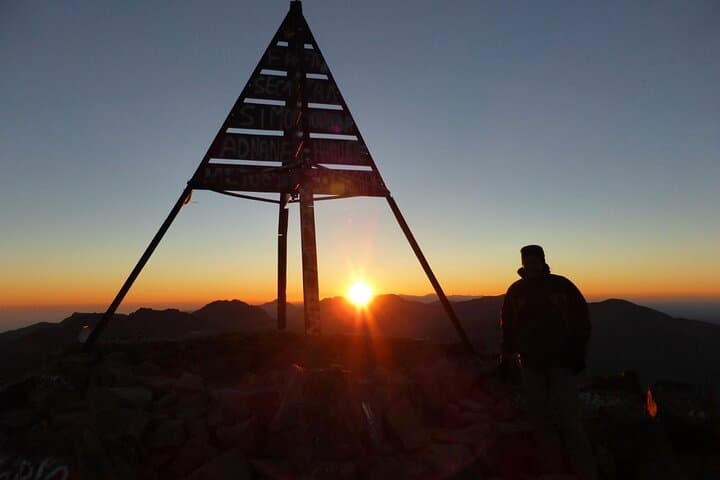
A cold pre-dawn breeze from the high ridgelines pushes across the stone courtyard as guides lace boots and pack mules nicker outside. By headlamp you climb out of the Toubkal Refuge into black sky; stars shutter and then a single ridge of light reveals the peak’s silhouette. The ascent to Jebel Toubkal (4,167 m) is a sequence of switchbacks, scree fields and granite outcrops that demands steady legs and calm breathing.
A cold pre-dawn breeze from the high ridgelines pushes across the stone courtyard as guides lace boots and pack mules nicker outside. By headlamp you climb out of the Toubkal Refuge into black sky; stars shutter and then a single ridge of light reveals the peak’s silhouette. The ascent to Jebel Toubkal (4,167 m) is a sequence of switchbacks, scree fields and granite outcrops that demands steady legs and calm breathing.
The High Atlas were carved by tectonic pressure and erosion; on this route you cross younger volcanic deposits and exposed crystalline rock that record Morocco’s rugged uplift. Imlil and the surrounding villages are Berber-speaking, with seasonal terraces and small kasbah-like guesthouses where local families host trekkers and serve slow-simmered tagines.
Over three days the trek moves from Imlil (1,740 m) through the pilgrimage site of Sidi Chamharouch to the Toubkal Refuge (3,207 m) and the summit, then a long descent back to the valley. Expect steady climbs: roughly 1,467 m gain to the refuge and about 960 m from refuge to summit; the final day can reach 9–10 hours on foot. Terrain ranges from dusty mule tracks to loose scree near the top; winter brings hard-packed snow and possible cornices.
Practical essentials: acclimatize in Marrakech or Imlil, carry 2–3 L of water, layer for high diurnal swings, and use trekking poles to protect knees on descent. Guides handle route-finding and luggage shuttles; strong cardiovascular fitness and previous full-day mountain hikes make the experience safer and more enjoyable.