THE ADVENTURE COLLECTIVE® · Independent discovery and booking for outdoor travel

A compact, guided 3-day trek from Marrakech to the summit of Jebel Toubkal (4,165 m) that moves from Berber valleys to high-alpine scree. Expect village homestays, steady elevation gain, and a pre-dawn summit push with big views.
A compact, guided 3-day trek from Marrakech to the summit of Jebel Toubkal (4,165 m) that moves from Berber valleys to high-alpine scree. Expect village homestays, steady elevation gain, and a pre-dawn summit push with big views.
A pale dawn lifts off the Marrakech plain and, within an hour, the Atlas foothills sharpen into ridges and gullies. On this shared 3-day route, trekkers move from cultivated terraces and mule tracks into the raw, glacial-carved bowls of the High Atlas where the air thins and stone takes on a silver edge.
Verified experiences and guided adventures in the surrounding area.
Operated by Morocco Tours Services · Marrakech, Marrakech-Safi
A pale dawn lifts off the Marrakech plain and, within an hour, the Atlas foothills sharpen into ridges and gullies. On this shared 3-day route, trekkers move from cultivated terraces and mule tracks into the raw, glacial-carved bowls of the High Atlas where the air thins and stone takes on a silver edge.
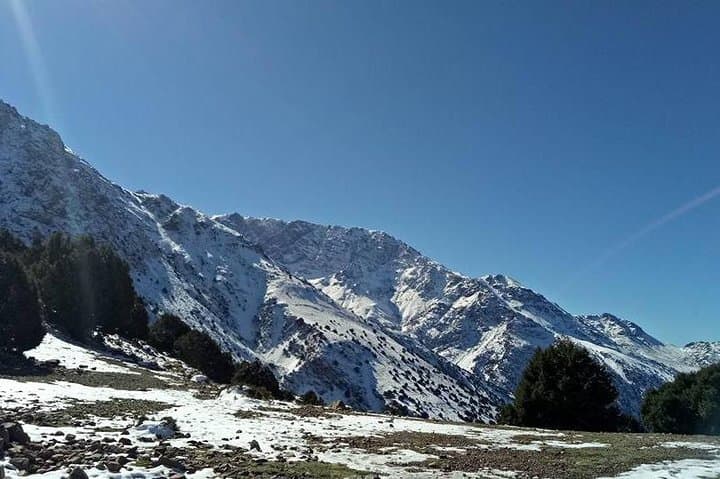
The route follows old Berber paths used for generations of seasonal movement—markets in Asni and homesteads in Aremd still sit alongside terraced corn and walnut plots. Geologically the High Atlas is folded Mesozoic rock, eroded into steep cirques and scree slopes; the ascent trades village tracks for moraine, then for the boulder fields and scree that guard Toubkal’s upper flanks.
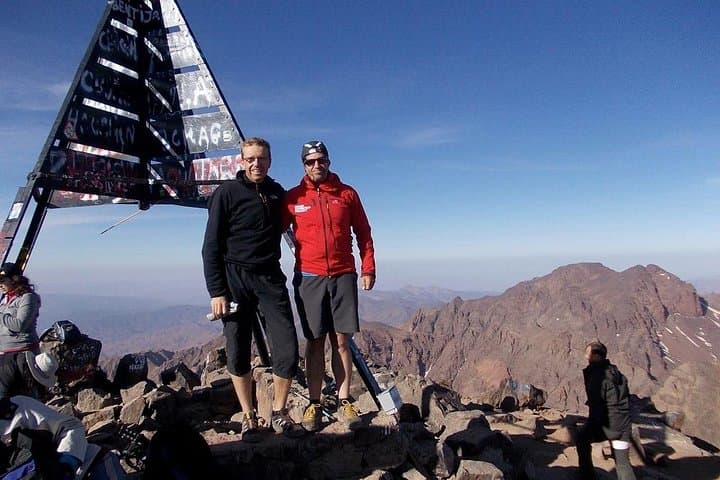
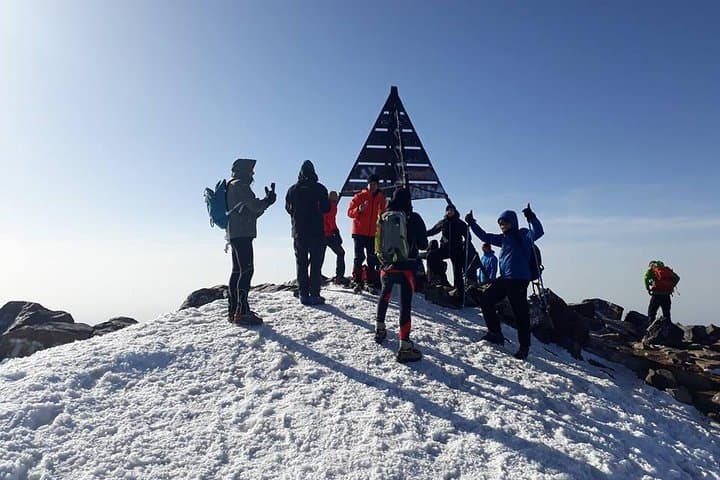
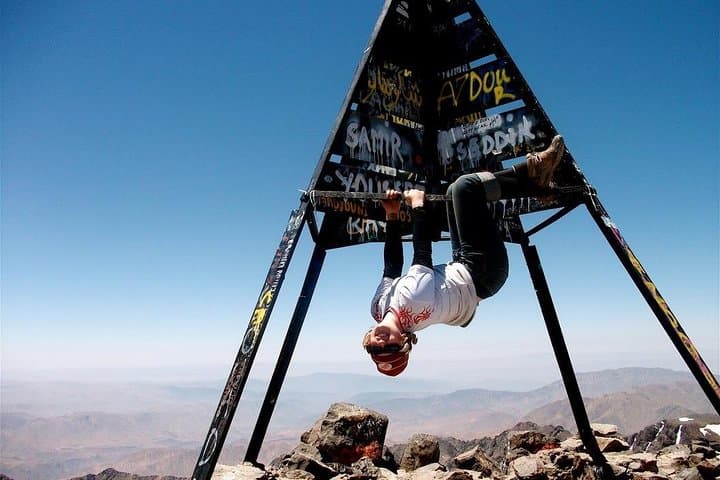
Culturally, the trek threads through Amazigh (Berber) communities: expect simple gîtes, homestay lunches, and hospitality shaped by mountain life. Day one’s walking (≈12 km) climbs between 1,600–2,200 m passes; day two gains to the Toubkal Refuge at ~3,206 m with steady uphill on mule tracks and rocky steps; day three begins pre-dawn for the summit push to 4,165 m across scree fields and a final rocky crest.
Practical guidance: move slowly to manage altitude, carry 2–3 liters of water and high-calorie snacks, and break up the ascent into steady, short steps over scree. Sturdy boots with ankle support and trekking poles make scree and descent sections far easier. Weather can swing rapidly—start early, dress in layers, and keep a headlamp and emergency insulation handy. With modest fitness and proper pacing, the summit rewards expansive views from the High Atlas to the Sahara.
challenging.
3 days.
Good aerobic fitness with experience on long uphill days; ability to hike 6–8 hours with a daypack.
Expect a long early start, sustained hiking over scree and boulder fields with ~900 m+ elevation gain from the refuge to the summit; fitness and pacing matter.
No technical climbing is needed in summer, but prior multi-day trekking and fitness at altitude are recommended.
Accommodations include mountain refuges and local gîtes/homestays with simple meals as described in the itinerary.
Late spring through early autumn offers the most stable conditions; winter requires alpine gear and experience with snow and ice.
The High Atlas has long been home to Amazigh (Berber) communities who farm terraced slopes and trade on seasonal mountain routes; the paths used today follow centuries-old tracks.
Stick to established trails, avoid collecting plant material, and use local guides to support community-based tourism and minimize ecological impact.
Morocco Tours Services operates guided outdoor trips and adventures with an emphasis on safety, stewardship, and memorable experiences.
A pale dawn lifts off the Marrakech plain and, within an hour, the Atlas foothills sharpen into ridges and gullies. On this shared 3-day route, trekkers move from cultivated terraces and mule tracks into the raw, glacial-carved bowls of the High Atlas where the air thins and stone takes on a silver edge.
A pale dawn lifts off the Marrakech plain and, within an hour, the Atlas foothills sharpen into ridges and gullies. On this shared 3-day route, trekkers move from cultivated terraces and mule tracks into the raw, glacial-carved bowls of the High Atlas where the air thins and stone takes on a silver edge.
The route follows old Berber paths used for generations of seasonal movement—markets in Asni and homesteads in Aremd still sit alongside terraced corn and walnut plots. Geologically the High Atlas is folded Mesozoic rock, eroded into steep cirques and scree slopes; the ascent trades village tracks for moraine, then for the boulder fields and scree that guard Toubkal’s upper flanks.
Culturally, the trek threads through Amazigh (Berber) communities: expect simple gîtes, homestay lunches, and hospitality shaped by mountain life. Day one’s walking (≈12 km) climbs between 1,600–2,200 m passes; day two gains to the Toubkal Refuge at ~3,206 m with steady uphill on mule tracks and rocky steps; day three begins pre-dawn for the summit push to 4,165 m across scree fields and a final rocky crest.
Practical guidance: move slowly to manage altitude, carry 2–3 liters of water and high-calorie snacks, and break up the ascent into steady, short steps over scree. Sturdy boots with ankle support and trekking poles make scree and descent sections far easier. Weather can swing rapidly—start early, dress in layers, and keep a headlamp and emergency insulation handy. With modest fitness and proper pacing, the summit rewards expansive views from the High Atlas to the Sahara.