THE ADVENTURE COLLECTIVE® · Independent discovery and booking for outdoor travel

Push from Marrakech to Imlil, spend a night at the Toubkal refuge, then climb to the 4,167 m summit on day two. This two-day itinerary pairs local guides, mules and straightforward high-mountain trekking for a compact yet demanding ascent.
Push from Marrakech to Imlil, spend a night at the Toubkal refuge, then climb to the 4,167 m summit on day two. This two-day itinerary pairs local guides, mules and straightforward high-mountain trekking for a compact yet demanding ascent.
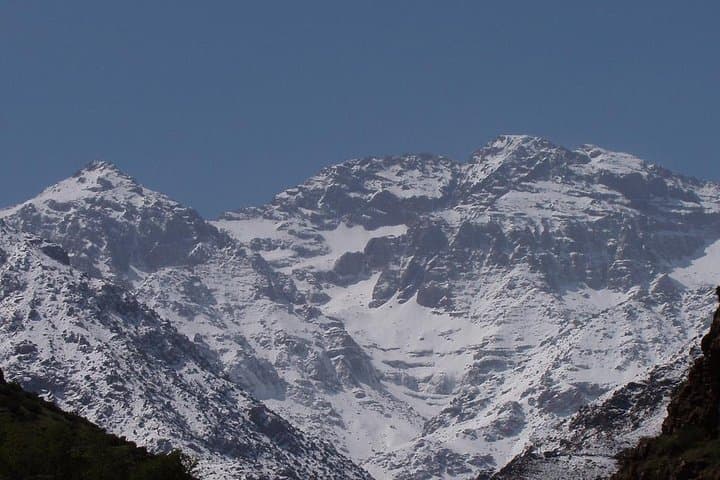
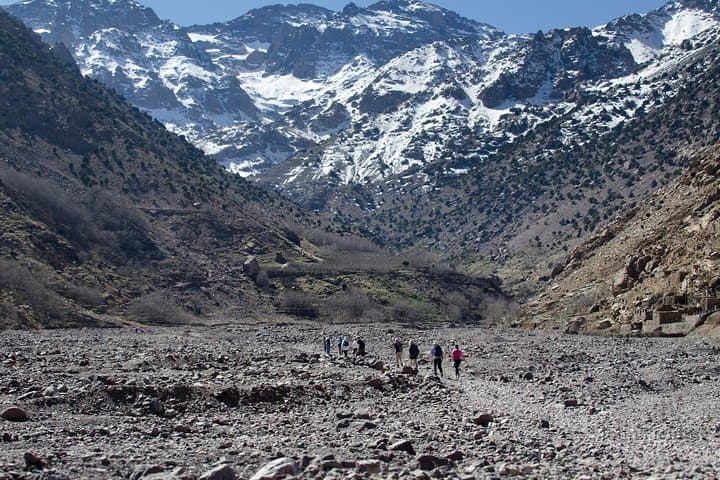
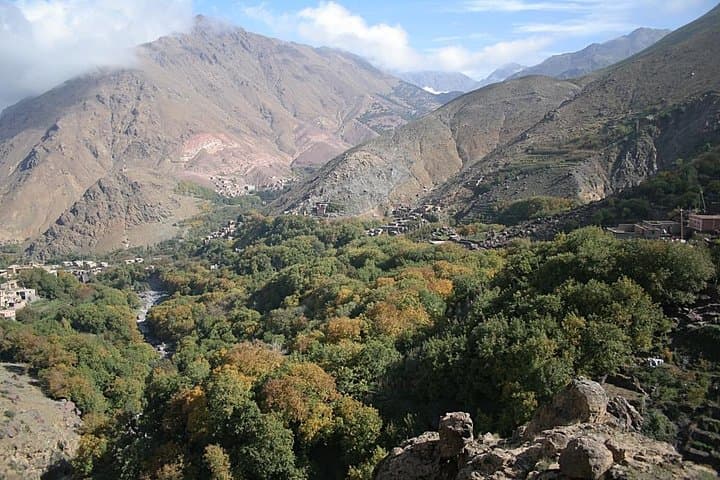
Dawn breaks over red-roofed Marrakech and the High Atlas silhouette slices the sky—your van slips up the valley toward Imlil while the mountains stubbornly hold the cold. By mid-afternoon you’ll leave the last cultivated terraces and start the climb through dry riverbeds, past Berber hamlets and stone cairns, heading to the mountain refuge where the wind already tests your jacket.
Verified experiences and guided adventures in the surrounding area.
Operated by Toubkal Trekking · Imlil, Marrakech-Safi
Dawn breaks over red-roofed Marrakech and the High Atlas silhouette slices the sky—your van slips up the valley toward Imlil while the mountains stubbornly hold the cold. By mid-afternoon you’ll leave the last cultivated terraces and start the climb through dry riverbeds, past Berber hamlets and stone cairns, heading to the mountain refuge where the wind already tests your jacket.
Jebel Toubkal (4,167 m) is North Africa’s highest peak and sits on young, folded Atlas ranges carved by uplift and winter freeze-thaw. The trail follows old mule tracks and seasonal streams; local guides are often Berber and the area’s culture is rooted in small-scale farming and mountain hospitality. The refuge at ~3,200 m provides basic shelter and dinner, a reminder that this is a lived landscape as much as a climbing objective.
Practically: expect one uphill day from Imlil (~1,740 m) to the refuge—about 6–8 km with ~1,400 m ascent—and a summit push the next day of roughly 960 m gain from the refuge, typically starting before 3:00 a.m. Terrain alternates packed earth, loose scree and rocky steps; in spring and winter you may encounter snowfields and ice.
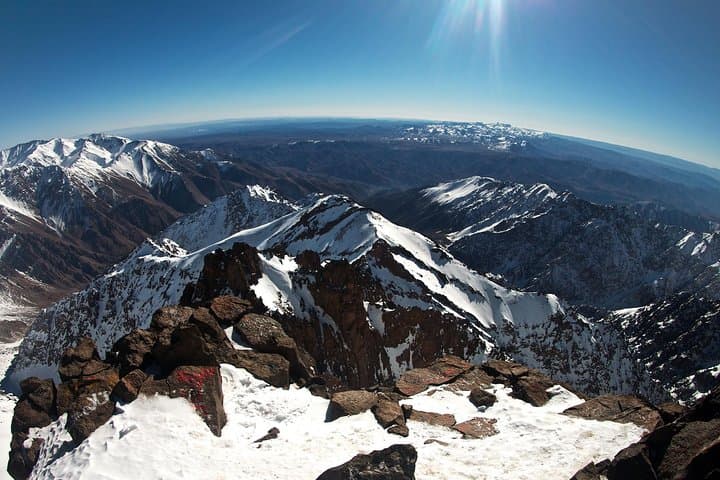
Hydration, steady pacing and layers are mission-critical; altitude moves slowly, so drink, eat and watch for headache or nausea. Good boots, poles and a headlamp make the summit day manageable. With a local guide, mules and a cook handling logistics, the route focuses on the climb and the views: high ridgelines, sudden panoramas of the Haouz plain, and a summit that rewards stubborn preparation with a clear, wind-sharpened horizon.
challenging.
2 days.
Should be in good aerobic condition with experience on sustained uphill hikes and comfort on loose, rocky terrain; prior multi-hour hikes at elevation helpful.
Challenging—long days, steep elevation gain and altitude make it tougher than lowland hikes; most fit hikers with no serious medical issues can summit with a guide and proper pacing.
No technical rock-climbing gear is needed in summer; in winter you may require crampons and ice axe, provided or rented locally and used with guidance.
Logistics usually begin and end in Marrakech with a drive to Imlil; trekking starts from Imlil and returns there before driving back to Marrakech.
Yes—mules and muleteers are commonly provided to carry overnight gear, leaving you to carry day essentials and a summit pack.
The High Atlas has been inhabited by Amazigh (Berber) communities for centuries; trails are ancient pack routes linking seasonal pastures and villages.
The region faces erosion from overuse on some popular paths; stick to trails, carry out waste and support local guides who practice low-impact camping.
Toubkal Trekking operates guided outdoor trips and adventures with an emphasis on safety, stewardship, and memorable experiences.
Dawn breaks over red-roofed Marrakech and the High Atlas silhouette slices the sky—your van slips up the valley toward Imlil while the mountains stubbornly hold the cold. By mid-afternoon you’ll leave the last cultivated terraces and start the climb through dry riverbeds, past Berber hamlets and stone cairns, heading to the mountain refuge where the wind already tests your jacket.
Dawn breaks over red-roofed Marrakech and the High Atlas silhouette slices the sky—your van slips up the valley toward Imlil while the mountains stubbornly hold the cold. By mid-afternoon you’ll leave the last cultivated terraces and start the climb through dry riverbeds, past Berber hamlets and stone cairns, heading to the mountain refuge where the wind already tests your jacket.
Jebel Toubkal (4,167 m) is North Africa’s highest peak and sits on young, folded Atlas ranges carved by uplift and winter freeze-thaw. The trail follows old mule tracks and seasonal streams; local guides are often Berber and the area’s culture is rooted in small-scale farming and mountain hospitality. The refuge at ~3,200 m provides basic shelter and dinner, a reminder that this is a lived landscape as much as a climbing objective.
Practically: expect one uphill day from Imlil (~1,740 m) to the refuge—about 6–8 km with ~1,400 m ascent—and a summit push the next day of roughly 960 m gain from the refuge, typically starting before 3:00 a.m. Terrain alternates packed earth, loose scree and rocky steps; in spring and winter you may encounter snowfields and ice.
Hydration, steady pacing and layers are mission-critical; altitude moves slowly, so drink, eat and watch for headache or nausea. Good boots, poles and a headlamp make the summit day manageable. With a local guide, mules and a cook handling logistics, the route focuses on the climb and the views: high ridgelines, sudden panoramas of the Haouz plain, and a summit that rewards stubborn preparation with a clear, wind-sharpened horizon.