THE ADVENTURE COLLECTIVE® · Independent discovery and booking for outdoor travel

Spend two days climbing North Africa’s highest peak via mule tracks, Berber villages and a mountain refuge. This compact trek balances cultural insight with a focused summit push to 4,167 m.
Spend two days climbing North Africa’s highest peak via mule tracks, Berber villages and a mountain refuge. This compact trek balances cultural insight with a focused summit push to 4,167 m.
Dawn breaks over a string of jagged ridgelines as a minivan winds out of Marrakech and climbs toward the High Atlas. By the time you reach Imlil, walnut trees and terraced fields frame a path of mule tracks that leads up into thinner air. The first day is a steady climb through Berber villages, past mountain streams and orchards, arriving at the refuge in late afternoon where the range narrows into rock and scree.
Verified experiences and guided adventures in the surrounding area.
Operated by Green Atlas Travel · Imlil, Marrakech-Safi
Dawn breaks over a string of jagged ridgelines as a minivan winds out of Marrakech and climbs toward the High Atlas. By the time you reach Imlil, walnut trees and terraced fields frame a path of mule tracks that leads up into thinner air. The first day is a steady climb through Berber villages, past mountain streams and orchards, arriving at the refuge in late afternoon where the range narrows into rock and scree.
Geologically the High Atlas is a young, uplifted block of folded and fractured rock—sharp ridges and steep gullies formed by tectonic pressure and erosion. Culturally, the route threads through Amazigh (Berber) hamlets where hospitality, mint tea and stone houses reflect centuries of mountain life. The refuge—basic but warm—sits at roughly 3,200 m; from there the summit push begins before dawn.
Expect a steep, rocky ascent on the second day with ~900–1,000 m of elevation gain and roughly 6–8 km of hiking round-trip from the refuge. Navigation follows obvious paths and cairns but can be slow above 3,500 m; altitude awareness and a steady pace matter more than speed. Guides handle logistics and local insight: mules for luggage, cooked meals, and cultural context.
Practical advice: acclimatize in Imlil if possible, layer for wind and sun, carry at least 2–3 liters of water and electrolytes, and use trekking poles for the summit slopes. Summit windows favor clear, early mornings; plan a flexible return to Marrakech the same day or the following afternoon depending on weather and group pace.
challenging.
2 days.
Good aerobic fitness and experience with sustained uphill hiking; comfortable with long days and altitude.
The summit day involves about 900–1,000 m of elevation gain from the refuge over rocky terrain; expect 6–8 hours round-trip at a steady, altitude-managed pace.
Prior long-day hiking experience is strongly recommended; formal mountaineering skills are not required but familiarity with altitude effects helps.
The Toubkal refuge provides basic dormitory-style lodging, hot meals, and communal spaces—comfortable but rustic compared with hotels in Marrakech.
While not legally required, hiring a local professional guide is standard for safety, route-finding and cultural context, and they typically arrange mules for luggage.
Mount Toubkal has long been a landmark for Amazigh (Berber) communities; it also attracted European alpinists in the early 20th century, becoming a focal point for mountain trekking in North Africa.
The High Atlas supports fragile alpine ecosystems—stick to trails, pack out waste, and respect local water scarcity; guided trips help reduce impact by concentrating use on established routes.
Green Atlas Travel operates guided outdoor trips and adventures with an emphasis on safety, stewardship, and memorable experiences.
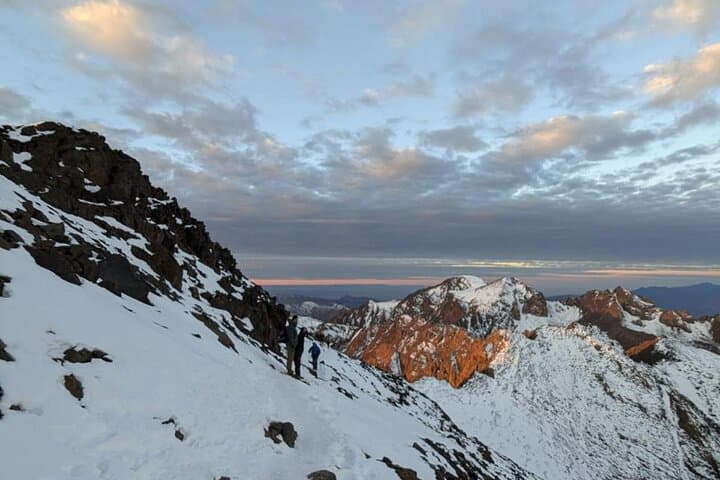
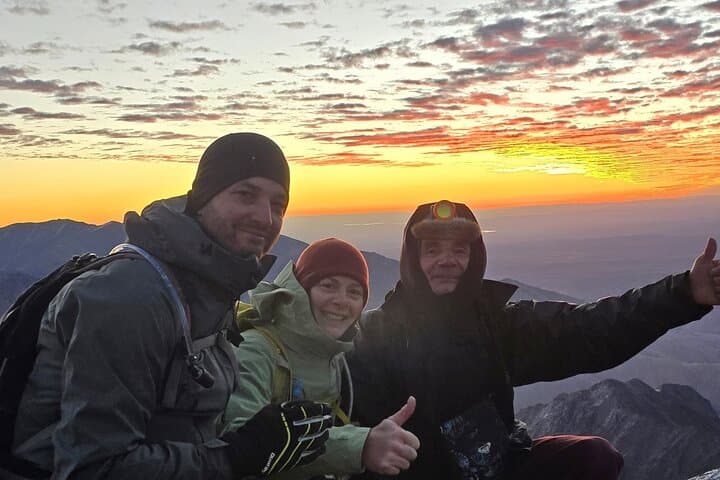
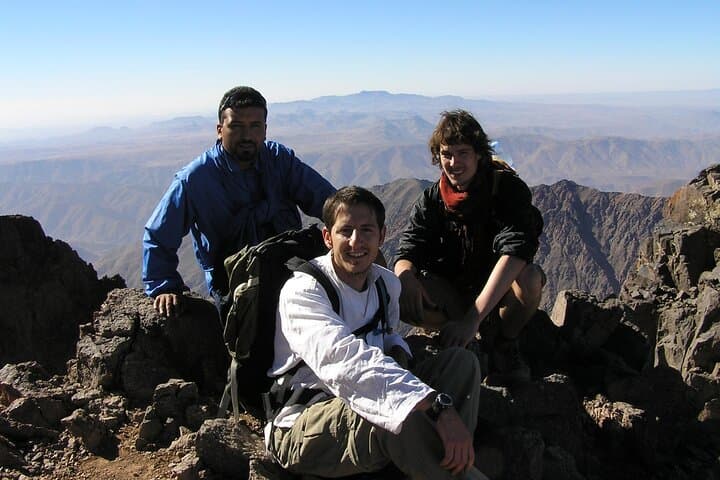
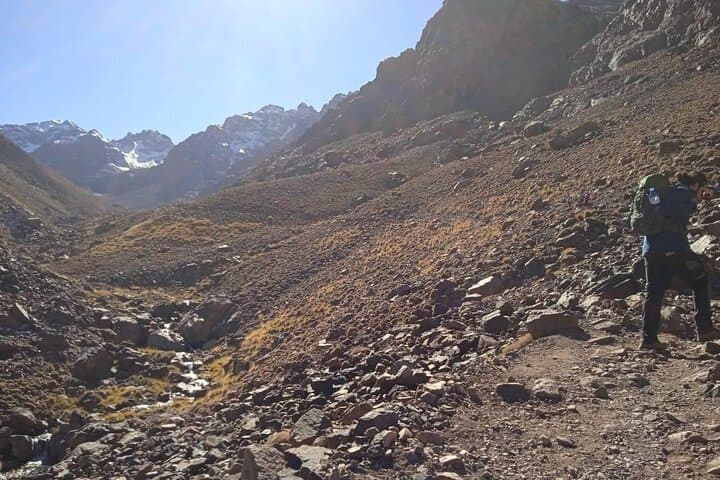
Dawn breaks over a string of jagged ridgelines as a minivan winds out of Marrakech and climbs toward the High Atlas. By the time you reach Imlil, walnut trees and terraced fields frame a path of mule tracks that leads up into thinner air. The first day is a steady climb through Berber villages, past mountain streams and orchards, arriving at the refuge in late afternoon where the range narrows into rock and scree.
Dawn breaks over a string of jagged ridgelines as a minivan winds out of Marrakech and climbs toward the High Atlas. By the time you reach Imlil, walnut trees and terraced fields frame a path of mule tracks that leads up into thinner air. The first day is a steady climb through Berber villages, past mountain streams and orchards, arriving at the refuge in late afternoon where the range narrows into rock and scree.
Geologically the High Atlas is a young, uplifted block of folded and fractured rock—sharp ridges and steep gullies formed by tectonic pressure and erosion. Culturally, the route threads through Amazigh (Berber) hamlets where hospitality, mint tea and stone houses reflect centuries of mountain life. The refuge—basic but warm—sits at roughly 3,200 m; from there the summit push begins before dawn.
Expect a steep, rocky ascent on the second day with ~900–1,000 m of elevation gain and roughly 6–8 km of hiking round-trip from the refuge. Navigation follows obvious paths and cairns but can be slow above 3,500 m; altitude awareness and a steady pace matter more than speed. Guides handle logistics and local insight: mules for luggage, cooked meals, and cultural context.
Practical advice: acclimatize in Imlil if possible, layer for wind and sun, carry at least 2–3 liters of water and electrolytes, and use trekking poles for the summit slopes. Summit windows favor clear, early mornings; plan a flexible return to Marrakech the same day or the following afternoon depending on weather and group pace.