THE ADVENTURE COLLECTIVE® · Independent discovery and booking for outdoor travel

A full-day guided ascent of Mount Tarn from the Brunswick Peninsula — 14 km round trip with 825 m of gain, dramatic Strait of Magellan views, and a post-hike meal at a historic ranchhouse. Ideal for fit hikers seeking remote Patagonian terrain.
A full-day guided ascent of Mount Tarn from the Brunswick Peninsula — 14 km round trip with 825 m of gain, dramatic Strait of Magellan views, and a post-hike meal at a historic ranchhouse. Ideal for fit hikers seeking remote Patagonian terrain.
You begin on a wind-scoured pebble beach, the Strait of Magellan bristling with cold light, then step into a rainforest that feels intent on slowing you down. Trees lean into the wind; moss and dripping ferns close over a narrow tread that soon pitches upward. The trail trades salt air for timber scent as the forest gives way to open alpine scrub and a final, rocky spine to Mount Tarn’s summit.
Verified experiences and guided adventures in the surrounding area.
Operated by Indomita Adventures Patagonia · Punta Arenas, Magallanes y la Antártica Chilena
You begin on a wind-scoured pebble beach, the Strait of Magellan bristling with cold light, then step into a rainforest that feels intent on slowing you down. Trees lean into the wind; moss and dripping ferns close over a narrow tread that soon pitches upward. The trail trades salt air for timber scent as the forest gives way to open alpine scrub and a final, rocky spine to Mount Tarn’s summit.
Geology here reads like an old map: glacially scoured slopes above peat-rich lowlands, with outcrops of dark volcanic-andesitic rock. The region’s human history is compact and layered — from Magellan’s 1520 passage and the abandoned settlement of Port Famine to Charles Darwin’s 19th-century observations on southern species. Local artisanal fishing and family-run estancias still shape life on the Brunswick Peninsula; after the hike you may eat at a historic ranchhouse whose recipes reflect that coastal-ranch economy.
Practically: this is an in-and-back route of about 14 km (8.7 mi) with roughly 825 m (2,707 ft) of gain, usually completed in 8–9 hours depending on weather and group pace. Expect wet, muddy sections in the forest, steeper switchbacks higher up, and exposed, wind-battered ground near the summit. A professional guide manages route-finding and pacing; you should be prepared with waterproof layers, sturdy boots, and ample water. Wind can arrive suddenly; start early to take advantage of calmer midday windows and save daylight for the descent. Leave no trace — the peat soils and coastal ecology are fragile and recover slowly from trampling.
moderate.
8–9 hours.
Suited to hikers with good aerobic fitness and experience on sustained uphill trails; expect sustained climbs and uneven footing.
The route is about 14 km round trip with roughly 825 m (2,707 ft) of elevation gain; plan on 8–9 hours including breaks.
No technical climbing is required; however a high level of fitness and experience on steep, muddy trails is recommended.
Expect rapidly changing coastal conditions—wind, rain, and sun can alternate in a single day—so bring waterproof and insulating layers.
Private tours typically include pickup from central Punta Arenas; verify pickup time and location when booking.
The area saw early European contact during Magellan’s 1520 voyage and was later observed by Charles Darwin; settlements like Port Famine reflect waves of exploration and hardship.
This coastal-Andean environment has fragile peatlands and slow-growing vegetation — stick to trails, pack out waste, and support local guides and family-run estancias.
Indomita Adventures Patagonia operates guided outdoor trips and adventures with an emphasis on safety, stewardship, and memorable experiences.
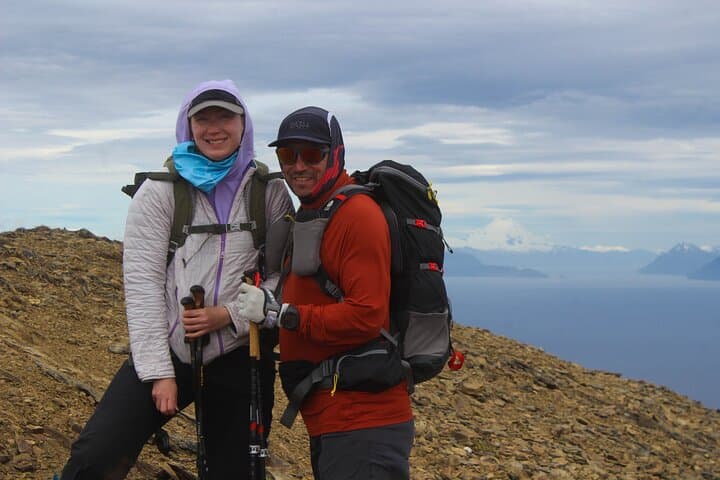
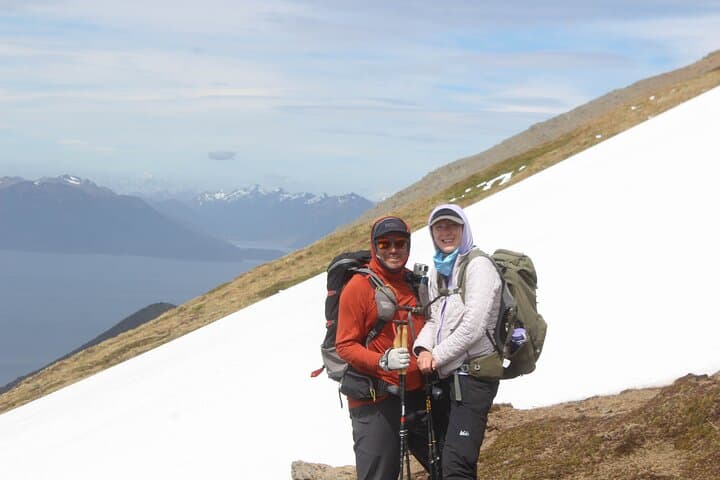
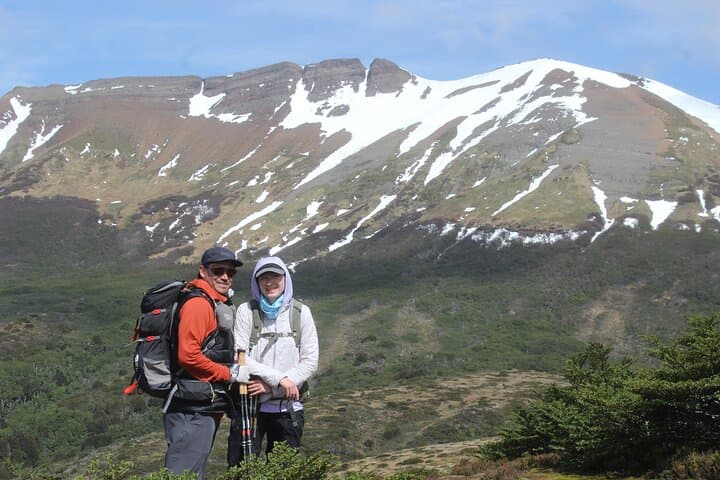
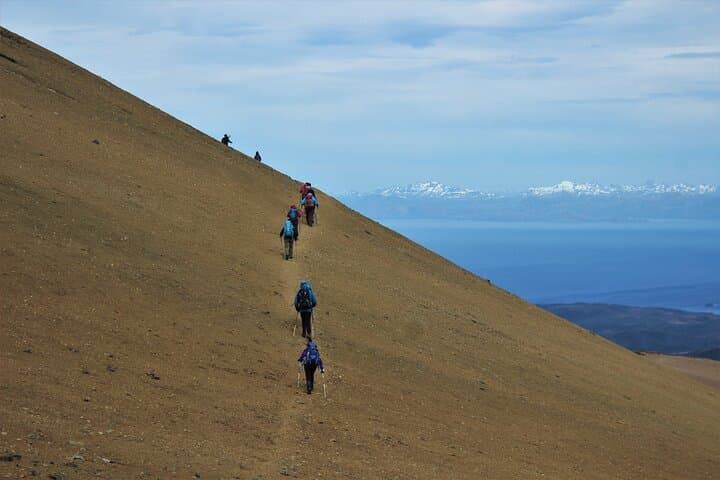
You begin on a wind-scoured pebble beach, the Strait of Magellan bristling with cold light, then step into a rainforest that feels intent on slowing you down. Trees lean into the wind; moss and dripping ferns close over a narrow tread that soon pitches upward. The trail trades salt air for timber scent as the forest gives way to open alpine scrub and a final, rocky spine to Mount Tarn’s summit.
You begin on a wind-scoured pebble beach, the Strait of Magellan bristling with cold light, then step into a rainforest that feels intent on slowing you down. Trees lean into the wind; moss and dripping ferns close over a narrow tread that soon pitches upward. The trail trades salt air for timber scent as the forest gives way to open alpine scrub and a final, rocky spine to Mount Tarn’s summit.
Geology here reads like an old map: glacially scoured slopes above peat-rich lowlands, with outcrops of dark volcanic-andesitic rock. The region’s human history is compact and layered — from Magellan’s 1520 passage and the abandoned settlement of Port Famine to Charles Darwin’s 19th-century observations on southern species. Local artisanal fishing and family-run estancias still shape life on the Brunswick Peninsula; after the hike you may eat at a historic ranchhouse whose recipes reflect that coastal-ranch economy.
Practically: this is an in-and-back route of about 14 km (8.7 mi) with roughly 825 m (2,707 ft) of gain, usually completed in 8–9 hours depending on weather and group pace. Expect wet, muddy sections in the forest, steeper switchbacks higher up, and exposed, wind-battered ground near the summit. A professional guide manages route-finding and pacing; you should be prepared with waterproof layers, sturdy boots, and ample water. Wind can arrive suddenly; start early to take advantage of calmer midday windows and save daylight for the descent. Leave no trace — the peat soils and coastal ecology are fragile and recover slowly from trampling.