THE ADVENTURE COLLECTIVE® · Independent discovery and booking for outdoor travel

Hike Mount Sinai by headlamp for a sunrise summit, then explore St. Catherine’s Monastery — one of the oldest working Christian monasteries. This guided overnight‑day trip pairs demanding desert hiking with compact cultural exploration.
Hike Mount Sinai by headlamp for a sunrise summit, then explore St. Catherine’s Monastery — one of the oldest working Christian monasteries. This guided overnight‑day trip pairs demanding desert hiking with compact cultural exploration.
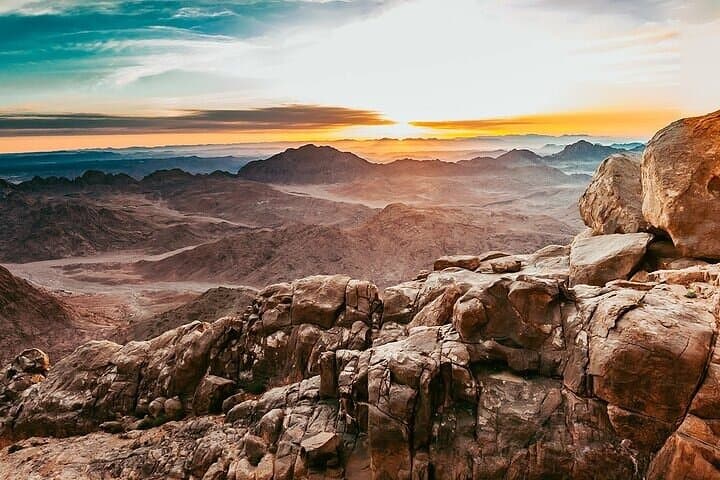
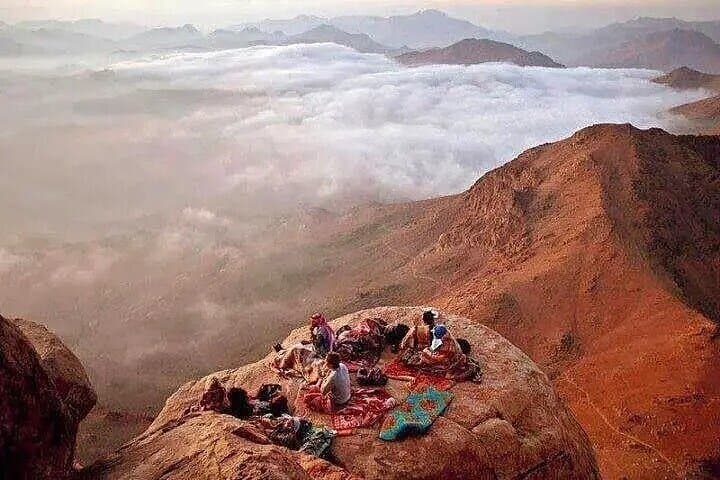
Night swallows the highway as an air‑conditioned van pulls away from Sharm El Sheikh; your headlamp beam becomes a private sun as desert ridges roll by. After the 2–3 hour transfer you step onto a stony trail, cool air sharpening each breath. The ascent climbs switchbacks and open scree, the summit revealing a sunrise that unspools color across a sea of cloud and serrated sandstone.
Verified experiences and guided adventures in the surrounding area.
Operated by ToursMo · St. Catherine, South Sinai
Night swallows the highway as an air‑conditioned van pulls away from Sharm El Sheikh; your headlamp beam becomes a private sun as desert ridges roll by. After the 2–3 hour transfer you step onto a stony trail, cool air sharpening each breath. The ascent climbs switchbacks and open scree, the summit revealing a sunrise that unspools color across a sea of cloud and serrated sandstone.
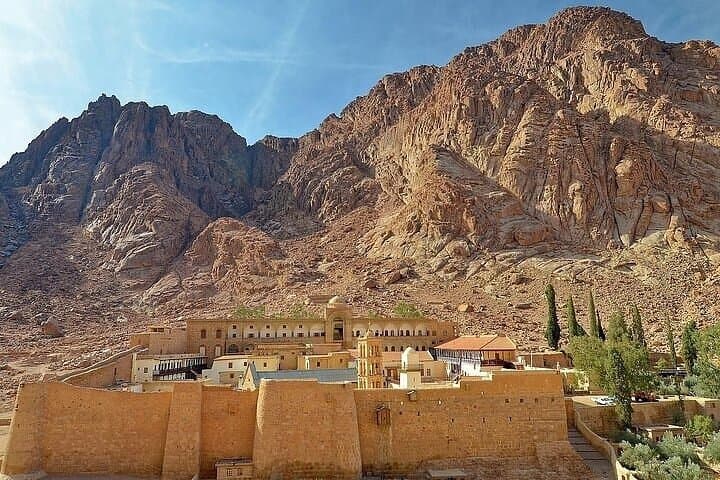
The route leads to St. Catherine’s Monastery, founded under Byzantine patronage in the 6th century and built at the foot of Jabal Musa—the mountain long associated with ancient pilgrimage. Geologically the peaks are late‑Precambrian granites and gneisses, wind‑scoured into steep ridges; culture here is a living overlap of Bedouin hospitality and Orthodox Christian ritual. Guides often point out the Church of the Transfiguration and the monastery’s famed manuscript library as part of a compact, centuries‑old complex.
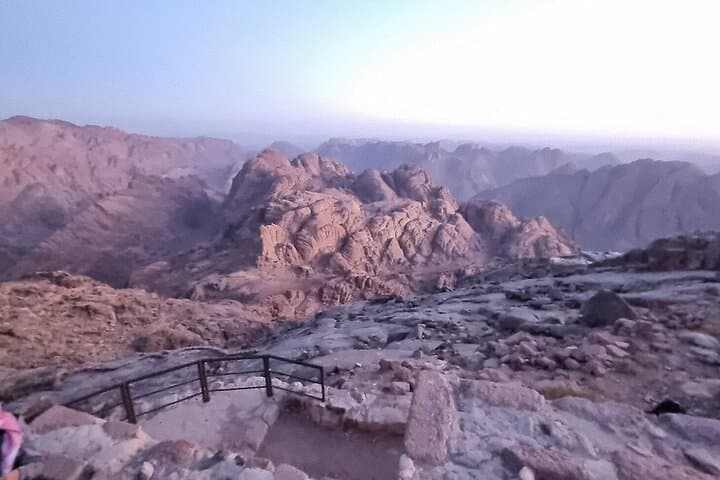
Practically, expect a 2–3 hour night hike up (less if you take a camel to the last 700 steps), exposed terrain near the ridge, and temperatures that plummet after dawn. Bring a reliable headlamp, layered insulation, and 1–2 liters of water; eat before the climb and pace the ascent to manage altitude and steep sections. The route is physically demanding but nontechnical—no ropes, just steady footing on loose rock and stone steps. Respect religious spaces at the monastery: modest dress and quiet are required. Return transport to Sharm El Sheikh completes a long, rewarding day that balances raw desert scenery with deep history.
challenging.
12–14 hours.
Good cardiovascular fitness and leg strength required to manage a multi‑hour night ascent and descent.
The guided climb typically takes about 2–3 hours up from the base trailhead; descent is similar or faster depending on pace.
Yes—many operators offer a camel ride to the final 700 stone steps before the summit, reducing physical effort but not eliminating stairs.
Yes, guided visits to St. Catherine’s Monastery and key sites like the Church of the Transfiguration are part of the tour.
Summit altitude is around 2,200–2,300 m; most people acclimatize fine but move slowly, hydrate, and rest if you feel unwell.
Jabal Musa and St. Catherine’s Monastery have been pilgrimage destinations since late antiquity; the monastery complex dates to the 6th century under Byzantine patronage.
The high‑desert ecosystem is fragile—stay on trails, pack out waste, conserve water, and respect monastery rules and prayer areas.
ToursMo operates guided outdoor trips and adventures with an emphasis on safety, stewardship, and memorable experiences.
Night swallows the highway as an air‑conditioned van pulls away from Sharm El Sheikh; your headlamp beam becomes a private sun as desert ridges roll by. After the 2–3 hour transfer you step onto a stony trail, cool air sharpening each breath. The ascent climbs switchbacks and open scree, the summit revealing a sunrise that unspools color across a sea of cloud and serrated sandstone.
Night swallows the highway as an air‑conditioned van pulls away from Sharm El Sheikh; your headlamp beam becomes a private sun as desert ridges roll by. After the 2–3 hour transfer you step onto a stony trail, cool air sharpening each breath. The ascent climbs switchbacks and open scree, the summit revealing a sunrise that unspools color across a sea of cloud and serrated sandstone.
The route leads to St. Catherine’s Monastery, founded under Byzantine patronage in the 6th century and built at the foot of Jabal Musa—the mountain long associated with ancient pilgrimage. Geologically the peaks are late‑Precambrian granites and gneisses, wind‑scoured into steep ridges; culture here is a living overlap of Bedouin hospitality and Orthodox Christian ritual. Guides often point out the Church of the Transfiguration and the monastery’s famed manuscript library as part of a compact, centuries‑old complex.
Practically, expect a 2–3 hour night hike up (less if you take a camel to the last 700 steps), exposed terrain near the ridge, and temperatures that plummet after dawn. Bring a reliable headlamp, layered insulation, and 1–2 liters of water; eat before the climb and pace the ascent to manage altitude and steep sections. The route is physically demanding but nontechnical—no ropes, just steady footing on loose rock and stone steps. Respect religious spaces at the monastery: modest dress and quiet are required. Return transport to Sharm El Sheikh completes a long, rewarding day that balances raw desert scenery with deep history.