THE ADVENTURE COLLECTIVE® · Independent discovery and booking for outdoor travel

A compact, four-day push up Mount Kenya’s classic Naro Moru Route to Point Lenana. Expect forested approaches, boggy moorland, steep scree and a pre-dawn summit for sunrise above the high alpine ridges.
A compact, four-day push up Mount Kenya’s classic Naro Moru Route to Point Lenana. Expect forested approaches, boggy moorland, steep scree and a pre-dawn summit for sunrise above the high alpine ridges.
Dawn on the western flank of Mount Kenya feels like a wake-up call from the mountain itself: cool air pushes up the valley and the forest seems to lean in, watching every step. The Naro Moru Route begins in farmland and climbs quickly through montane forest to the Met Station (3,000 m), then traverses boggy moorland to Mackinder’s Camp (4,200 m) before the thin-air push to Point Lenana (4,985 m).
Verified experiences and guided adventures in the surrounding area.
Operated by Africa Vacation Safaris · Naro Moru, Nyeri County
Dawn on the western flank of Mount Kenya feels like a wake-up call from the mountain itself: cool air pushes up the valley and the forest seems to lean in, watching every step. The Naro Moru Route begins in farmland and climbs quickly through montane forest to the Met Station (3,000 m), then traverses boggy moorland to Mackinder’s Camp (4,200 m) before the thin-air push to Point Lenana (4,985 m).
The mountain is volcanic, its high peaks carved by glaciers and capped with jagged ridges; the Lewis Glacier has retreated decades, leaving moraine and loose scree that test balance and resolve. Local Kikuyu and Meru communities historically regarded the massif as sacred; early scientific parties mapped its peaks while colonial-era trails became the modern routes trekkers use today.
Expect changing terrain each day: dusty gravel roads, closed-canopy forest, spongy moorland and finally steep scree and narrow ridge above the Austrian Hut (4,790 m). Summit day commonly starts around 2 a.m. for a 3–6 hour ascent to catch sunrise over jagged silhouettes and the high alpine plateau.
Practically, this is a high-altitude trek not a technical climb — no ropes required, but good boots, layered insulation and steady pacing matter. Acclimatise at Met Station, drink frequently, use a headlamp for summit pushes and heed guides about river crossings and bogs. Descend the same way to Met Station and return to Naro Moru or Nairobi by vehicle on day four. With clear weather this route delivers concentrated alpine drama in four compact days.
difficult.
4 days.
High aerobic fitness and previous multi-day trekking experience recommended; expect sustained uphill and altitude stress
No technical climbing gear is required—Point Lenana is a trekking summit, though some short scrambling on loose rock may be encountered.
You should have strong cardiovascular fitness and experience with full-day hikes; the altitude and sustained ascent make it demanding.
The drier months (January–February and June–September) offer the most stable conditions; avoid long rains (March–May) when trails are muddy and visibility poor.
Yes — Mount Kenya National Park requires permits and a registered guide; this tour includes guide fees and a porter and chef as listed.
Mount Kenya’s peaks were first mapped by European explorers in the late 19th century; its glaciers have since retreated significantly, reshaping routes and hazards.
Visitors should stick to established trails, carry out waste and respect water sources—the alpine vegetation is fragile and slow to recover from trampling.
Africa Vacation Safaris operates guided outdoor trips and adventures with an emphasis on safety, stewardship, and memorable experiences.


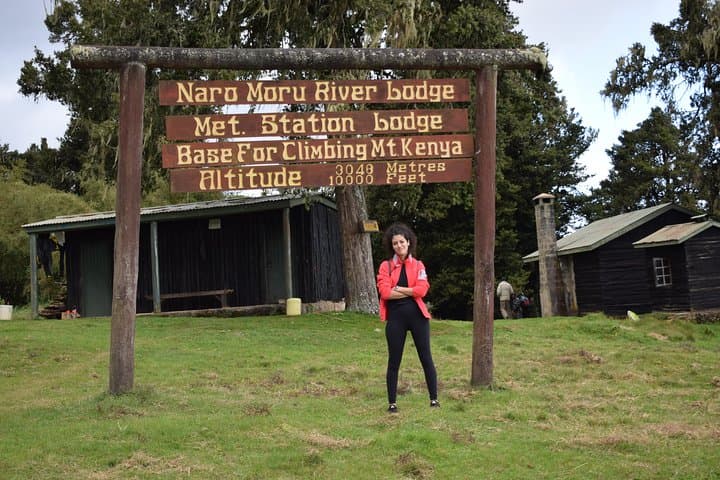
Dawn on the western flank of Mount Kenya feels like a wake-up call from the mountain itself: cool air pushes up the valley and the forest seems to lean in, watching every step. The Naro Moru Route begins in farmland and climbs quickly through montane forest to the Met Station (3,000 m), then traverses boggy moorland to Mackinder’s Camp (4,200 m) before the thin-air push to Point Lenana (4,985 m).
Dawn on the western flank of Mount Kenya feels like a wake-up call from the mountain itself: cool air pushes up the valley and the forest seems to lean in, watching every step. The Naro Moru Route begins in farmland and climbs quickly through montane forest to the Met Station (3,000 m), then traverses boggy moorland to Mackinder’s Camp (4,200 m) before the thin-air push to Point Lenana (4,985 m).
The mountain is volcanic, its high peaks carved by glaciers and capped with jagged ridges; the Lewis Glacier has retreated decades, leaving moraine and loose scree that test balance and resolve. Local Kikuyu and Meru communities historically regarded the massif as sacred; early scientific parties mapped its peaks while colonial-era trails became the modern routes trekkers use today.
Expect changing terrain each day: dusty gravel roads, closed-canopy forest, spongy moorland and finally steep scree and narrow ridge above the Austrian Hut (4,790 m). Summit day commonly starts around 2 a.m. for a 3–6 hour ascent to catch sunrise over jagged silhouettes and the high alpine plateau.
Practically, this is a high-altitude trek not a technical climb — no ropes required, but good boots, layered insulation and steady pacing matter. Acclimatise at Met Station, drink frequently, use a headlamp for summit pushes and heed guides about river crossings and bogs. Descend the same way to Met Station and return to Naro Moru or Nairobi by vehicle on day four. With clear weather this route delivers concentrated alpine drama in four compact days.