THE ADVENTURE COLLECTIVE® · Independent discovery and booking for outdoor travel

Climb Mount Kenya via the popular Naro Moru route in four days, reaching Point Lenana for alpine sunrise views. This practical guide covers terrain, timing, and what to expect on huts-equipped nights and the summit push.
Climb Mount Kenya via the popular Naro Moru route in four days, reaching Point Lenana for alpine sunrise views. This practical guide covers terrain, timing, and what to expect on huts-equipped nights and the summit push.
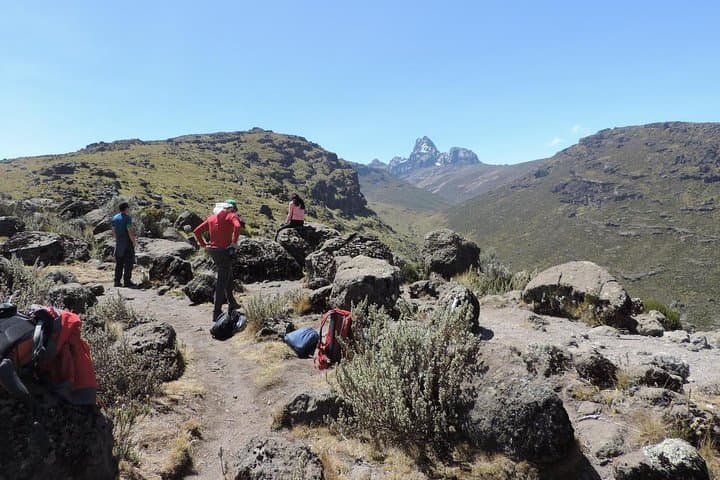
A high-altitude dawn breaks over jagged ridgelines as headlamps thread a line of trekkers toward Point Lenana. On the Naro Moru route the mountain wakes slow: forested slopes give way to moorland, then the Vertical Bog tests your footing before the rock-strewn approach to alpine peaks. You feel the air thin, and the summit crouches above like a silent, watchful neighbor.
Verified experiences and guided adventures in the surrounding area.
Operated by Africa Tours · Naro Moru, Nyeri County
A high-altitude dawn breaks over jagged ridgelines as headlamps thread a line of trekkers toward Point Lenana. On the Naro Moru route the mountain wakes slow: forested slopes give way to moorland, then the Vertical Bog tests your footing before the rock-strewn approach to alpine peaks. You feel the air thin, and the summit crouches above like a silent, watchful neighbor.
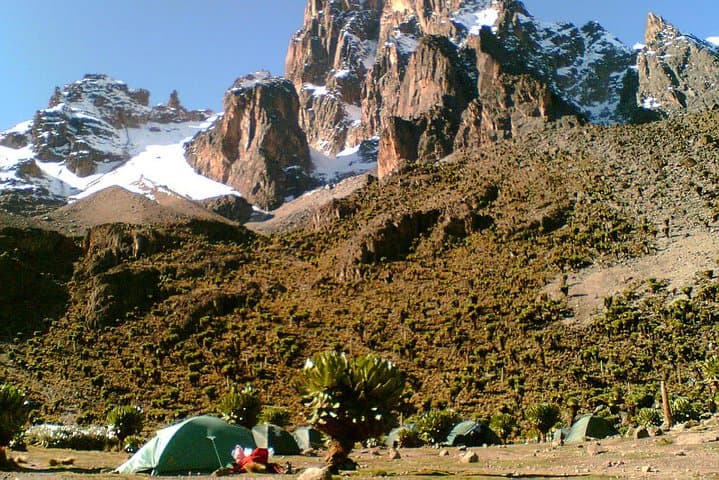
Mount Kenya is a volcanic massif carved by glaciers; its highest peaks—Batian, Nelion and the accessible Point Lenana—stand as evidence of Pleistocene sculpting and ongoing weathering. The Naromoru corridor has long been used by local communities for grazing and by early European explorers; Mackinder’s Camp and Met Station are named for those mapping and studying the range.
Expect varied terrain: shaded montane forest, tussock moorland, boggy patches, and rocky scree at higher elevations. Weather flips quickly—rain, wind and cold can arrive without warning—so timing and layering are essential. The route uses staffed huts and bunkhouses, reducing pack weight but not the challenge of altitude.
Practically, plan for 4 days with a pre-dawn summit push, steady pacing, and attention to acclimatization. Hydrate, eat, and sleep well on the approach days to reduce altitude sickness risk. Footwear with good ankle support and a reliable walking pole will save effort in the Vertical Bog and on scree. Local guides handle route-finding and logistics; permits and park fees apply. When the sun finally pushes across the glacier-polished ridges, the view rewards every measured step.
challenging.
4 days.
Good cardiovascular fitness and experience with multi-day hikes at altitude; be able to hike 5–8 hours on successive days.
No—Point Lenana is a non-technical trekking summit; ropes and rock-climbing gear are not required for the standard Naro Moru route.
The route uses staffed huts and bunkhouses at Met Station and Mackinder’s Camp, so personal tents are optional depending on operator arrangements.
Expect a long, early start (often around 3:00 a.m.), several hours of steep ascent, and a tiring descent; altitude and pace make it strenuous for many.
Climbers must pay Mount Kenya National Park entrance fees and obtain any required climbing permits; operators typically handle permits as part of the package.
Mount Kenya’s peaks were first measured and described by 19th-century explorers; Mackinder’s name comes from early scientific expeditions that mapped the massif.
The mountain is protected within Mount Kenya National Park; stay on established trails, avoid disturbing water sources, and pack out waste to protect fragile moorland and bog habitats.
Africa Tours operates guided outdoor trips and adventures with an emphasis on safety, stewardship, and memorable experiences.


A high-altitude dawn breaks over jagged ridgelines as headlamps thread a line of trekkers toward Point Lenana. On the Naro Moru route the mountain wakes slow: forested slopes give way to moorland, then the Vertical Bog tests your footing before the rock-strewn approach to alpine peaks. You feel the air thin, and the summit crouches above like a silent, watchful neighbor.
A high-altitude dawn breaks over jagged ridgelines as headlamps thread a line of trekkers toward Point Lenana. On the Naro Moru route the mountain wakes slow: forested slopes give way to moorland, then the Vertical Bog tests your footing before the rock-strewn approach to alpine peaks. You feel the air thin, and the summit crouches above like a silent, watchful neighbor.
Mount Kenya is a volcanic massif carved by glaciers; its highest peaks—Batian, Nelion and the accessible Point Lenana—stand as evidence of Pleistocene sculpting and ongoing weathering. The Naromoru corridor has long been used by local communities for grazing and by early European explorers; Mackinder’s Camp and Met Station are named for those mapping and studying the range.
Expect varied terrain: shaded montane forest, tussock moorland, boggy patches, and rocky scree at higher elevations. Weather flips quickly—rain, wind and cold can arrive without warning—so timing and layering are essential. The route uses staffed huts and bunkhouses, reducing pack weight but not the challenge of altitude.
Practically, plan for 4 days with a pre-dawn summit push, steady pacing, and attention to acclimatization. Hydrate, eat, and sleep well on the approach days to reduce altitude sickness risk. Footwear with good ankle support and a reliable walking pole will save effort in the Vertical Bog and on scree. Local guides handle route-finding and logistics; permits and park fees apply. When the sun finally pushes across the glacier-polished ridges, the view rewards every measured step.