THE ADVENTURE COLLECTIVE® · Independent discovery and booking for outdoor travel

Ride the cable car up Mount Etna, then hike with a certified alpine and volcano guide to the summit craters near 3,000 meters. Expect volcanic scree, sudden weather shifts and privileged views of Sicily from Europe’s most active volcano.
Ride the cable car up Mount Etna, then hike with a certified alpine and volcano guide to the summit craters near 3,000 meters. Expect volcanic scree, sudden weather shifts and privileged views of Sicily from Europe’s most active volcano.
You step out of the cable car into a high, thin air where black pumice crunches underfoot and the sky feels impossibly large. The guide points to a line of steam and new rock — the summit craters of Mount Etna, Europe's highest active volcano — and the group moves deliberately uphill, pausing for photos while wind scours the landscape.
Verified experiences and guided adventures in the surrounding area.
Operated by Sicilying SRL · Nicolosi, Sicily
You step out of the cable car into a high, thin air where black pumice crunches underfoot and the sky feels impossibly large. The guide points to a line of steam and new rock — the summit craters of Mount Etna, Europe's highest active volcano — and the group moves deliberately uphill, pausing for photos while wind scours the landscape.
Etna’s slopes record a relentless geological history: layers of lava, ash and pyroclastic deposits from eruptions that shaped eastern Sicily for millennia. Local culture has grown around this restless neighbor — vineyards cling to lower flanks and mountain huts serve simple, hearty food to hikers who come for the raw views. You’ll pass recent eruption craters (notably the 2001 and 2002 sites) and the Barbagallo craters that mark Etna’s modern activity.
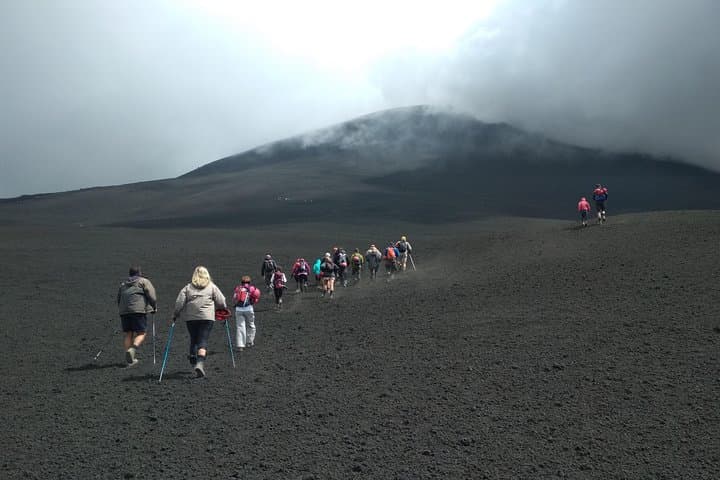
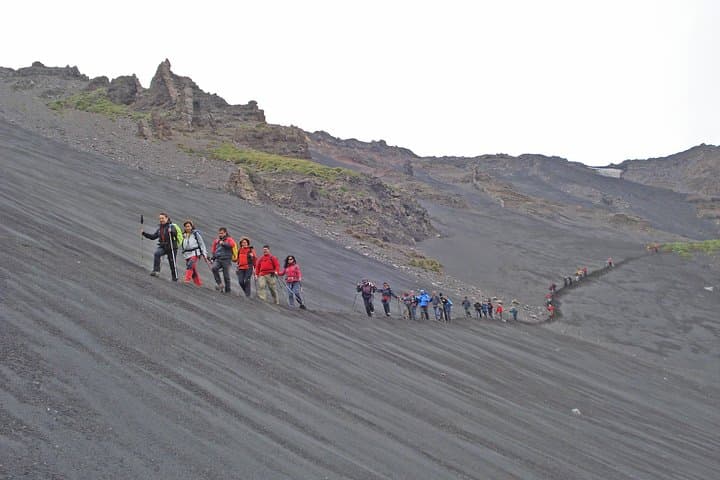
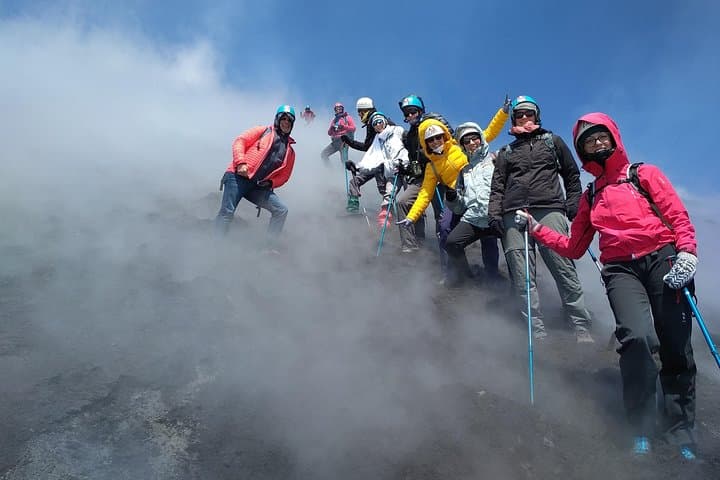
Expect rocky, uneven terrain with loose volcanic scree and occasional basalt slabs; the altitude — up to about 3,000 meters — makes pace and hydration decisive. The guide provides helmets, poles and a wind jacket, but layered clothing, sun protection and sturdy boots are non-negotiable. Weather can change fast: tours cancel or alter routes when volcanic activity or storms make the upper slopes unsafe.
This excursion balances spectacle and safety: a cable car boosts you to roughly 2,500 m, then an alpine volcanologist-led trek climbs to the permitted summit area and back in a roughly five-hour outing. Plan for moderate to strenuous exertion, pack water and snacks, and give yourself time to acclimate if coming from sea level — the view from the craters rewards the effort with a rare, elemental landscape.
challenging.
5 hours.
Should be in good aerobic shape; able to hike uphill for 1–2 hours at a time and manage steep, loose terrain at altitude.
Participants should have a moderate-to-good fitness level—able to hike uphill for 1–2 hours and handle uneven, loose terrain at altitude; the guide will set the pace.
Operators monitor volcanic and weather conditions closely; the tour may be rerouted or cancelled for safety, with refunds or rescheduling per the operator's policy.
Guides typically supply helmets, hiking poles and wind jackets; you should bring your own boots, layers, sun protection and personal water.
Yes—ascending to ~3,000 m can affect some people; hydrate, ascend slowly, and inform the guide of any symptoms; this tour is not recommended for people with serious heart or respiratory issues.
Etna has been erupting for hundreds of thousands of years; historical records from Greek and Roman times document its regular eruptions and influence on local settlement patterns.
High foot traffic and loose volcanic soils make erosion a concern; stick to guided routes, avoid trampling fragile vegetation, and follow local waste rules.
Sicilying SRL operates guided outdoor trips and adventures with an emphasis on safety, stewardship, and memorable experiences.
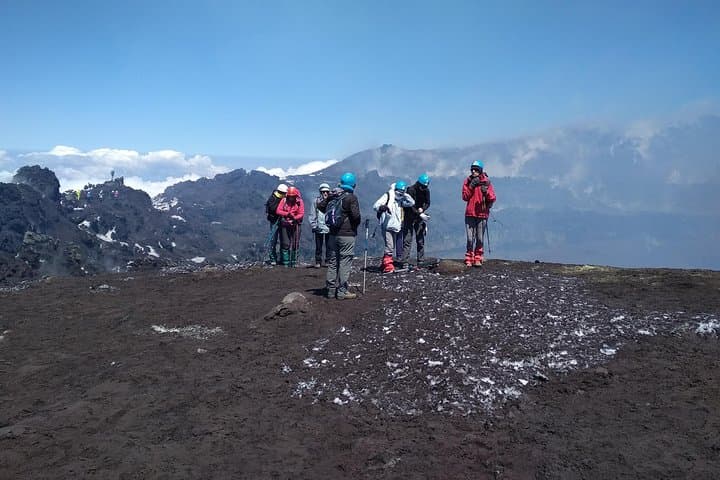
You step out of the cable car into a high, thin air where black pumice crunches underfoot and the sky feels impossibly large. The guide points to a line of steam and new rock — the summit craters of Mount Etna, Europe's highest active volcano — and the group moves deliberately uphill, pausing for photos while wind scours the landscape.
You step out of the cable car into a high, thin air where black pumice crunches underfoot and the sky feels impossibly large. The guide points to a line of steam and new rock — the summit craters of Mount Etna, Europe's highest active volcano — and the group moves deliberately uphill, pausing for photos while wind scours the landscape.
Etna’s slopes record a relentless geological history: layers of lava, ash and pyroclastic deposits from eruptions that shaped eastern Sicily for millennia. Local culture has grown around this restless neighbor — vineyards cling to lower flanks and mountain huts serve simple, hearty food to hikers who come for the raw views. You’ll pass recent eruption craters (notably the 2001 and 2002 sites) and the Barbagallo craters that mark Etna’s modern activity.
Expect rocky, uneven terrain with loose volcanic scree and occasional basalt slabs; the altitude — up to about 3,000 meters — makes pace and hydration decisive. The guide provides helmets, poles and a wind jacket, but layered clothing, sun protection and sturdy boots are non-negotiable. Weather can change fast: tours cancel or alter routes when volcanic activity or storms make the upper slopes unsafe.
This excursion balances spectacle and safety: a cable car boosts you to roughly 2,500 m, then an alpine volcanologist-led trek climbs to the permitted summit area and back in a roughly five-hour outing. Plan for moderate to strenuous exertion, pack water and snacks, and give yourself time to acclimate if coming from sea level — the view from the craters rewards the effort with a rare, elemental landscape.