THE ADVENTURE COLLECTIVE® · Independent discovery and booking for outdoor travel

Leave Ubud before dawn for a steep, night-time ascent to Mount Agung’s 3,142‑meter summit. With a local guide, hikers tackle loose volcanic scree to reach a sunrise that reveals Bali, Lombok and Rinjani.
Leave Ubud before dawn for a steep, night-time ascent to Mount Agung’s 3,142‑meter summit. With a local guide, hikers tackle loose volcanic scree to reach a sunrise that reveals Bali, Lombok and Rinjani.
Before dawn, a headlamp beam threads the volcanic scree and the air sharpens with cold as the trail angles upward toward Mount Agung’s 3,142‑meter crown. Hikers leave Ubud in the night, pass small hamlets and temple shrines, and begin the steep push from Pasar Agung or Besakih in the dark; the summit’s reward is a sunrise that lays Bali, Lombok and the jagged shadow of Rinjani into silhouette.
Verified experiences and guided adventures in the surrounding area.
Operated by Mount Agung Trekking · Karangasem, Bali
Before dawn, a headlamp beam threads the volcanic scree and the air sharpens with cold as the trail angles upward toward Mount Agung’s 3,142‑meter crown. Hikers leave Ubud in the night, pass small hamlets and temple shrines, and begin the steep push from Pasar Agung or Besakih in the dark; the summit’s reward is a sunrise that lays Bali, Lombok and the jagged shadow of Rinjani into silhouette.
Geologically, Agung is a stratovolcano of layered lava and ash whose slopes show fresh talus, eroded gullies and the black, loose rock that makes footing tricky. Culturally the mountain is central to Balinese Hinduism—Besakih, the island’s mother temple, anchors many pilgrimages—and local guides double as interpreters of both route and ritual.
Expect steep, often loose terrain, sections of exposed rock and a final ridge that can feel alpine in its exposure. The standard climbs range from about 3–4 hours from Pasar Agung to 5–7 from Besakih; tour itineraries commonly run 10–13 hours including transfers. Weather is tropical: dry season (Apr–Oct) offers the most stable skies for views, while the wet season can turn trails slick.
Practical guidance: acclimatize with a day at low altitude, pack warm layers for summit temps near freezing, and use a reliable headlamp and sturdy boots. Go with a licensed local guide for navigation, permits and cultural sensitivity; move deliberately on loose rock, drink frequently, and set an early start to reach the crater rim before crowds and wind increase.
challenging.
10–13 hours.
Requires high aerobic fitness, regular hill training and comfort with long steep ascents.
Guided climbs typically total 10–13 hours door-to-door; the uphill portion is about 3–7 hours depending on route and pace.
Yes—local guides arrange permits, navigate poorly marked sections and provide cultural context important for safety and respect.
Hikers should be in strong cardiovascular shape and experienced with long steep ascents; prior high-gain hikes recommended.
Dry season (April–October) offers the most reliable conditions for sunrise visibility; wet season brings slippery trails and cloud cover.
Mount Agung is considered Bali’s most sacred mountain; Besakih Temple on its slopes is the island’s principal temple complex and pilgrimage site.
Trail erosion is a concern—stick to established routes, avoid littering and follow guide instructions; park authorities manage permits to limit impact.
Mount Agung Trekking operates guided outdoor trips and adventures with an emphasis on safety, stewardship, and memorable experiences.
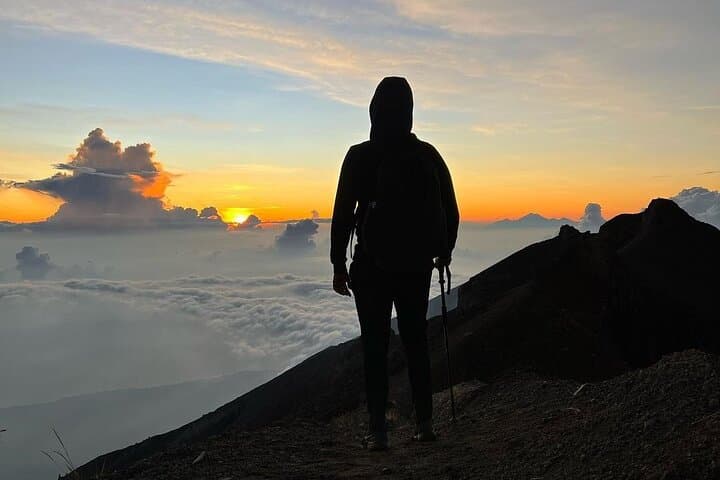
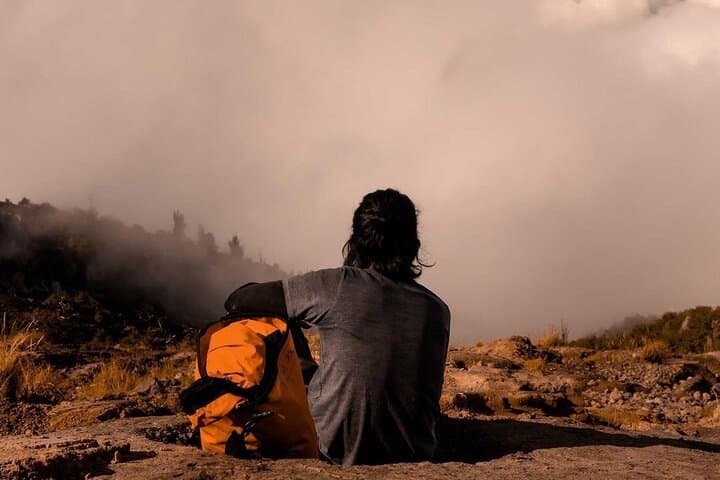
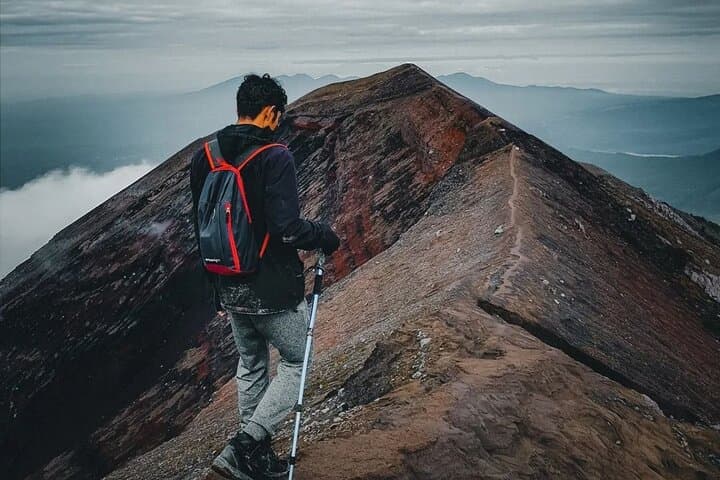
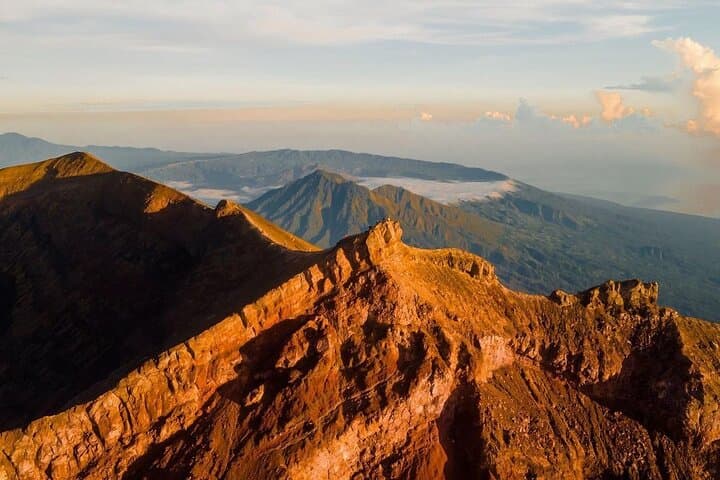
Before dawn, a headlamp beam threads the volcanic scree and the air sharpens with cold as the trail angles upward toward Mount Agung’s 3,142‑meter crown. Hikers leave Ubud in the night, pass small hamlets and temple shrines, and begin the steep push from Pasar Agung or Besakih in the dark; the summit’s reward is a sunrise that lays Bali, Lombok and the jagged shadow of Rinjani into silhouette.
Before dawn, a headlamp beam threads the volcanic scree and the air sharpens with cold as the trail angles upward toward Mount Agung’s 3,142‑meter crown. Hikers leave Ubud in the night, pass small hamlets and temple shrines, and begin the steep push from Pasar Agung or Besakih in the dark; the summit’s reward is a sunrise that lays Bali, Lombok and the jagged shadow of Rinjani into silhouette.
Geologically, Agung is a stratovolcano of layered lava and ash whose slopes show fresh talus, eroded gullies and the black, loose rock that makes footing tricky. Culturally the mountain is central to Balinese Hinduism—Besakih, the island’s mother temple, anchors many pilgrimages—and local guides double as interpreters of both route and ritual.
Expect steep, often loose terrain, sections of exposed rock and a final ridge that can feel alpine in its exposure. The standard climbs range from about 3–4 hours from Pasar Agung to 5–7 from Besakih; tour itineraries commonly run 10–13 hours including transfers. Weather is tropical: dry season (Apr–Oct) offers the most stable skies for views, while the wet season can turn trails slick.
Practical guidance: acclimatize with a day at low altitude, pack warm layers for summit temps near freezing, and use a reliable headlamp and sturdy boots. Go with a licensed local guide for navigation, permits and cultural sensitivity; move deliberately on loose rock, drink frequently, and set an early start to reach the crater rim before crowds and wind increase.