THE ADVENTURE COLLECTIVE® · Independent discovery and booking for outdoor travel

Trek the Machame Route over seven days to reach Uhuru Peak, Africa’s highest point. This practical guide outlines what to expect—terrain, daily rhythm, and key logistics—to help you prepare for a high-altitude adventure on Kilimanjaro.
Trek the Machame Route over seven days to reach Uhuru Peak, Africa’s highest point. This practical guide outlines what to expect—terrain, daily rhythm, and key logistics—to help you prepare for a high-altitude adventure on Kilimanjaro.
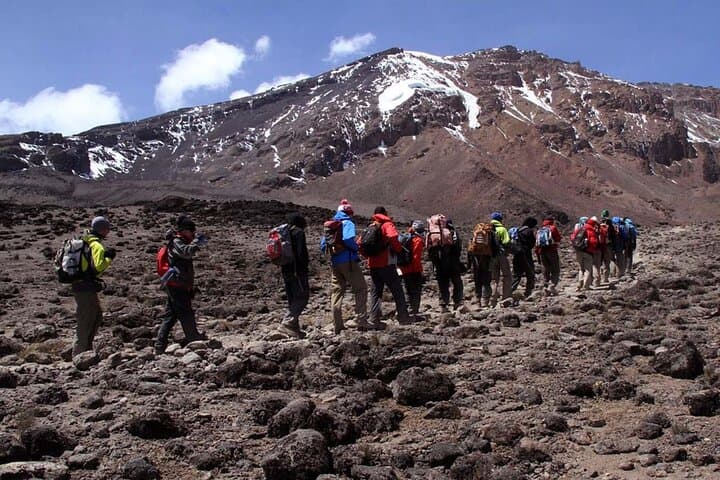
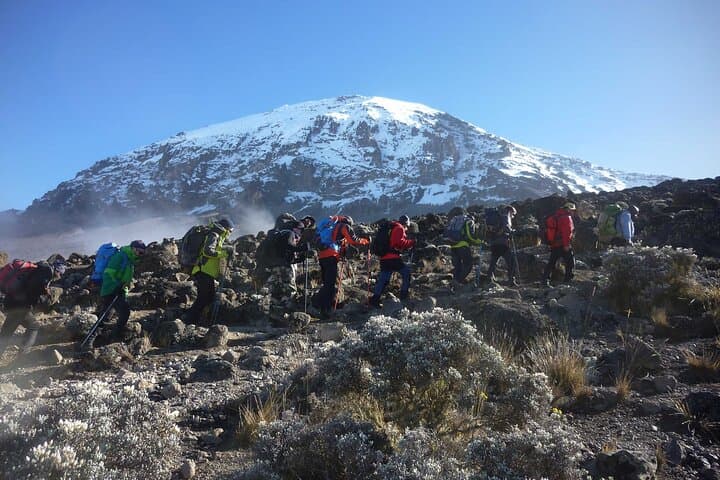
You wake before dawn in a damp cloud forest, headlamp cutting a cone through drifting mist as porters pack the mess tent behind you. The trail begins under moss-streaked trunks, then opens to heather slopes and the wide Shira Plateau; throughout the week the mountain changes its mood—green, then stony, then blanketed in wind-scrubbed alpine desert as Kibo’s glaciers come into view.
Verified experiences and guided adventures in the surrounding area.
Operated by Safari G.O.A.T.S · Arusha, Kilimanjaro Region
You wake before dawn in a damp cloud forest, headlamp cutting a cone through drifting mist as porters pack the mess tent behind you. The trail begins under moss-streaked trunks, then opens to heather slopes and the wide Shira Plateau; throughout the week the mountain changes its mood—green, then stony, then blanketed in wind-scrubbed alpine desert as Kibo’s glaciers come into view.
Kilimanjaro is a dormant stratovolcano whose three cones—Kibo, Mawenzi and Shira—tell a volcanic story written in lava and ice. The Machame Route approaches from the southwest and was popularized for its varied scenery and solid acclimatization profile. Local Chagga villages and coffee farms lie below Arusha; guides and porters are often drawn from these communities, and climbing is woven into local livelihoods.
Expect daily hikes of 4–8 hours, with the summit push starting around midnight from Barafu Camp. Key moments: the mossy cloud forest on day one, Shira Plateau’s wind-swept high plain, the scrambling Barranco Wall, and the thin-air haul to Stella Point and Uhuru Peak. Altitude—not technical difficulty—is the main challenge.
Practical guidance: pace conservatively, drink often, and sleep early before summit night. Use layered clothing for big temperature swings and bring a high-quality sleeping bag rated for -10°C to -20°C. Your operator provides tents, meals, purified water and experienced guides; acclimatization days are built into the itinerary for safety. Book in Arusha, train on long uphill hikes, and prepare for sudden weather changes—Kilimanjaro rewards patience and respect.
challenging.
7 days.
Moderate to high aerobic fitness with experience on multi-day hikes; train on sustained uphill walks and back-to-back days of hiking.
Daily hikes typically range from 4–8 hours; the summit day is the longest, often 10–14 hours round trip including descent segments.
No technical skills are required—the route is a strenuous trek rather than a technical climb, though sure-footedness and scrambling ability help on sections like Barranco Wall.
Operators provide portable toilet tents at camps and follow park rules for waste management; bring hand sanitizer and toilet paper.
The clearest windows are January–March and June–October; these dry seasons offer more stable weather and better summit visibility.
Kilimanjaro’s first recorded ascent of the highest summit, Kilimanjaro’s Kibo cone, was in 1889; the mountain’s glaciers are remnants of Pleistocene ice sculpting the summit crater.
Glaciers on Kibo are rapidly retreating; climbers should follow park rules, minimize waste, and support operators that use proper human waste management and local porters' welfare practices.
Safari G.O.A.T.S operates guided outdoor trips and adventures with an emphasis on safety, stewardship, and memorable experiences.
You wake before dawn in a damp cloud forest, headlamp cutting a cone through drifting mist as porters pack the mess tent behind you. The trail begins under moss-streaked trunks, then opens to heather slopes and the wide Shira Plateau; throughout the week the mountain changes its mood—green, then stony, then blanketed in wind-scrubbed alpine desert as Kibo’s glaciers come into view.
You wake before dawn in a damp cloud forest, headlamp cutting a cone through drifting mist as porters pack the mess tent behind you. The trail begins under moss-streaked trunks, then opens to heather slopes and the wide Shira Plateau; throughout the week the mountain changes its mood—green, then stony, then blanketed in wind-scrubbed alpine desert as Kibo’s glaciers come into view.
Kilimanjaro is a dormant stratovolcano whose three cones—Kibo, Mawenzi and Shira—tell a volcanic story written in lava and ice. The Machame Route approaches from the southwest and was popularized for its varied scenery and solid acclimatization profile. Local Chagga villages and coffee farms lie below Arusha; guides and porters are often drawn from these communities, and climbing is woven into local livelihoods.
Expect daily hikes of 4–8 hours, with the summit push starting around midnight from Barafu Camp. Key moments: the mossy cloud forest on day one, Shira Plateau’s wind-swept high plain, the scrambling Barranco Wall, and the thin-air haul to Stella Point and Uhuru Peak. Altitude—not technical difficulty—is the main challenge.
Practical guidance: pace conservatively, drink often, and sleep early before summit night. Use layered clothing for big temperature swings and bring a high-quality sleeping bag rated for -10°C to -20°C. Your operator provides tents, meals, purified water and experienced guides; acclimatization days are built into the itinerary for safety. Book in Arusha, train on long uphill hikes, and prepare for sudden weather changes—Kilimanjaro rewards patience and respect.