THE ADVENTURE COLLECTIVE® · Independent discovery and booking for outdoor travel

Stand on the Gulf's highest summit: a long, 24 km ascent from 1,900m to ~3,000m featuring balcony walks, dusty switchbacks and a little bouldering. This expedition-style climb is ideal for experienced hikers preparing for higher-altitude objectives.
Stand on the Gulf's highest summit: a long, 24 km ascent from 1,900m to ~3,000m featuring balcony walks, dusty switchbacks and a little bouldering. This expedition-style climb is ideal for experienced hikers preparing for higher-altitude objectives.
You break the desert horizon before sunrise and the ridge of Jebel Shams rises like a sheer wall, the stone already warming under a low, gold light. The South Full Summit begins from about 1,900m and pulls you up to roughly 3,000m across a long, steady climb; the trail alternates between dusty switchbacks, a balcony walk with bluff-edge views, and a few sections of boulder-scramble that demand hands-on balance.
Verified experiences and guided adventures in the surrounding area.
Operated by Alpine Trekkers · Nizwa, Ad Dakhiliyah Governorate
You break the desert horizon before sunrise and the ridge of Jebel Shams rises like a sheer wall, the stone already warming under a low, gold light. The South Full Summit begins from about 1,900m and pulls you up to roughly 3,000m across a long, steady climb; the trail alternates between dusty switchbacks, a balcony walk with bluff-edge views, and a few sections of boulder-scramble that demand hands-on balance.
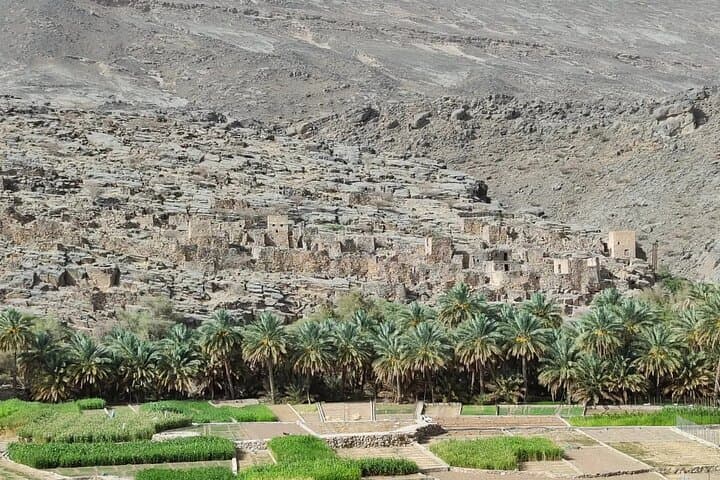
This massif is the highest in the Arabian Peninsula, carved from Permian limestone and undercut by deep canyons that reveal layered geologic time. Local communities in Al Hamra and nearby villages have herded goats here for generations; you’ll notice terraced fields and dry-stone walls on lower slopes. The route has military and exploration history—the North Summit sits nearer an old army tower—while the modern challenge draws hikers prepping for higher alpine treks.
Expect wide temperature swings: cool, thin air at the top and desert heat below. The trail is well-marked but remote; navigation is straightforward, though the final approaches include short boulder sections. Water sources are absent; pack for self-sufficiency. Guides usually include an overnight with attached washroom and meals, so the outing can function as both a summit push and an altitude-acclimatization training ground for longer expeditions.
Practical plan: start before dawn, move steadily, and leave room in your schedule for weather delays. Good footwear, layered clothing for wind and cold, sun protection, and at least 2–3 liters of water are essential. With proper fitness and pacing, Jebel Shams rewards climbers with sweeping canyon views that push you to the edge of the Gulf’s high country.
challenging.
10–14 hours.
High level of cardiovascular fitness and leg endurance; comfortable with long day-hikes and sustained ascents.
The South route is about 24 km with roughly 1,500 m of elevation gain; expect 10–14 hours depending on fitness and pace.
Local operators typically guide this route; permits are not usually required but guided trips improve safety and logistics in remote terrain.
October to April offers the coolest, most stable conditions; summer temperatures are hot at lower elevations and can make long approaches harder.
Most packages include a guide and assistant, meals (dinner, breakfast, lunch), one night accommodation with an attached washroom, tea/coffee, and basic first aid.
Jebel Shams has long been a natural landmark for local communities; its cliffs and terraces show centuries of pastoral use and link the mountain to regional trade and tribal routes.
The area is sensitive to erosion and litter; stick to trails, pack out waste, and use local guides who follow low-impact camping practices.
Alpine Trekkers operates guided outdoor trips and adventures with an emphasis on safety, stewardship, and memorable experiences.
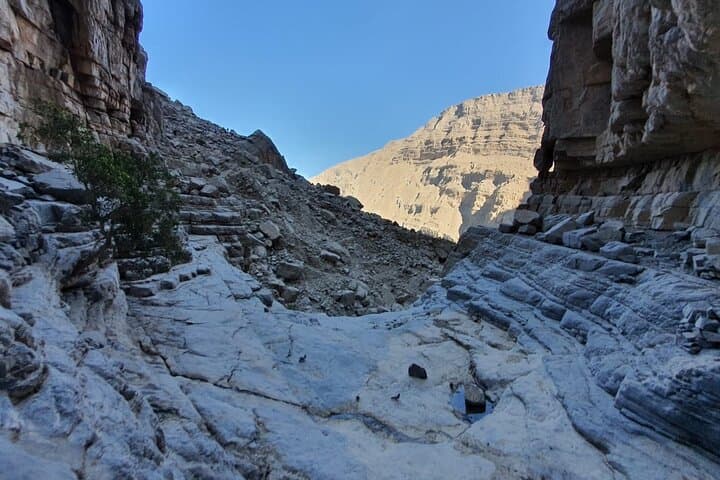
You break the desert horizon before sunrise and the ridge of Jebel Shams rises like a sheer wall, the stone already warming under a low, gold light. The South Full Summit begins from about 1,900m and pulls you up to roughly 3,000m across a long, steady climb; the trail alternates between dusty switchbacks, a balcony walk with bluff-edge views, and a few sections of boulder-scramble that demand hands-on balance.
You break the desert horizon before sunrise and the ridge of Jebel Shams rises like a sheer wall, the stone already warming under a low, gold light. The South Full Summit begins from about 1,900m and pulls you up to roughly 3,000m across a long, steady climb; the trail alternates between dusty switchbacks, a balcony walk with bluff-edge views, and a few sections of boulder-scramble that demand hands-on balance.
This massif is the highest in the Arabian Peninsula, carved from Permian limestone and undercut by deep canyons that reveal layered geologic time. Local communities in Al Hamra and nearby villages have herded goats here for generations; you’ll notice terraced fields and dry-stone walls on lower slopes. The route has military and exploration history—the North Summit sits nearer an old army tower—while the modern challenge draws hikers prepping for higher alpine treks.
Expect wide temperature swings: cool, thin air at the top and desert heat below. The trail is well-marked but remote; navigation is straightforward, though the final approaches include short boulder sections. Water sources are absent; pack for self-sufficiency. Guides usually include an overnight with attached washroom and meals, so the outing can function as both a summit push and an altitude-acclimatization training ground for longer expeditions.
Practical plan: start before dawn, move steadily, and leave room in your schedule for weather delays. Good footwear, layered clothing for wind and cold, sun protection, and at least 2–3 liters of water are essential. With proper fitness and pacing, Jebel Shams rewards climbers with sweeping canyon views that push you to the edge of the Gulf’s high country.