THE ADVENTURE COLLECTIVE® · Independent discovery and booking for outdoor travel

Ride a cable car and 4x4 minibuses up Mount Etna, then trek across recent lava and sandy slopes to panoramic summit craters. Guided by alpine-volcanological professionals, this half-day excursion blends dramatic geology with rigorous safety protocols.
Ride a cable car and 4x4 minibuses up Mount Etna, then trek across recent lava and sandy slopes to panoramic summit craters. Guided by alpine-volcanological professionals, this half-day excursion blends dramatic geology with rigorous safety protocols.
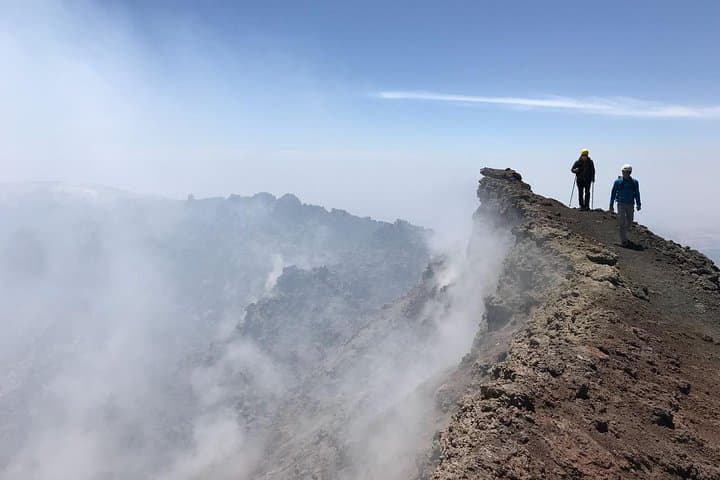
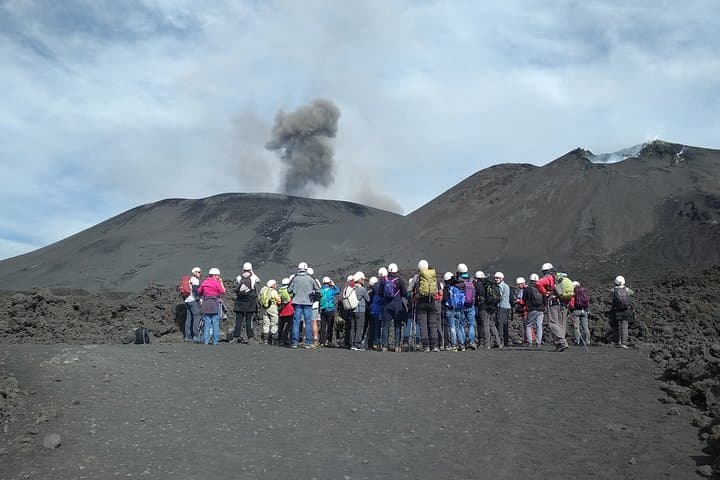
Wind tugs at your jacket as the cable car climbs out of Rifugio Sapienza and the cultivated foothills fall away beneath a plume of steam. Above the tree line the landscape slides into black rock and sand; fumaroles hiss like a living thing and the air smells faintly of sulphur. Guides check helmets and radios, then the 4x4 minibuses bump over ancient lava to a high ridge where the real walk begins.
Verified experiences and guided adventures in the surrounding area.
Operated by Etna Together · Nicolosi, Sicily
Wind tugs at your jacket as the cable car climbs out of Rifugio Sapienza and the cultivated foothills fall away beneath a plume of steam. Above the tree line the landscape slides into black rock and sand; fumaroles hiss like a living thing and the air smells faintly of sulphur. Guides check helmets and radios, then the 4x4 minibuses bump over ancient lava to a high ridge where the real walk begins.
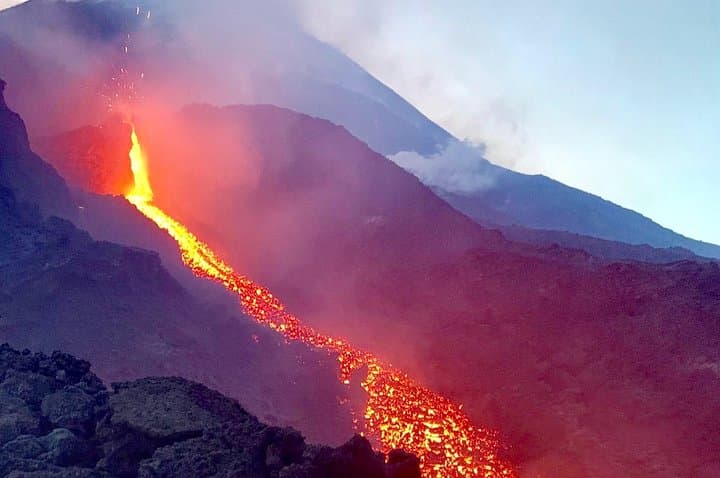
Mount Etna is Europe's tallest active volcano and a subject of recorded eruptions for millennia. Geology here is immediate: layers of pahoehoe and a’a lava, fresh tephra from recent events (including activity as recent as January 2024), and broad collapse scarps that frame the Valle del Bove. Culturally, villages on Etna’s slopes lean into the volcano—wine, pistachios and architecture shaped by ash and time.
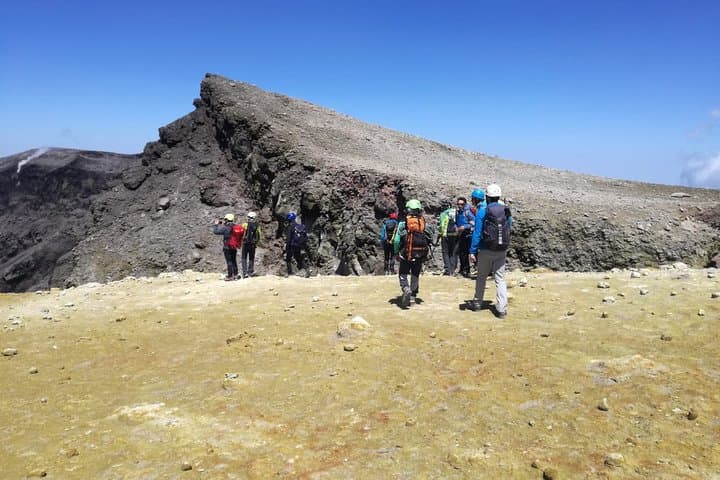
The trek climbs from roughly 2,800 m to about 3,340 m across loose volcanic sand and jagged lava flows to view multiple active summit craters and steaming vents. Guides are qualified alpine/volcanological professionals; helmets are mandatory above 2,900 m. Expect high UV, cold winds, and rapid weather changes.
Practical advice: acclimatize in Catania or Nicolosi, bring layered windproof clothing, sturdy hiking boots and plenty of water, and allow 5–6 hours for the full excursion. Stay on routes set by guides, follow their safety briefings around fumaroles, and plan for a sandy, fun but physically demanding descent back to the cable car.
challenging.
5–6 hours.
Good aerobic fitness and comfort on steep, unstable terrain; previous mountain hiking helpful.
The full activity takes about 5–6 hours from Rifugio Sapienza, including cable car, 4x4 transfers and summit trekking.
No technical mountaineering skills are required, but participants should have good fitness and be comfortable on steep, uneven volcanic terrain.
This excursion is not recommended for pregnant travelers, people with serious heart or spinal conditions, or those unable to tolerate high altitude.
The operator may cancel for safety in poor weather; cancel at least 24 hours before departure for a full refund per the booking policy.
Etna’s eruptions are documented back to antiquity and have shaped local agriculture and settlement; volcanic soils support vineyards and orchards unique to the region.
Etna is a protected park—stick to marked routes, avoid collecting geological samples, and follow guide instructions to limit erosion and disturbance.
Etna Together operates guided outdoor trips and adventures with an emphasis on safety, stewardship, and memorable experiences.
Wind tugs at your jacket as the cable car climbs out of Rifugio Sapienza and the cultivated foothills fall away beneath a plume of steam. Above the tree line the landscape slides into black rock and sand; fumaroles hiss like a living thing and the air smells faintly of sulphur. Guides check helmets and radios, then the 4x4 minibuses bump over ancient lava to a high ridge where the real walk begins.
Wind tugs at your jacket as the cable car climbs out of Rifugio Sapienza and the cultivated foothills fall away beneath a plume of steam. Above the tree line the landscape slides into black rock and sand; fumaroles hiss like a living thing and the air smells faintly of sulphur. Guides check helmets and radios, then the 4x4 minibuses bump over ancient lava to a high ridge where the real walk begins.
Mount Etna is Europe's tallest active volcano and a subject of recorded eruptions for millennia. Geology here is immediate: layers of pahoehoe and a’a lava, fresh tephra from recent events (including activity as recent as January 2024), and broad collapse scarps that frame the Valle del Bove. Culturally, villages on Etna’s slopes lean into the volcano—wine, pistachios and architecture shaped by ash and time.
The trek climbs from roughly 2,800 m to about 3,340 m across loose volcanic sand and jagged lava flows to view multiple active summit craters and steaming vents. Guides are qualified alpine/volcanological professionals; helmets are mandatory above 2,900 m. Expect high UV, cold winds, and rapid weather changes.
Practical advice: acclimatize in Catania or Nicolosi, bring layered windproof clothing, sturdy hiking boots and plenty of water, and allow 5–6 hours for the full excursion. Stay on routes set by guides, follow their safety briefings around fumaroles, and plan for a sandy, fun but physically demanding descent back to the cable car.