THE ADVENTURE COLLECTIVE® · Independent discovery and booking for outdoor travel

A focused, technical 4-day ascent of Chopicalqui (6,354 m) from Huaraz, combining glacier travel, steep ice sections and alpine camping. Ideal for climbers with prior high‑altitude experience.
A focused, technical 4-day ascent of Chopicalqui (6,354 m) from Huaraz, combining glacier travel, steep ice sections and alpine camping. Ideal for climbers with prior high‑altitude experience.
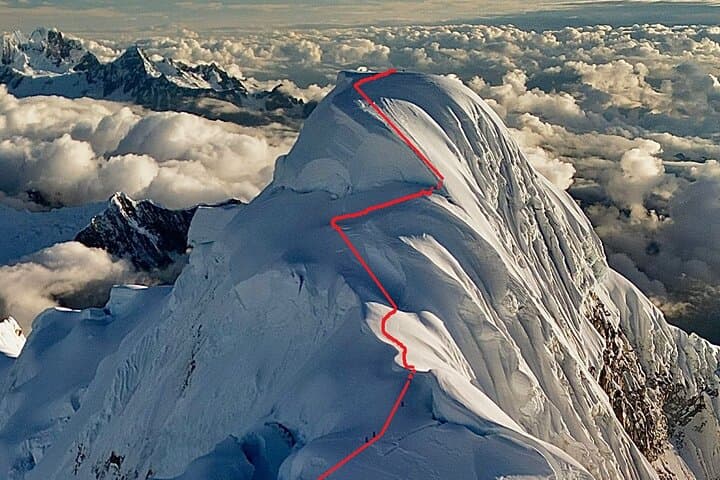
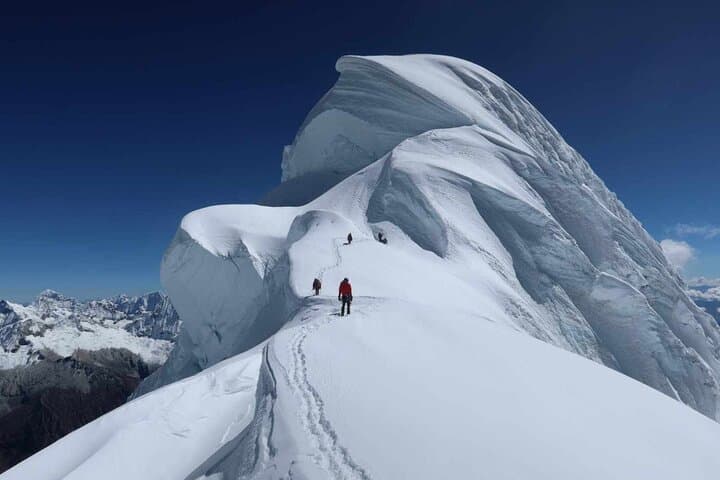
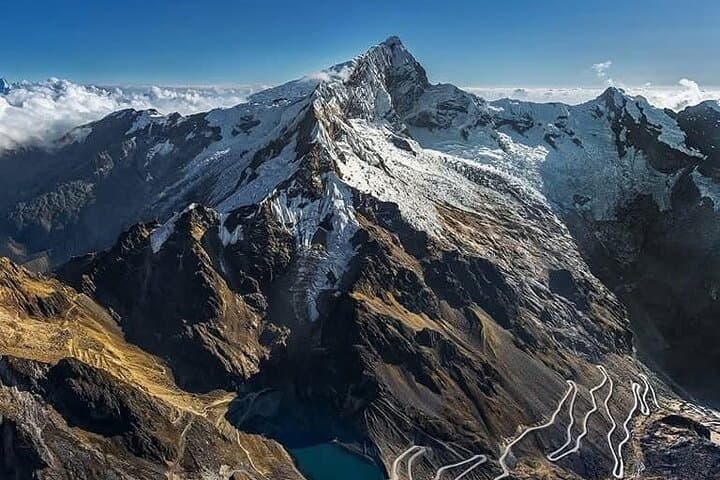
A thin, cold wind threads the Llanganuco Valley as climbers step out of the bus and look up at the white ridge of Chopicalqui. The sky here is fierce and clear: glaciers glint during the day, stars flood the night, and every step on moraine or ice brings the mountain closer — both in altitude and in focus.
Verified experiences and guided adventures in the surrounding area.
Operated by Peru Expeditions Tours · Huaraz, Ancash
A thin, cold wind threads the Llanganuco Valley as climbers step out of the bus and look up at the white ridge of Chopicalqui. The sky here is fierce and clear: glaciers glint during the day, stars flood the night, and every step on moraine or ice brings the mountain closer — both in altitude and in focus.
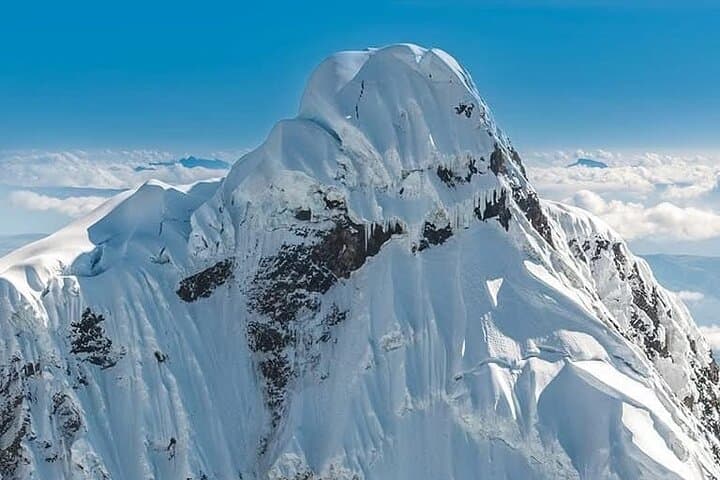
Chopicalqui (6,354 m) sits on the Huascarán Massif in the Cordillera Blanca, the highest tropical range on Earth. The massif was sculpted by repeated glaciation over millennia, leaving sharp arêtes, seracs and hanging glaciers that test route-finding and resolve. Local Andean culture has long regarded these peaks with respect; villages around Huaraz supply guides, porters and the highland knowledge that makes modern expeditions possible.
The company itinerary moves from Huaraz (3,100 m) up to a 4,350 m base camp and a glacier high camp at ~5,350 m, with a long technical summit day featuring crevasse travel and short near-vertical ice sections (75–80°). Expect 5–6 hours approach days, then a 10–13 hour summit push with roped glacier travel and fixed rope or steep ice moves.
Practically: train for long days at altitude, be competent with crampons, ice axe and rope techniques, and carry layered clothing for extreme temperature swings. Hydrate and follow guide pacing for acclimatization. Weather can flip quickly; an early start on summit day is standard. For experienced mountaineers seeking a classic tropical 6,000‑meter objective, Chopicalqui delivers alpine exposure, compact technical climbing and one of the most rewarding panoramic summits in the Cordillera Blanca.
expert.
4 days (approach days 5–6 hrs; summit day 10–13 hrs).
Strong cardiovascular endurance and experience with sustained uphill days at altitude; should be comfortable carrying 15–25 kg rucksack.
Yes — participants should have previous glacier and technical climbing experience; guides expect competence with crampons, ice axe, and roped team travel.
The itinerary stages gradually from Huaraz to base and high camps; additional acclimatization days are recommended if you’ve recently been at low altitude.
Stable conditions usually occur in the dry season (May–September), with clearer skies and lower precipitation; afternoon storms remain possible at high altitude.
Yes — the package includes camping tents, cook staff and porters (ratio noted in the itinerary), plus meals during the trek.
The Cordillera Blanca has been a center of Andean mountaineering since the early 20th century; local Quechua communities have long maintained cultural ties to the peaks.
Glacial retreat is visible across the Cordillera Blanca—minimize camp waste, use provided cooking facilities, and follow Leave No Trace practices to reduce local impact.
Peru Expeditions Tours operates guided outdoor trips and adventures with an emphasis on safety, stewardship, and memorable experiences.
A thin, cold wind threads the Llanganuco Valley as climbers step out of the bus and look up at the white ridge of Chopicalqui. The sky here is fierce and clear: glaciers glint during the day, stars flood the night, and every step on moraine or ice brings the mountain closer — both in altitude and in focus.
A thin, cold wind threads the Llanganuco Valley as climbers step out of the bus and look up at the white ridge of Chopicalqui. The sky here is fierce and clear: glaciers glint during the day, stars flood the night, and every step on moraine or ice brings the mountain closer — both in altitude and in focus.
Chopicalqui (6,354 m) sits on the Huascarán Massif in the Cordillera Blanca, the highest tropical range on Earth. The massif was sculpted by repeated glaciation over millennia, leaving sharp arêtes, seracs and hanging glaciers that test route-finding and resolve. Local Andean culture has long regarded these peaks with respect; villages around Huaraz supply guides, porters and the highland knowledge that makes modern expeditions possible.
The company itinerary moves from Huaraz (3,100 m) up to a 4,350 m base camp and a glacier high camp at ~5,350 m, with a long technical summit day featuring crevasse travel and short near-vertical ice sections (75–80°). Expect 5–6 hours approach days, then a 10–13 hour summit push with roped glacier travel and fixed rope or steep ice moves.
Practically: train for long days at altitude, be competent with crampons, ice axe and rope techniques, and carry layered clothing for extreme temperature swings. Hydrate and follow guide pacing for acclimatization. Weather can flip quickly; an early start on summit day is standard. For experienced mountaineers seeking a classic tropical 6,000‑meter objective, Chopicalqui delivers alpine exposure, compact technical climbing and one of the most rewarding panoramic summits in the Cordillera Blanca.