THE ADVENTURE COLLECTIVE® · Independent discovery and booking for outdoor travel

A focused two‑day climb to Chimborazo’s main summits, this expedition pairs a high camp at 5,300 m with a pre‑dawn summit push to 6,268 m. Expect glacier travel, certified guides, and panoramic Andean views with full logistical support.
A focused two‑day climb to Chimborazo’s main summits, this expedition pairs a high camp at 5,300 m with a pre‑dawn summit push to 6,268 m. Expect glacier travel, certified guides, and panoramic Andean views with full logistical support.
Night compresses into a single headlamp beam as the group tightens harnesses at 5,300 m. The high camp on Chimborazo sits raw and cold beneath a vault of stars; by midnight the small tents look fragile against the glacier-lit slopes that will test every step before dawn.
Verified experiences and guided adventures in the surrounding area.
Operated by Mauna Expeditions · Riobamba, Chimborazo Province
Night compresses into a single headlamp beam as the group tightens harnesses at 5,300 m. The high camp on Chimborazo sits raw and cold beneath a vault of stars; by midnight the small tents look fragile against the glacier-lit slopes that will test every step before dawn.
Chimborazo is a massive stratovolcano carved by ice and wind, its Whymper summit reaching 6,268 m and Veintimilla 6,160 m. Though not the tallest by sea level, the peak is the point on Earth farthest from the planet’s center—a fact that gives the mountain its nickname, the “closest point to the sun.” The climb threads through the Reserva de Producción y Fauna Chimborazo, an area long used by local highland communities and home to resilient puna grasslands and herding culture.
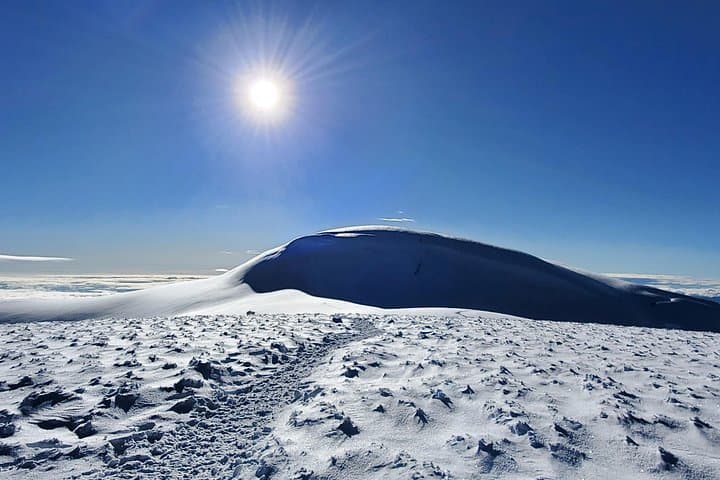
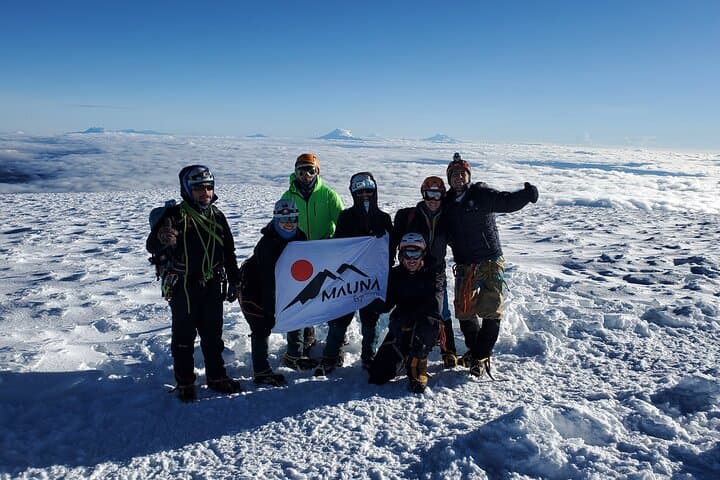
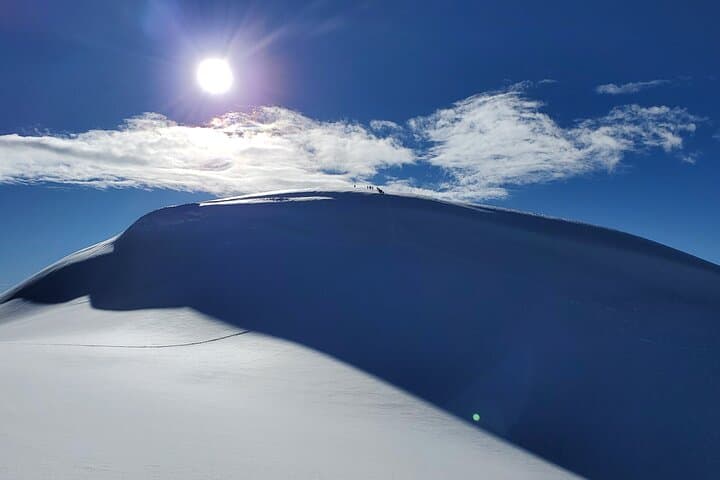
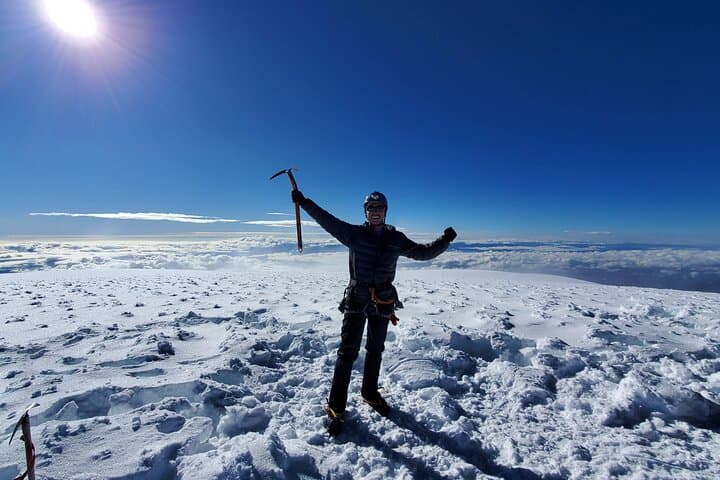
Expect glacier travel, steep bootpack sections and exposed ridgelines with sweeping views of Cotopaxi, Tungurahua and Sangay on clear days. Guides here run a tight schedule: a 3‑hour road transfer from Riobamba, a short approach to high camp, a midnight start and a 6‑hour push to the summit with a 2–3 hour descent.
Practical edge: acclimatize beforehand, practice ice-axe arrest and crampon technique, and pack layered insulation for sub‑zero summit winds. The operator provides certified guides (1:2 ratio), permits, meals and shared rope systems; you should bring personal mountaineering boots, headlamp, and high‑energy snacks. Hydrate, watch for altitude symptoms, and allow the mountain to set your pace—ambition moves slower above 5,000 m.
difficult.
2 days (overnight high camp; ~6–8 hours ascent on summit day).
Requires high aerobic fitness, experience with full‑day ascents at altitude and the ability to carry a 8–12 kg pack; prior altitude trekking recommended.
Yes—participants should have prior high‑altitude trekking experience and basic glacier skills; guides provide instruction but not beginner training on summit day.
Yes—the tour includes park permits and certified mountain guides at a roughly 1:2 guide‑to‑client ratio.
Altitude sickness, hypothermia, falls on ice, and sudden weather changes are primary hazards; the guide team mitigates risk with pacing, equipment and contingency plans.
Shared technical rope systems and some mountaineering equipment are provided; operators list helmet, harness, ice axe, boots and crampons—confirm what you need to bring personally.
Chimborazo has been a culturally significant landmark for Andean communities and featured in early European exploration; its peaks were first surveyed by Edward Whymper in the 19th century.
The climb runs through a protected production and fauna reserve; stay on trails, pack out waste and respect grazing areas to limit erosion and disturbance.
Mauna Expeditions operates guided outdoor trips and adventures with an emphasis on safety, stewardship, and memorable experiences.
Night compresses into a single headlamp beam as the group tightens harnesses at 5,300 m. The high camp on Chimborazo sits raw and cold beneath a vault of stars; by midnight the small tents look fragile against the glacier-lit slopes that will test every step before dawn.
Night compresses into a single headlamp beam as the group tightens harnesses at 5,300 m. The high camp on Chimborazo sits raw and cold beneath a vault of stars; by midnight the small tents look fragile against the glacier-lit slopes that will test every step before dawn.
Chimborazo is a massive stratovolcano carved by ice and wind, its Whymper summit reaching 6,268 m and Veintimilla 6,160 m. Though not the tallest by sea level, the peak is the point on Earth farthest from the planet’s center—a fact that gives the mountain its nickname, the “closest point to the sun.” The climb threads through the Reserva de Producción y Fauna Chimborazo, an area long used by local highland communities and home to resilient puna grasslands and herding culture.
Expect glacier travel, steep bootpack sections and exposed ridgelines with sweeping views of Cotopaxi, Tungurahua and Sangay on clear days. Guides here run a tight schedule: a 3‑hour road transfer from Riobamba, a short approach to high camp, a midnight start and a 6‑hour push to the summit with a 2–3 hour descent.
Practical edge: acclimatize beforehand, practice ice-axe arrest and crampon technique, and pack layered insulation for sub‑zero summit winds. The operator provides certified guides (1:2 ratio), permits, meals and shared rope systems; you should bring personal mountaineering boots, headlamp, and high‑energy snacks. Hydrate, watch for altitude symptoms, and allow the mountain to set your pace—ambition moves slower above 5,000 m.