THE ADVENTURE COLLECTIVE® · Independent discovery and booking for outdoor travel

A guided, high-altitude ascent of Cerro Toco (5,600 m) offers a brisk climb from a 5,200 m trailhead with panoramic views of Licancabur, Sairecabur and the Bolivian altiplano. Expect a 2–2.5 hour climb, strong winds, and the need to be acclimatized before the outing.
A guided, high-altitude ascent of Cerro Toco (5,600 m) offers a brisk climb from a 5,200 m trailhead with panoramic views of Licancabur, Sairecabur and the Bolivian altiplano. Expect a 2–2.5 hour climb, strong winds, and the need to be acclimatized before the outing.
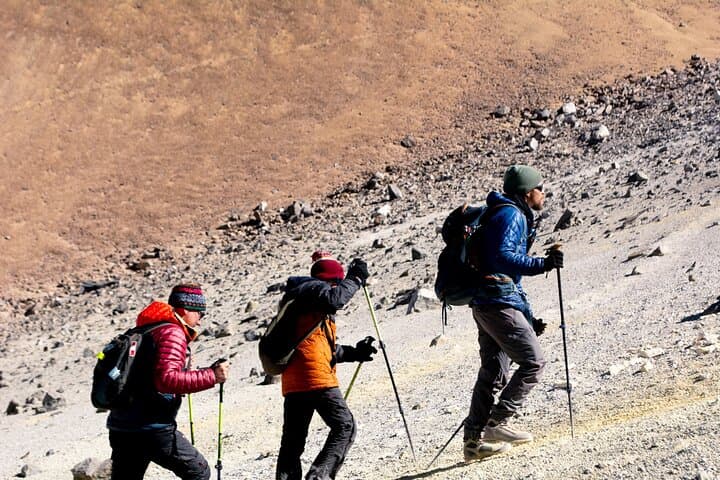
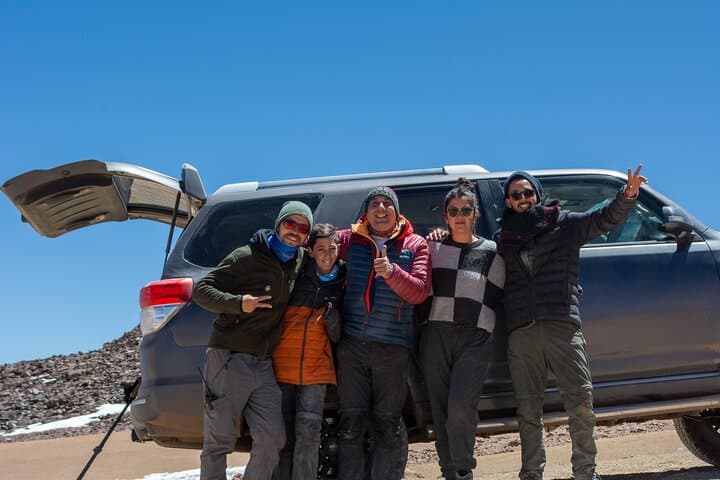
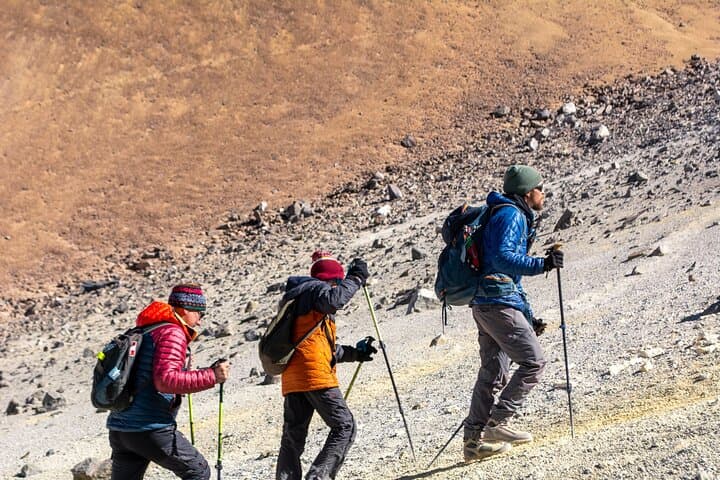
A thin, clean light breaks over the Altiplano as your van climbs out of San Pedro de Atacama and the peaks push into view. The wind has a voice up here — blunt, cold, and honest — and it will test your layering and your pace long before the summit does. You step off at roughly 5,200 meters, shoulders squared to a slope of gravel and volcanic scree. The ascent is straightforward but relentless; each switchback begs you to breathe slower and trust your legs.
Verified experiences and guided adventures in the surrounding area.
Operated by Molantur · San Pedro de Atacama, Antofagasta Region
A thin, clean light breaks over the Altiplano as your van climbs out of San Pedro de Atacama and the peaks push into view. The wind has a voice up here — blunt, cold, and honest — and it will test your layering and your pace long before the summit does. You step off at roughly 5,200 meters, shoulders squared to a slope of gravel and volcanic scree. The ascent is straightforward but relentless; each switchback begs you to breathe slower and trust your legs.
Cerro Toco is an extinct Andean cone carved from volcanic flows and pyroclastic deposits tied to the Central Volcanic Zone. From the crater rim the sweep of Licancabur and Sairecabur punctures the horizon while Bolivian highland lagoons flash like glass below — an open record of tectonics and climatic extremes. The surrounding landscape is shaped by altiplano culture: camelids grazing in salt-rich flats and archaeological footprints of Atacameño communities on trade routes used for centuries.
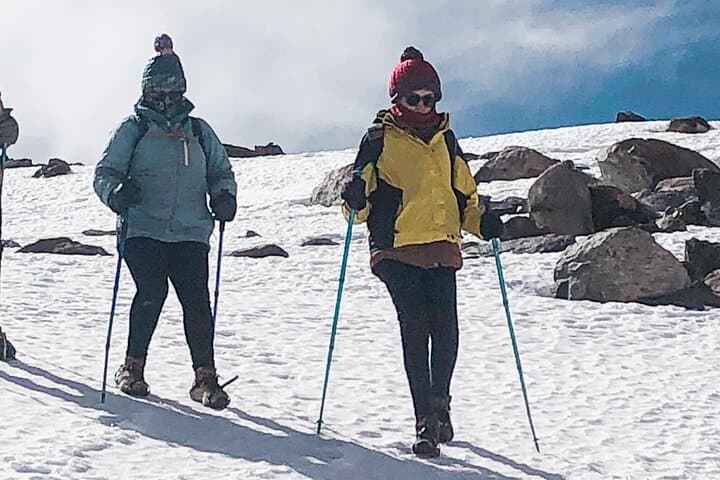
Practical reality meets the spectacle: the guided program stages from San Pedro, drives you to the 5,200 m trailhead, and times the climb to limit exposure to midday sun and afternoon winds. Expect a 2–2.5 hour ascent and steady descent within a 5-hour window. Acclimatize ahead, move at an even pace, use sunscreen and sunglasses, and rely on gaiters or poles on loose scree. Guides often provide canes and gloves; bring insulated layers, extra water, and patience for the thin air. At the rim, the view rewards steady pacing — the high Andes daring you to stay a little longer before you head back down.
challenging.
5 hours.
Good aerobic fitness and prior high-altitude trekking experience recommended; must be acclimatized to avoid altitude illness.
From the 5,200 m trailhead guides quote 2 to 2.5 hours for the ascent and about 1.5–2 hours to descend, packaged into a roughly 5-hour tour including transport.
No technical climbing skills are required, but prior high-altitude hiking experience and good fitness are strongly recommended.
Typical inclusions: round-trip transport from San Pedro de Atacama, guide, gloves and canes; confirm exact inclusions with the operator before booking.
Yes — the tour is not recommended without prior acclimatization; spend a few days in town or on lower treks before attempting Cerro Toco.
Cerro Toco is part of the Central Volcanic Zone of the Andes; volcanic cones here record successive eruptions and uplift tied to subduction along the Pacific margin.
Visitors should stick to existing paths, pack out all waste, and minimize disturbance to fragile high-elevation vegetation and archaeological traces.
Molantur operates guided outdoor trips and adventures with an emphasis on safety, stewardship, and memorable experiences.
A thin, clean light breaks over the Altiplano as your van climbs out of San Pedro de Atacama and the peaks push into view. The wind has a voice up here — blunt, cold, and honest — and it will test your layering and your pace long before the summit does. You step off at roughly 5,200 meters, shoulders squared to a slope of gravel and volcanic scree. The ascent is straightforward but relentless; each switchback begs you to breathe slower and trust your legs.
A thin, clean light breaks over the Altiplano as your van climbs out of San Pedro de Atacama and the peaks push into view. The wind has a voice up here — blunt, cold, and honest — and it will test your layering and your pace long before the summit does. You step off at roughly 5,200 meters, shoulders squared to a slope of gravel and volcanic scree. The ascent is straightforward but relentless; each switchback begs you to breathe slower and trust your legs.
Cerro Toco is an extinct Andean cone carved from volcanic flows and pyroclastic deposits tied to the Central Volcanic Zone. From the crater rim the sweep of Licancabur and Sairecabur punctures the horizon while Bolivian highland lagoons flash like glass below — an open record of tectonics and climatic extremes. The surrounding landscape is shaped by altiplano culture: camelids grazing in salt-rich flats and archaeological footprints of Atacameño communities on trade routes used for centuries.
Practical reality meets the spectacle: the guided program stages from San Pedro, drives you to the 5,200 m trailhead, and times the climb to limit exposure to midday sun and afternoon winds. Expect a 2–2.5 hour ascent and steady descent within a 5-hour window. Acclimatize ahead, move at an even pace, use sunscreen and sunglasses, and rely on gaiters or poles on loose scree. Guides often provide canes and gloves; bring insulated layers, extra water, and patience for the thin air. At the rim, the view rewards steady pacing — the high Andes daring you to stay a little longer before you head back down.