THE ADVENTURE COLLECTIVE® · Independent discovery and booking for outdoor travel

A full-day guided ascent of Ben Nevis from Fort William that balances local knowledge with safety and practicality. Expect nine hours of varied terrain, summit plateau views, and a deepening respect for Scotland’s highest peak.
A full-day guided ascent of Ben Nevis from Fort William that balances local knowledge with safety and practicality. Expect nine hours of varied terrain, summit plateau views, and a deepening respect for Scotland’s highest peak.
A damp wind pushes up Glen Nevis as the group sets off from the foot of Britain’s highest peak. The river dares you to hurry, while the path steepens and the landscape opens into the raw bulk of the mountain. A local mountain guide sets the pace—steady, observant—leading over boggy lower slopes toward the long, stony plateau that marks Ben Nevis’s summit at 1,344 m.
Verified experiences and guided adventures in the surrounding area.
Operated by Atlas Mountaineering · Fort William, Highland
A damp wind pushes up Glen Nevis as the group sets off from the foot of Britain’s highest peak. The river dares you to hurry, while the path steepens and the landscape opens into the raw bulk of the mountain. A local mountain guide sets the pace—steady, observant—leading over boggy lower slopes toward the long, stony plateau that marks Ben Nevis’s summit at 1,344 m.
Ben Nevis’s summit holds the whitewashed ruins of an 1883 observatory; its story is the practical kind—weather records, failed experiments, and harsh highland winters. Geologically the mountain is an old volcanic plug with steep western flanks that rise roughly 1,200 m in two kilometres, and to the north a corrie shelters the Charles Inglis Clark Hut.
Culturally, Fort William has long been a hub for climbers and hill-walkers; a post-ascent dram of local whisky is a common ritual. Practically, expect a full day: the guided tour runs about nine hours with varied terrain—well-defined paths, boggy sections, scree and short steep pitches. Guides assess conditions and may alter plans for safety. Essentials include three-season walking boots, layered waterproofs, navigation basics, and sufficient food and water. In summer the summit can be exposed and windy; in winter, snow, ice and avalanche risk demand winter kit and experience.
This private guided ascent is best for those with moderate to strong fitness who want a managed, knowledgeable approach to a serious hill day. Start early, heed the guide’s advice, and prepare for fast-changing mountain weather.
challenging.
8–10 hours.
Good aerobic fitness and experience with sustained uphill walking; comfortable with long days and uneven terrain.
You should have good aerobic fitness and experience with sustained uphill walking; the guided day typically lasts 8–10 hours with significant ascent.
Guides carry group safety equipment; you must bring personal kit like boots, waterproofs, and any spare warm layers. In winter additional technical kit may be required.
Guides monitor conditions closely and may change the route, delay the start, or cancel for safety—refund policies vary but operators often cancel if conditions are unsafe.
Children must be accompanied by an adult and should meet the operator’s fitness and kit requirements; check with the operator for any age restrictions.
The summit is crowned by the ruined 1883 observatory that recorded weather observations until 1904; Ben Nevis’s Gaelic name, Beinn Nibheis, is often translated as ‘venomous’ or ‘malicious’ mountain.
High visitor numbers and peatland erosion are ongoing concerns—stay on defined paths, avoid widening eroded sections, and follow Leave No Trace principles.
Atlas Mountaineering operates guided outdoor trips and adventures with an emphasis on safety, stewardship, and memorable experiences.
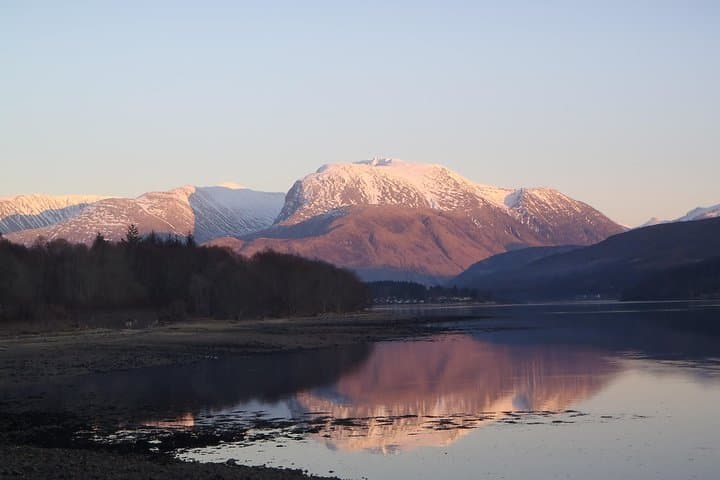
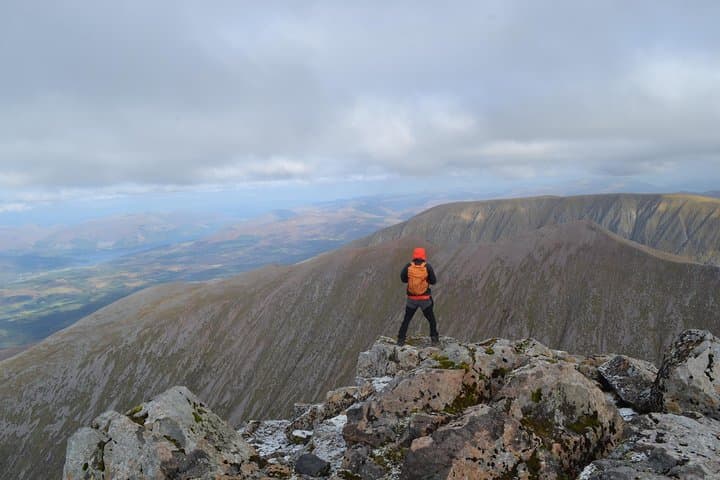
A damp wind pushes up Glen Nevis as the group sets off from the foot of Britain’s highest peak. The river dares you to hurry, while the path steepens and the landscape opens into the raw bulk of the mountain. A local mountain guide sets the pace—steady, observant—leading over boggy lower slopes toward the long, stony plateau that marks Ben Nevis’s summit at 1,344 m.
A damp wind pushes up Glen Nevis as the group sets off from the foot of Britain’s highest peak. The river dares you to hurry, while the path steepens and the landscape opens into the raw bulk of the mountain. A local mountain guide sets the pace—steady, observant—leading over boggy lower slopes toward the long, stony plateau that marks Ben Nevis’s summit at 1,344 m.
Ben Nevis’s summit holds the whitewashed ruins of an 1883 observatory; its story is the practical kind—weather records, failed experiments, and harsh highland winters. Geologically the mountain is an old volcanic plug with steep western flanks that rise roughly 1,200 m in two kilometres, and to the north a corrie shelters the Charles Inglis Clark Hut.
Culturally, Fort William has long been a hub for climbers and hill-walkers; a post-ascent dram of local whisky is a common ritual. Practically, expect a full day: the guided tour runs about nine hours with varied terrain—well-defined paths, boggy sections, scree and short steep pitches. Guides assess conditions and may alter plans for safety. Essentials include three-season walking boots, layered waterproofs, navigation basics, and sufficient food and water. In summer the summit can be exposed and windy; in winter, snow, ice and avalanche risk demand winter kit and experience.
This private guided ascent is best for those with moderate to strong fitness who want a managed, knowledgeable approach to a serious hill day. Start early, heed the guide’s advice, and prepare for fast-changing mountain weather.